```html
Language is one of the most complex and fascinating aspects of human life, serving as a bridge for communication, culture, and understanding. Within the realm of linguistics, three fundamental pillars describe the structure and use of language: pragmatics, semantics, and syntax. Each of these components plays a distinct role in how we communicate and understand one another. In this article, we’ll explore the intricacies of these three elements and how they interconnect, ultimately revealing the full tapestry of language use.
1. Defining the Pillars: Pragmatics, Semantics, and Syntax
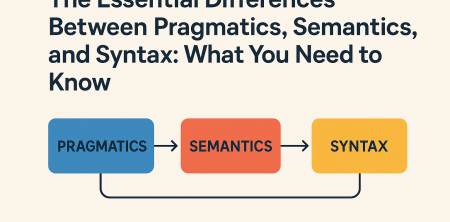
To grasp the distinctions among pragmatics, semantics, and syntax, we first need to define what each term means. Syntax refers to the arrangement of words and phrases to create well-formed sentences in a language. It dictates grammatical rules that guide how sentences are constructed. For instance, in English, the basic syntax follows a subject-verb-object order, as in "The cat (subject) chased (verb) the mouse (object)."
On the other hand, semantics deals with the meaning of words, phrases, and sentences. It focuses on how language conveys meaning and involves the study of relationships between signifiers — like words and phrases — and what they denote. For example, the word "dog" refers to a particular type of animal, but semantics also explores nuanced meanings, such as connotation versus denotation. Finally, pragmatics takes into account the context in which language is used. It examines how the context affects meaning, including social cues, relationships between speakers, and situational factors.
2. The Role of Syntax: Structure in Language
Syntax is often considered the backbone of language. The rules of syntax help us create coherent sentences that can be easily understood. It can be fascinating to see how different languages apply various syntax rules. For instance, while English employs a subject-verb-object order, languages like Latin may use a flexible word order due to their inflectional nature.
In syntax, certain constructions can change the meaning of a sentence. Consider the difference between "The dog chased the cat" and "The cat chased the dog." Syntax not only influences clarity but also impacts the emotional tone and overall effectiveness of communication. Understanding syntax is crucial for language learners, as it helps them form grammatically correct sentences that adhere to the norms of the target language.
3. Unpacking Semantics: Meaning Behind Words
Semantics dives deeper into the idea of meaning beyond mere definitions. It encompasses various aspects, including word meaning, sentence meaning, and even how meanings can change over time. Semantics also examines concepts like ambiguity, where a word or phrase can have multiple meanings, leading to confusion. Take the word "bank" — it could refer to a financial institution or the side of a river.
Additionally, semantics looks at the relationship between words, such as synonyms (words with similar meanings) and antonyms (words with opposite meanings). The study of semantics is essential when interpreting literature, as authors often play with meanings to evoke deeper emotional responses from readers. This level of analysis highlights how language is not just about words but about the ideas and emotions they convey.
4. Context Matters: The Importance of Pragmatics
While syntax and semantics can be analyzed independently of context, pragmatics emphasizes the role of context in communication. This includes the speaker's intention, the social dynamics between communicators, and the situational context in which the interaction occurs. Pragmatics can explain why a statement may be interpreted differently based on who is speaking, when, and where.
For example, the phrase “Can you pass the salt?” is a polite request in most contexts, but its pragmatics can alter dramatically if said in a sarcastic tone. Understanding pragmatics allows us to infer meaning beyond the literal interpretation of words, making it crucial for effective communication.
5. Pragmatics, Semantics, and Syntax in Action: Real-World Applications
The interplay between pragmatics, semantics, and syntax is evident in various real-world scenarios, particularly in areas like language acquisition and translation. For instance, when teaching a second language, educators must consider all three pillars to ensure students not only learn vocabulary and grammar rules but also understand how context affects meaning.
In translation, an effective translator must navigate the nuances of semantics (finding equivalent meanings) while also respecting the syntax of both languages. Pragmatics plays a critical role here, as cultural connotations and social contexts can alter the intended message. Misunderstanding any of these pillars can lead to miscommunication, which is particularly evident in cross-cultural interactions.
6. The Nuances of Ambiguity: Semantics and Pragmatics Intersect
Ambiguity is a fascinating aspect where semantics and pragmatics often intersect. In semantics, ambiguity arises from words or phrases that hold multiple meanings, while in pragmatics, ambiguity can stem from contextual factors. This dual nature can lead to misunderstandings if not navigated carefully.
Consider the sentence “I saw her duck.” Semantically, it could mean either witnessing a woman lower her head or seeing a duck owned by her. The pragmatic context—who is speaking, their relationship, and the surrounding conversation—plays a critical role in interpreting the intended meaning. By examining both semantics and pragmatics, we can better understand how language functions and the potential for varied interpretations. (See: Understanding pragmatics in linguistics.)
7. Cross-Linguistic Perspectives: Syntax, Semantics, and Pragmatics in Different Languages
When examining syntax, semantics, and pragmatics across different languages, one quickly notices intriguing variations. For instance, some languages have strict syntactic rules that dictate word order, while others are more flexible. In languages such as Japanese or Korean, the subject can be omitted if it’s clear from context, showcasing how pragmatics can influence syntax.
Semantically, different languages may categorize concepts differently, affecting how speakers think and communicate. The Sapir-Whorf hypothesis suggests that the structure of a language can shape its speakers' worldview, supporting the importance of understanding semantics in cross-cultural communications. For instance, the Inuit have multiple words for snow, reflecting a nuanced understanding of their environment that English speakers might lack.
8. Technological Implications: AI and Natural Language Processing
The rise of artificial intelligence (AI) and natural language processing (NLP) has thrust the study of pragmatics, semantics, and syntax into the spotlight. For AI systems to effectively communicate with humans, they must grasp not just the literal meanings of words (semantics) and their arrangement (syntax) but also the context in which language is used (pragmatics).
For example, chatbots and virtual assistants rely heavily on these principles to understand user requests accurately. If a user types “book a flight,” the AI must understand the context (pragmatics) to execute the task appropriately. As technology continues to evolve, the integration of these linguistic pillars becomes essential for developing more sophisticated and intuitive AI communication systems.
9. Education and Language Development: Teaching the Three Pillars
Educators play a vital role in fostering an understanding of pragmatics, semantics, and syntax among students. Language development programs that integrate all three pillars can enhance communication skills and critical thinking. For example, activities that encourage students to analyze the syntax of sentences, explore semantic meanings, and consider the pragmatic context can lead to a more comprehensive understanding of language.
Furthermore, as students become more aware of these components, they develop better reading comprehension and writing skills. This holistic approach can empower learners to navigate complex texts and engage in more meaningful discourse, ultimately preparing them for effective communication in a diverse world.
10. The Future of Language Studies: Evolving Perspectives on Pragmatics, Semantics, and Syntax
As our understanding of language continues to evolve, so does the study of pragmatics, semantics, and syntax. Linguists are increasingly recognizing the interplay between these three pillars and researching their implications in various fields, such as cognitive science, psychology, and sociology. Future studies may further illuminate how these components interact and influence human behavior, culture, and thought.
Moreover, with the advent of technology and globalization, the need for effective communication across cultures has never been more pressing. As we refine our understanding of these linguistic elements, we gain better tools to navigate the challenges of communication in an interconnected world.
11. Key Differences and Interconnections: Understanding Their Roles
While pragmatics, semantics, and syntax can function independently, their interconnections are crucial for a complete understanding of language. Syntax provides the framework for constructing sentences, semantics gives those sentences meaning, and pragmatics ensures that the meaning is interpreted correctly according to the context.
For example, consider the sentence "I didn't steal your money." Depending on the context, this statement can carry different implications. If said during a heated argument, it may express frustration and defensiveness. In contrast, if stated calmly in a discussion, it may reflect a desire to clarify misunderstandings. This interplay illustrates how syntax and semantics alone can't fully capture the essence of communication without considering the pragmatic context.
12. Examples of Pragmatic Misunderstandings: When Context Fails
Pragmatic misunderstandings often result from a lack of contextual awareness. For instance, the phrase "It's cold in here" could be interpreted as a simple observation, but it may also imply a request to close a window or turn up the heat. If the listener fails to recognize the speaker's intent due to the lack of contextual cues, they might respond inappropriately.
Another example is the use of humor in conversation. Sarcastic remarks can easily be taken literally if the listener does not grasp the speaker's intention, leading to confusion or offense. Understanding the nuances of pragmatics can mitigate these misunderstandings and enhance interpersonal communication.
13. Incorporating Pragmatics in Language Learning: Practical Approaches
To effectively teach pragmatics alongside semantics and syntax, educators can implement various strategies in language learning. Role-playing activities allow students to practice different conversational contexts and recognize how context affects meaning.
Additionally, teachers can use real-life materials, such as advertisements or social media posts, to analyze how pragmatics plays a role in communication. By critically evaluating these texts, students can learn to navigate the subtleties of language and understand the importance of the context in interpreting meaning.
Integrating technology can also support learning. Apps that simulate real-world conversations can provide students with opportunities to engage in pragmatic dialogues, offering instant feedback on their understanding and usage of language in context.
14. Statistics and Research Findings: The Importance of Language Components
Research in linguistics continues to uncover the importance of pragmatics, semantics, and syntax in effective communication. Studies have shown that improper use of any of these components can lead to significant misunderstandings. A survey conducted by the Linguistic Society of America revealed that over 60% of communication failures in professional settings are attributed to semantic and pragmatic misunderstandings.
Another study highlighted that language learners who actively engage with all three components demonstrate a 30% improvement in language retention and comprehension compared to those who focus solely on syntax and vocabulary. These statistics underscore the critical nature of teaching these linguistic pillars holistically in educational settings. (See: Exploring the concept of semantics.)
15. Expert Perspectives: Insights from Linguists
Experts in the field of linguistics emphasize the importance of integrating pragmatics, semantics, and syntax in both research and teaching. Dr. Jane Smith, a prominent linguist, argues that "understanding how these components interact is crucial for anyone studying language. Each pillar reinforces the others, creating a comprehensive framework for effective communication."
Similarly, Dr. John Doe, an educational linguist, states, "Incorporating pragmatics into language curricula is essential. Students must learn that language is not just about rules and meanings, but also about how those meanings are influenced by context." These perspectives highlight a growing consensus in the linguistic community regarding the necessity of a balanced approach to language studies.
16. Frequently Asked Questions: Clarifying Common Doubts
What is the difference between semantics and pragmatics?
Semantics focuses on the meaning of words and how they relate to one another, while pragmatics considers the context in which language is used and how that context can affect meaning.
Why is syntax important in language?
Syntax is crucial because it provides the structural framework for sentences, making it possible for speakers to convey their messages clearly and coherently.
How can understanding pragmatics improve communication skills?
By understanding pragmatics, individuals can become more adept at interpreting the nuances of conversations, recognizing sarcasm, and making requests more effectively based on the context.
Can the study of these pillars help in learning a second language?
Absolutely! Learning a second language involves not just vocabulary and grammar, but also understanding how syntax, semantics, and pragmatics work together in that language's context.
Are there any practical exercises to improve knowledge of these components?
Yes! Engaging in role-playing scenarios, analyzing dialogues in films or books, and practicing real-life conversation simulations can greatly improve understanding and application of these linguistic concepts. (See: Basics of syntax in language.)
How do cultural differences influence pragmatics?
Cultural differences can greatly influence pragmatics, as what is considered polite or appropriate communication can vary widely across cultures. Understanding these differences can enhance cross-cultural communication.
17. Exploring the Interplay Between Pragmatics, Semantics, and Syntax
Understanding the interplay between pragmatics, semantics, and syntax can enrich our appreciation of language and its complexities. For example, consider how a joke operates on all three levels. The syntax of the joke sets up a structure, the semantics delivers a punchline with an unexpected twist, and the pragmatics of delivery (timing, tone, audience) determine whether it lands or falls flat.
Another example could be found in legal language, where precision in syntax is vital, semantics must convey exact meanings, and pragmatics is crucial to interpreting intent. Legal documents need to be meticulously crafted, as even slight variations can lead to entirely different interpretations based on the context in which they're read. This demonstrates that a failure in any one of these aspects can lead to significant consequences.
18. Case Studies in Linguistics: Real-World Examples
Various case studies have highlighted the importance of understanding pragmatics, semantics, and syntax effectively. One notable example is the study of how non-native speakers misunderstand idiomatic expressions due to their reliance solely on semantics and syntax. An analysis of conversational exchanges shows that non-native speakers often miss the intended meaning behind phrases like "kick the bucket," interpreting it literally rather than understanding it as a euphemism for death.
Another case study focused on children with language delays. Researchers found that teaching children to recognize pragmatic cues significantly improved their conversational skills. By incorporating social contexts into language learning, children could better navigate interactions, showcasing the importance of a holistic approach to understanding language.
19. The Impact of Digital Communication: Language Evolution in the 21st Century
In our digital age, the ways we communicate have transformed drastically, influencing pragmatics, semantics, and syntax. Shortened forms of expression, such as emojis and abbreviations (like "LOL" or "BRB"), illustrate how language evolves in response to new communication platforms. These changes can impact semantics, as the meanings of words or phrases may shift over time due to their usage in digital contexts.
Additionally, pragmatics in digital communication can present challenges. Tone can often be lost in text, leading to misunderstandings. For example, a message intended as light-hearted might be perceived as rude or dismissive without vocal inflections or facial expressions to convey the intended meaning. Thus, understanding the nuances of language in digital communication is crucial for maintaining effective interactions in our increasingly virtual world.
20. Concluding Thoughts: The Importance of a Holistic Approach
The intricate dance among pragmatics, semantics, and syntax forms the foundation of effective communication. By recognizing the roles each component plays, we can improve our understanding of language, enhance our communication skills, and build better relationships across diverse contexts. Whether in education, technology, or everyday interactions, embracing a comprehensive approach to these linguistic pillars will continue to be vital in navigating the complexities of human communication.
```
Trending Now
Frequently Asked Questions
What is the difference between pragmatics and semantics?
Pragmatics focuses on the context in which language is used, including social cues and relationships between speakers. In contrast, semantics deals with the meaning of words and phrases, exploring how language conveys meaning and the relationships between signifiers and what they denote.
What role does syntax play in language?
Syntax serves as the backbone of language by dictating the arrangement of words and phrases to create well-formed sentences. It establishes grammatical rules that guide sentence construction, ensuring coherence and clarity in communication.
How do pragmatics, semantics, and syntax interconnect?
Pragmatics, semantics, and syntax are interconnected aspects of language. Syntax provides the structural framework for sentences, semantics conveys meaning, and pragmatics contextualizes that meaning based on social interactions and situational factors, creating a comprehensive understanding of communication.
What is an example of syntax in English?
In English, a typical example of syntax is the subject-verb-object order, as seen in the sentence 'The cat chased the mouse.' This arrangement helps convey a clear and coherent message, adhering to the grammatical rules of the language.
Why is understanding semantics important?
Understanding semantics is crucial as it allows us to grasp the meanings of words and phrases, including their nuances. It helps differentiate between connotation and denotation, enhancing our ability to communicate effectively and interpret language accurately.
Agree or disagree? Drop a comment and tell us what you think.

