```html
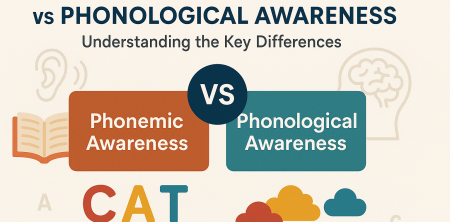
When diving into the world of literacy and language development, two terms often come up: phonemic awareness and phonological awareness. While they sound similar and are often used interchangeably, they refer to different, yet interconnected, skills that are crucial in the process of learning to read and write. Understanding the differences between phonemic awareness vs phonological awareness can significantly enhance teaching methods and learning experiences for children. In this article, we’ll explore these concepts in depth, examining their definitions, importance, and practical implications.
1. Defining Phonological Awareness
Phonological awareness is an umbrella term that encompasses the various ways that individuals can recognize and manipulate sounds in spoken language. This includes several levels of sound processing, ranging from the largest units, such as words, to smaller units like syllables, onsets, and rimes. Phonological awareness is a critical foundation for successful reading and writing skills.
At its core, phonological awareness involves being aware of the sound structure of language. This can manifest in several ways: recognizing rhymes, counting words in sentences, clapping out syllables, and identifying onsets (the initial consonant sound) and rimes (the vowel and any following consonants) in words. For example, in the word “cat,” the onset is “c” and the rime is “at.” Developing these skills allows children to play with sounds, enhancing their overall linguistic abilities.
2. What is Phonemic Awareness?
Phonemic awareness is a specific subset of phonological awareness that focuses on the smallest unit of sound, known as a phoneme. A phoneme is the individual sound in a spoken word, and understanding phonemes is critical for decoding words while reading. Phonemic awareness involves the ability to hear, identify, and manipulate these individual sounds in spoken words.
For instance, in the word “dog,” there are three phonemes: /d/, /o/, and /g/. Phonemic awareness includes tasks like blending sounds together to form a word (e.g., /d/ + /o/ + /g/ = dog) or segmenting a word into its individual phonemes. Children who develop strong phonemic awareness can decode new words more easily and have a better grasp of spelling and pronunciation.
3. The Importance of Phonological Awareness
Phonological awareness is essential for literacy development and has a profound impact on a child’s ability to read. Research shows that children who display strong phonological awareness skills tend to have better reading outcomes. This skill set allows them to easily break down spoken words into manageable parts, making it easier to learn how to read and write.
Furthermore, phonological awareness is closely linked to vocabulary development. As children become more adept at recognizing and manipulating sounds, they also develop a better understanding of language structure, which enhances their overall vocabulary. Teachers often employ phonological awareness activities, such as rhyming games or syllable clapping, to help children build these foundational skills.
4. Why Phonemic Awareness Matters
Phonemic awareness is particularly critical for early readers. Children who develop this skill are often better equipped to tackle the complexities of reading. Without a solid understanding of phonemes, a child may struggle to decode unfamiliar words, leading to frustration and aversion to reading.
Moreover, phonemic awareness is predictive of later reading success. Studies indicate that children who demonstrate strong phonemic awareness skills in kindergarten tend to become proficient readers by third grade. This is largely because phonemic awareness contributes to the development of spelling skills, allowing children to connect sounds with letters, a key component in the journey to becoming fluent readers.
5. Key Differences Between Phonemic and Phonological Awareness
While both phonological and phonemic awareness are crucial for reading development, there are notable differences. Phonological awareness encompasses a broader range of sound skills, including syllables and rhyming, whereas phonemic awareness is confined to the manipulation of individual sounds. (See: Phonological Awareness from NIH.)
To illustrate, consider the activity of clapping out syllables in a word. This exercise falls under phonological awareness since it addresses larger sound units. In contrast, asking a child to identify the first sound in the word “cat” involves phonemic awareness. Understanding these distinctions helps educators tailor their teaching strategies to meet specific student needs.
6. Activities to Develop Phonological Awareness
Creating a rich environment for developing phonological awareness can be fun and engaging. Here are some activities that can help foster these skills:
- Rhyming Games: Have children identify words that rhyme or create their own rhymes. This not only builds phonological awareness but also enhances their vocabulary.
- Syllable Clapping: Encourage children to clap their hands as they say words, breaking them into syllables. For example, the word “banana” would be clapped three times.
- Sound Sorting: Use pictures of items that begin with different sounds and have children sort them based on their initial phoneme.
These activities can be seamlessly integrated into daily routines, making learning a continuous process.
7. Activities to Cultivate Phonemic Awareness
Just like phonological awareness, phonemic awareness can be developed through targeted activities. Here are some effective ways to bolster this essential skill:
- Sound Blending: Present children with isolated phonemes and ask them to blend them together to form words (e.g., /s/ + /a/ + /t/ = sat).
- Sound Segmentation: Ask children to break a word down into its phonemes, such as identifying that “fish” consists of /f/, /i/, and /sh/.
- Phoneme Manipulation: Challenge children to change one phoneme in a word to create a new word (e.g., changing the /c/ in “cat” to /h/ to create “hat”).
These exercises not only enhance phonemic awareness but also engage children in meaningful language play.
8. The Role of Educators and Parents
Both educators and parents play a vital role in developing phonological and phonemic awareness. Teachers can integrate sound-focused activities into the daily curriculum, ensuring that children have ample practice with these skills. Using engaging materials, such as books with rhythmic patterns or interactive games, can make phonological tasks more appealing.
Parents can reinforce these skills at home through everyday conversations, reading together, and encouraging playful sound games. Talking about the sounds in words or playing rhyming games during car rides can foster a love for language and support phonological and phonemic development. Collaboration between school and home is essential for maximizing a child's literacy potential.
9. Current Relevance and Future Implications
In recent years, there has been an increased focus on the importance of phonological and phonemic awareness in early childhood education. Research continues to support the notion that these skills are foundational for literacy. Educators are increasingly adopting comprehensive literacy programs that place emphasis on sound awareness as a precursor to reading comprehension and writing proficiency.
As technology continues to evolve, integrating digital tools into phonics instruction presents new opportunities for engaging young learners. Apps and online programs designed to promote phonemic and phonological awareness can provide interactive and personalized learning experiences. The future of literacy education lies in a balanced approach that harnesses both traditional methods and modern technology to support language development.
10. Statistical Insights on Literacy Development
Several studies have highlighted the importance of phonemic and phonological awareness in literacy development. According to the National Reading Panel, students who receive explicit instruction in phonological and phonemic awareness improve their reading abilities significantly. For instance, children who struggle with phonological skills are 4-10 times more likely to experience reading difficulties in later grades. This emphasizes the need for early intervention programs focusing on these skills.
Furthermore, longitudinal studies have shown that children with strong phonemic awareness in kindergarten scored higher on reading comprehension tests in later grades. A 2015 study published in the Journal of Learning Disabilities found that 80% of students with reading difficulties did not receive adequate training in phonemic awareness during the crucial early years. This statistic underlines the critical window for instruction, which can set the stage for future academic success.
11. Expert Perspectives on Phonological and Phonemic Awareness
Experts in early childhood literacy, such as Dr. Timothy Shanahan, emphasize that phonological and phonemic awareness are not just essential precursors to reading but are intertwined with broader cognitive skills. “Developing these skills helps children not only to read but also to think critically about language,” he states. Other educators advocate for a balanced literacy approach, combining phonics with real reading experiences to foster a more holistic understanding of language. (See: CDC on Phonological Awareness.)
Furthermore, renowned literacy researcher Dr. Marilyn Jager Adams points out that phonological and phonemic awareness are crucial in developing a child’s ability to analyze language deeply. “When we teach children to break down sounds, we’re also teaching them to think analytically,” she explains. This analytical thinking extends beyond reading and writing, influencing other academic areas and problem-solving skills.
12. FAQs About Phonemic Awareness vs Phonological Awareness
What is the main difference between phonemic awareness and phonological awareness?
The main difference is that phonological awareness is a broad skill that includes understanding various sound units, while phonemic awareness specifically focuses on the smallest units of sound, known as phonemes.
Can a child have phonological awareness without phonemic awareness?
Yes, a child can demonstrate phonological awareness, such as recognizing rhymes or clapping syllables, without having developed phonemic awareness. However, phonemic awareness is vital for reading success, as it helps children decode words based on sounds.
How can I help my child develop phonemic awareness at home?
Engage your child in activities like sound blending and segmentation exercises. You can use everyday objects or play games that focus on manipulating sounds. Reading aloud and emphasizing sounds in words during storytelling can also enhance phonemic awareness.
Are there specific age ranges when phonological and phonemic awareness should be developed?
Typically, phonological awareness skills begin to develop in preschool, around ages 3-4, while phonemic awareness should be emphasized during pre-kindergarten and kindergarten years (ages 4-6). Early exposure is key to fostering these essential skills.
What role does phonological awareness play in vocabulary development?
Phonological awareness fosters a better understanding of language structure, which enhances vocabulary acquisition. When children can manipulate sounds, they can connect words and meanings more effectively, leading to a richer vocabulary.
13. Real-World Applications of Phonological and Phonemic Awareness
Understanding phonemic and phonological awareness goes beyond the classroom. These skills play a vital role in everyday communication and literacy. For instance, in a real-world context, phonological awareness allows individuals to understand and create poetry, songs, and jokes, which often rely on rhyme and rhythm. Phonemic awareness, on the other hand, is critical in spelling and pronunciation, impacting both written and spoken communication.
Consider someone learning a new language. They must first become aware of the phonemic distinctions in that language to pronounce words accurately. Phonemic awareness aids language learners in breaking down unfamiliar sounds, making it easier to articulate new vocabulary and improve their overall fluency.
14. Challenges in Developing Phonemic and Phonological Awareness
While it's clear that phonemic and phonological awareness are essential, many students face challenges in developing these skills. For instance, children with hearing impairments may struggle significantly with sound recognition, as they might not be exposed to the full range of phonetic sounds in spoken language. Additionally, some children may have language processing disorders that hinder their ability to recognize and manipulate sounds.
Furthermore, educational disparities can impact a child’s access to resources and instruction tailored to developing these skills. In underserved communities where educational resources may be limited, children might miss out on early exposure to phonological and phonemic activities, leading to a widening gap in literacy skills.
15. Strategies for Overcoming Challenges
To address these challenges, educators and parents can employ several strategies. For children with hearing impairments, using visual aids, such as sign language or written words alongside spoken language, can enhance understanding. Phonics programs that include multi-sensory approaches, like incorporating physical movement while learning sounds, can also benefit children with learning differences.
In terms of educational disparities, community programs and outreach initiatives can provide supplemental support. Workshops on literacy development for parents can empower families to reinforce these skills at home. Collaborating with local libraries to offer storytelling sessions can also foster an environment conducive to phonological and phonemic awareness development.
16. The Future of Reading Instruction
The future of reading instruction lies in a more nuanced understanding of how phonemic and phonological awareness impacts literacy. As educational research evolves, there is a growing emphasis on personalized learning experiences that cater to individual student needs. This means using adaptive technology to assess a child’s skills and provide targeted activities that promote phonemic and phonological awareness.
Furthermore, the incorporation of culturally responsive teaching practices can enhance engagement and relevance in learning. When children see their own experiences reflected in the language and literacy activities they engage in, it can spark greater interest and investment in their own learning journeys.
17. Building a Supportive Literacy Environment
Creating a supportive environment for developing phonological and phonemic awareness involves more than just activities. It requires fostering a culture of literacy where reading and language play are valued. Schools and homes should be rich with books, sounds, and conversations about language. Celebrating achievements in literacy, no matter how small, can also motivate children to embrace their learning.
Encouraging peer collaborations can foster a community of learners who support each other’s growth. Reading buddies or small groups can create an atmosphere where children can practice skills together, share ideas, and learn from one another.
Understanding the nuances of phonemic awareness vs phonological awareness is critical for educators, parents, and caregivers. By recognizing the differences and similarities between these two essential skills, we can create more effective literacy instruction and foster a love for reading and writing that lasts a lifetime.
```
Trending Now
- this guide on unlocking communication: how social pragmatics role play transforms middle school education
- Unlocking Communication: 7 Strategies for Supporting Pragmatic Language Development in Preschool
- Why Students with ADHD Are Struggling with Pragmatic Language Skills and What You Can Do About It
- our breakdown of 7 essential insights into pragmatics challenges english language learners face
Frequently Asked Questions
What is the difference between phonemic awareness and phonological awareness?
Phonological awareness is a broad skill that includes recognizing and manipulating sounds at various levels, such as words, syllables, and onsets. In contrast, phonemic awareness is a specific subset focusing solely on the smallest unit of sound, known as phonemes, which is essential for decoding words.
Why is phonological awareness important for reading?
Phonological awareness lays the groundwork for successful reading and writing skills. It helps children understand the sound structure of language, enabling them to recognize rhymes, count words, and manipulate sounds, which are crucial for decoding words and developing literacy.
How can I improve my child's phonemic awareness?
To enhance your child's phonemic awareness, engage them in activities like rhyming games, sound manipulation exercises, and clapping out syllables in words. These fun practices can help them hear, identify, and manipulate individual sounds effectively.
What are examples of phonological awareness skills?
Examples of phonological awareness skills include recognizing rhymes, counting words in sentences, clapping out syllables, and identifying onsets and rimes in words. These skills help children play with sounds, forming a crucial part of their literacy development.
At what age should phonemic awareness be developed?
Phonemic awareness typically begins to develop in preschool and early elementary years, usually around ages 3 to 7. Early exposure to sound manipulation activities can significantly boost a child's reading readiness and overall literacy skills.
What did we miss? Let us know in the comments and join the conversation.

