```html
Introduction: Understanding how colleges evaluate students is crucial for anyone on the path to higher education. The debate between GPA vs Class Rank is a topic that has generated considerable discussion among students, parents, and educators alike. While both metrics play a significant role in the college admissions process, they serve different purposes and can impact a student's application in diverse ways. This article will explore these distinctions, providing a comprehensive overview of what colleges care about when weighing GPA against class rank.
1. Defining GPA and Class Rank
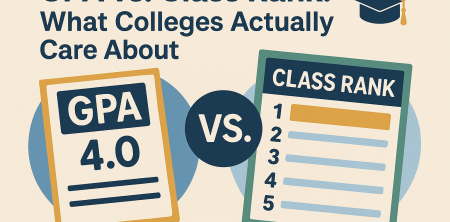
To grasp the significance of GPA vs Class Rank, we first need to define these terms. GPA, or Grade Point Average, is a numerical representation of a student's average performance across all classes, typically calculated on a 4.0 scale. It summarizes overall academic performance into a single metric that can be quickly assessed by admissions officers.
Class rank, on the other hand, places a student in context within their graduating class. It indicates the student's position relative to their peers, often expressed as a percentile. For instance, being ranked 10th in a class of 100 means you are in the top 10% of your peers. Understanding these definitions is essential for students who aim to optimize their college applications.
2. The Weight of GPA in College Admissions
When it comes to GPA, colleges typically view this figure as a key indicator of a student's academic capabilities. A higher GPA is often associated with a stronger work ethic, better study habits, and a commitment to education. Research shows that many colleges and universities, especially selective ones, prioritize GPA in their admissions decisions. For example, a study by the National Association for College Admission Counseling found that 81% of colleges consider GPA as a significant factor.
Moreover, GPA can offer insights into a student's performance in advanced courses, such as honors or AP classes. Colleges often look favorably upon students who challenge themselves academically, as this indicates a readiness for the rigors of college coursework. As such, maintaining a strong GPA is crucial, especially in a competitive academic environment.
3. How Class Rank Complements GPA
While GPA is a critical factor, class rank provides additional context. It illustrates where a student stands among their peers, which can be especially important in schools with varying grading standards. For example, a student with a GPA of 3.8 from a highly competitive school might be ranked lower than a student from a less competitive school with a GPA of 4.0.
Colleges often take this context into account when reviewing applications. Admissions officers might consider a student's class rank to assess the rigor of their academic environment. A high class rank can help demonstrate that a student not only excelled academically but also stood out among their peers, adding another layer to their academic profile.
4. The Importance of Course Rigor
Both GPA and class rank can be influenced by the types of courses students take. Colleges look favorably upon students who challenge themselves with advanced courses, as these classes are often more rigorous than standard coursework. For instance, taking AP, IB, or honors classes can boost GPA and enhance class rank, thereby strengthening an application.
Moreover, some schools employ a weighted GPA system, where courses such as AP or honors classes are assigned extra points. For example, an A in an AP class might be worth 5.0 instead of the standard 4.0. This system not only rewards students for taking challenging courses but also provides colleges with additional context when evaluating GPA. A student with a high weighted GPA may be viewed more favorably than one with a lower unweighted GPA, regardless of class rank.
5. Regional Differences in GPA vs Class Rank
The significance of GPA vs Class Rank can vary by region and even by individual colleges. For instance, in some parts of the United States, class rank may be a more critical factor due to the prevalence of class ranking systems in schools. In contrast, other regions may place a heavier emphasis on GPA due to differences in educational structures. (See: GPA and class rank in admissions.)
Additionally, some colleges and universities have explicitly stated their preference for GPA over class rank. For instance, the University of California system has moved away from class rank as a primary metric for admissions, focusing instead on GPA and standardized test scores. Understanding these regional and institutional preferences can help students tailor their applications more effectively.
6. Standardized Tests and Their Role
While this article focuses on GPA vs Class Rank, it’s essential to consider the role of standardized tests like the SAT or ACT in the college admissions landscape. Many colleges have adopted a test-optional policy, which has shifted the focus even more toward GPA and class rank. As a result, students with strong GPAs and impressive class ranks may stand out even more in applications, particularly in a landscape where standardized test scores are less emphasized.
However, for colleges that still require standardized tests, GPA can serve as a predictor of performance on these exams. Studies have shown that students with higher GPAs tend to perform better on standardized tests, further reinforcing the importance of maintaining a strong GPA throughout high school.
7. Beyond GPA and Class Rank: Other Factors to Consider
While GPA and class rank are significant components of a college application, they are not the only factors that admissions committees consider. Extracurricular activities, letters of recommendation, personal essays, and interviews can all play crucial roles in determining whether a student is admitted.
Colleges are increasingly looking for well-rounded students who demonstrate leadership skills, community involvement, and unique talents. For instance, a student with a lower GPA but exceptional extracurricular achievements might still gain admission if they showcase strong character and passion. This shift underlines the importance of not solely focusing on GPA vs Class Rank but also on building a comprehensive application.
8. How to Navigate GPA and Class Rank in Your Application
For students concerned about GPA vs Class Rank, it’s vital to strategize effectively for college applications. First, maintain a strong GPA by prioritizing your studies and seeking help when necessary. Consider taking advanced courses to not only boost your GPA but also enhance your class rank.
Additionally, be transparent about your academic environment. If your school has a rigorous curriculum, make sure to highlight this in your application. If your class rank is less favorable due to school policies or grading scales, explain these circumstances in your personal statement or supplemental essays. This can provide context that admissions officers appreciate.
9. The Future of GPA and Class Rank
As college admissions continue to evolve, the relevance of GPA vs Class Rank may also shift. Increasingly, colleges are adopting holistic admissions processes, relying less on strict numerical criteria. This trend may lead to a re-evaluation of how GPA and class rank are viewed in the context of an entire application.
Furthermore, with the growing movement toward test-optional policies, students may find their GPA and class rank gaining even more significance in college admissions. As a prospective student, staying informed about these trends can help you make strategic choices that align with your academic and career goals. Ultimately, understanding the nuances between GPA and class rank can empower you to present your strongest self in college applications.
10. A Closer Look at GPA Calculation Methods
When discussing GPA, it’s important to recognize that calculation methods can differ between schools. Most commonly, GPAs are calculated on a 4.0 scale, but some schools use weighted scales that can skew the numbers significantly. Weighted GPAs add extra points for advanced classes, making it possible for students to achieve GPAs higher than 4.0. For example, a student earning an A in an AP class may receive a 5.0 instead of a 4.0, allowing them to stand out in applications. This system can lead to confusion as students from different schools with varying grading standards may have GPAs that are not directly comparable.
Furthermore, the exact courses that contribute to a student's GPA may also vary. Some schools may include grades from electives, while others focus solely on core academic subjects. Because of these discrepancies, colleges often have to interpret GPAs within the context of the school's overall academic profile. (See: What colleges look for in applicants.)
11. Statistics on College Admissions Trends
Recent statistics indicate a notable trend in college admissions related to GPA vs Class Rank. According to the National Center for Education Statistics, about 70% of colleges consider GPA as a critical factor. In contrast, only about 40% of institutions place a significant emphasis on class rank. This disparity suggests that while class rank offers context, it may not hold as much weight in decision-making compared to GPA.
Another interesting statistic comes from the College Board, indicating that students with GPAs above 3.5 have a higher admission rate to selective colleges—about 50% compared to those with GPAs below 3.0, which only have an admission rate of around 20%. Such data underlines the importance of a strong GPA in the competitive admissions landscape.
12. Expert Perspectives on GPA vs Class Rank
Education experts emphasize the importance of understanding the role of GPA and class rank in admissions. Dr. Jane Smith, a college admissions consultant, asserts that while GPA is critical, class rank provides necessary context. "Admissions committees are looking for consistency and excellence. A high GPA from a school with a rigorous curriculum is more impressive than a perfect score from a less challenging environment," she explains.
Additionally, college admissions officer Tom Daniels notes that students should not solely focus on these metrics. "We want to see the whole student. GPA and class rank are important, but we also value creativity, leadership, and resilience. A student who has overcome challenges to maintain their GPA is often more compelling than one with perfect grades but no narrative." This perspective reinforces the idea that a holistic application can be just as vital as numerical metrics.
13. FAQs about GPA and Class Rank
What is considered a good GPA for college admissions?
Generally, a GPA of 3.0 or higher is viewed as competitive for many colleges. However, more selective institutions tend to look for GPAs of 3.5 and above.
Does class rank matter if my GPA is high?
Class rank can still provide helpful context for admissions officers. A high GPA from a school with a rigorous academic program can enhance your application, even if your class rank isn't as high.
How can I improve my GPA?
To improve your GPA, focus on studying effectively, enrolling in advanced classes, and seeking assistance when needed. Prioritizing your time and setting realistic academic goals can also help.
Can I still get into college if my GPA is low but my class rank is high?
Yes, a high class rank can sometimes compensate for a lower GPA, especially if you can demonstrate strong extracurricular involvement or exceptional talents in other areas.
Are there colleges that don’t consider class rank?
Yes, many colleges, particularly those that have moved towards a holistic review process, may not emphasize class rank as a key factor in admissions. It's always best to check the specific admissions criteria of each institution.
How should I present my GPA and class rank in my application?
Be honest and clear about your GPA and class rank. If applicable, provide context regarding your school's grading system, course rigor, or any challenges you've faced. This transparency can help admissions officers make informed decisions. (See: College admissions and GPA significance.)
14. Common Misconceptions about GPA and Class Rank
As students prepare their applications, several misconceptions about GPA and class rank can lead to confusion. One common myth is that higher class rank always equates to a better chance of college admission. While class rank is significant, it’s important to recognize that a competitive GPA often has a greater impact. For instance, a student ranked 50th in a class of 200 may have a devastatingly low GPA, while someone ranked 150th in a class of 400 with a high GPA could be a more attractive candidate.
Another misconception is that class rank is uniformly calculated across all schools. In reality, grading scales can differ significantly from one institution to another, making direct comparisons challenging. As previously mentioned, some schools use weighted GPAs, while others do not, which can skew perceptions of academic performance. Thus, students should focus on their individual achievements rather than just their rank.
15. The Impact of GPA and Class Rank on Scholarships
GPA and class rank can also significantly influence scholarship opportunities. Many merit-based scholarships consider these metrics when determining eligibility. For example, organizations might require applicants to meet a minimum GPA or be in the top percentage of their class to qualify. Some states even offer automatic scholarships to students who achieve certain GPA thresholds or rank within a specified percentile of their graduating class.
Additionally, private universities and colleges often provide scholarships based on academic achievements, meaning those with a high GPA and favorable class rank could have access to more funding opportunities. Students should research specific scholarships and their eligibility requirements to ensure they present the best application possible.
16. Handling GPA and Class Rank in a Competitive Environment
In a highly competitive academic environment, students often feel pressure to outperform their peers. If you’re in a rigorous program where the competition is fierce, it’s essential to focus on personal growth rather than just numbers. While it’s worthwhile to strive for a high GPA or a top class rank, it’s also vital to develop coping strategies to manage stress and avoid burnout.
Consider setting realistic goals and tracking your own progress rather than focusing only on others’ achievements. Engaging in study groups can foster collaboration rather than competition, allowing you to learn from peers while maintaining your mental well-being. Remember that colleges appreciate resilience and personal stories, so don’t hesitate to share your unique experiences in your applications.
17. Conclusion: Making GPA and Class Rank Work for You
As you prepare for the college admissions process, it's essential to understand the nuances of GPA vs Class Rank. Both metrics play distinct roles in how colleges evaluate applications. By maintaining a strong GPA, taking challenging courses, and highlighting class rank effectively, you can present a well-rounded application that captures your academic prowess and potential. Remember, the college admissions process is evolving, and staying informed will help you make the best choices for your future.
```
Trending Now
Frequently Asked Questions
What is the difference between GPA and class rank?
GPA, or Grade Point Average, is a numerical representation of a student's overall academic performance on a 4.0 scale. Class rank indicates a student's position relative to peers within their graduating class, often expressed as a percentile. While GPA summarizes individual performance, class rank provides context within the cohort.
How important is GPA for college admissions?
GPA is a crucial metric for college admissions, with many institutions viewing it as a key indicator of academic capability. Research indicates that 81% of colleges consider GPA a significant factor, associating higher GPAs with strong work ethics and commitment to education.
Do colleges prefer GPA or class rank?
Colleges generally prioritize GPA over class rank since it offers a direct measure of academic performance. However, class rank can provide valuable context, especially in competitive environments, allowing admissions officers to assess a student's standing among peers.
Can a high class rank compensate for a low GPA?
While a high class rank may enhance a student's application, it typically cannot fully compensate for a low GPA. Colleges often look for consistent academic performance, and a strong GPA is usually seen as a better indicator of readiness for college-level work.
What factors do colleges consider besides GPA and class rank?
In addition to GPA and class rank, colleges consider various factors, including standardized test scores, personal statements, letters of recommendation, extracurricular activities, and interviews. These elements collectively provide a holistic view of a student's qualifications and potential.
What did we miss? Let us know in the comments and join the conversation.

