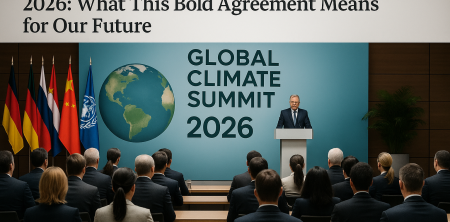
Setting the Scene for Climate Action
The Global Climate Summit 2026 has become the talk of the town, and for good reason. In a groundbreaking move, representatives from 195 nations reached an unprecedented agreement aimed at drastically reducing greenhouse gas emissions. This crucial pact signals a monumental shift in how the world approaches climate change, marking a hopeful yet contentious chapter in global environmental policy.
A Closer Look at the Agreement
At the heart of the Global Climate Summit 2026 is a commitment to ambitious emission reduction targets that aim to curb the rising temperatures threatening our planet. Countries have pledged to collectively reduce carbon emissions by 50% by 2030, targeting net-zero emissions by 2050. This timeline is tighter than many experts initially thought feasible, but it reflects a rejuvenated global urgency to address climate change.
One significant aspect of this agreement is that it goes beyond mere targets; it includes mechanisms for accountability and transparency. Nations are required to report their progress regularly, creating a system of checks and balances designed to ensure compliance. This level of commitment could be a game-changer in the fight against climate change.
Widespread Reactions and Social Media Buzz
The announcement of this historic agreement quickly spread across social media platforms, sparking intense discussions among environmentalists, policymakers, and concerned citizens. The hashtags #GlobalClimateSummit2026 and #ClimateActionNow have surged in popularity, with millions sharing their thoughts and reactions.
While many hailed the agreement as a significant step forward, others raised concerns about its feasibility. Critics argue that the ambitious reduction targets may not be achievable for many nations, especially those with economies heavily reliant on fossil fuels. This debate has ignited a firestorm of commentary online, showcasing a divide between those optimistic about the agreement and those skeptical of its implementation.
Balancing Economic Growth and Environmental Sustainability
One of the most contentious issues arising from the Global Climate Summit 2026 is the tension between economic growth and environmental sustainability. Nations are struggling to find a balance between meeting their economic goals and adhering to the newly established climate targets. For countries like India and China, where rapid industrialization has fueled economic growth, the stakes are particularly high.
The challenges are not just limited to developing nations. Even developed countries face hurdles, as industries push back against regulations they fear could stifle economic progress. This conflict between environmental policies and economic imperatives raises questions about whether the ambitious targets set by the Global Climate Summit 2026 can truly be achieved without significant sacrifices.
The Role of Businesses in Climate Action
As nations come to grips with the implications of this landmark agreement, businesses are also feeling the pressure to adapt. Companies across various sectors are beginning to rethink their strategies in light of the new regulations. This shift is particularly evident in industries known for high carbon footprints, such as energy, transportation, and manufacturing.
Many corporations are now committing to sustainability initiatives and carbon neutrality goals, reflecting a growing awareness that consumer preferences are shifting towards more environmentally friendly practices. In fact, some experts suggest that businesses that embrace these changes early on may find themselves at a competitive advantage in the future.
Global Climate Summit 2026: A Catalyst for Change
What makes the Global Climate Summit 2026 particularly impactful is its potential to act as a catalyst for broader climate action. The agreement highlights the interconnectedness of global economies and the urgent need for collaboration. With nations agreeing to hold each other accountable, there’s a chance to foster a collective spirit of responsibility.
Moreover, this summit serves as a reminder that climate change is not just an environmental issue; it's a global economic challenge that could redefine industries and reshape geopolitical relations. The ripple effects of the agreement could influence trade agreements, investment strategies, and technological innovations for years to come.
Finding Realistic Pathways to Achieve Goals
While the ambitious targets set at the Global Climate Summit 2026 have generated excitement, the real question remains: How will countries achieve these goals? Experts agree that a multifaceted approach is essential. Transitioning to renewable energy sources, increasing energy efficiency, and adopting sustainable agricultural practices are just a few pathways nations can take.
For instance, countries like Denmark and Sweden are already leading the way by investing heavily in wind and solar energy. Their experiences could serve as valuable blueprints for others aiming to meet their targets. At the same time, technological innovation will play a crucial role in this transition, as new advancements can provide the tools needed to reduce emissions effectively. (See: COP26 Climate Change Conference Overview.)
The Debate Over Feasibility
Despite the optimism surrounding the Global Climate Summit 2026, skepticism persists regarding the feasibility of such ambitious goals. Critics caution that without substantial financial and technical support, many nations—especially developing ones—may struggle to meet their commitments. The disparity between developed and developing nations could lead to tensions, with wealthier countries urged to assist their less affluent counterparts in achieving sustainability.
This disparity raises an important question: Will wealthier nations step up to provide the necessary resources? The history of climate negotiations is littered with broken promises, leading many to wonder if this time will be different. The commitment to accountability in the new agreement may provide some assurance, but the proof will ultimately be in the implementation.
Voices from the Frontlines: Environmental Activists Weigh In
Environmental activists have been vocal about the implications of the Global Climate Summit 2026. Many see the agreement as a crucial step towards climate justice, arguing that it provides a framework for addressing the inequities exacerbated by climate change. Activists emphasize the need for nations to prioritize marginalized communities in their climate policies, ensuring they are not left behind in the transition to a greener economy.
However, some activists express disappointment over specific loopholes in the agreement, worrying that they might allow nations to evade their responsibilities. These concerns highlight the need for vigilance and advocacy in the coming months and years, as the world monitors progress and pushes for stronger commitments.
The Path Ahead: Will the Agreement Stand the Test of Time?
The Global Climate Summit 2026 may be a defining moment in the fight against climate change, but the real challenge lies ahead. The agreement has sparked a wave of hope and urgency, but whether it will translate into meaningful action remains to be seen. As nations prepare to implement their commitments, the eyes of the world will be watching closely.
Ultimately, the success of this unprecedented agreement will depend not only on the willingness of countries to follow through but also on the engagement of citizens, businesses, and civil society. We all have a role to play in shaping the future of our planet, and the stakes have never been higher. Will this be the turning point in our battle against climate change? Only time will tell.
Understanding the Economic Implications
The economic implications of the Global Climate Summit 2026 are vast and multifaceted. As countries commit to reducing greenhouse gas emissions, industries must adapt to new regulations, which can either spur innovation or lead to significant economic challenges. Sectors such as coal mining and oil extraction are projected to face the most significant disruption. The shift towards renewable energy sources, while necessary for environmental sustainability, may lead to job losses in traditional energy sectors.
In contrast, the rise of the green economy presents opportunities for job creation in renewable energy, energy efficiency, and sustainable agriculture. According to a report by the International Renewable Energy Agency, the renewable energy sector alone could create over 24 million jobs globally by 2030. This shift highlights the importance of investing in workforce development and retraining programs to ensure a smooth transition for workers displaced by the move away from fossil fuels.
Technological Innovations Driving Change
Technology will undoubtedly play a pivotal role in achieving the goals set at the Global Climate Summit 2026. Innovations in various fields, including energy storage, electric vehicles, and smart grid technologies, are crucial for reducing emissions. For example, advancements in battery technology are making electric vehicles more accessible and efficient, which could significantly lower carbon emissions from the transportation sector.
Furthermore, carbon capture and storage (CCS) technologies are gaining traction as a means to mitigate emissions from industrial processes. Countries like Norway have been at the forefront of CCS initiatives, demonstrating that it is possible to capture and store large amounts of CO2. As these technologies become more mainstream, they could help countries meet their climate targets while continuing to rely on existing industrial infrastructure.
Global Cooperation and Climate Finance
One of the critical components of the Global Climate Summit 2026 is the emphasis on global cooperation and climate finance. Wealthier nations have historically pledged financial assistance to developing countries to help them transition to greener economies. However, the effectiveness of these commitments has often been questioned.
At the summit, discussions focused on ensuring that climate finance is both adequate and accessible. The Green Climate Fund, established to assist developing countries in climate mitigation and adaptation efforts, aims to mobilize $100 billion annually. The success of this fund will depend on the political will of donor countries and the ability of recipient nations to effectively utilize these resources.
Frequently Asked Questions (FAQ)
What is the Global Climate Summit 2026?
The Global Climate Summit 2026 is an international conference where representatives from 195 nations negotiated a groundbreaking agreement aimed at significantly reducing greenhouse gas emissions, with targets of a 50% reduction by 2030 and net-zero emissions by 2050.
Why are the targets set at the summit considered ambitious?
The targets are considered ambitious because they require countries to make substantial changes to their energy and economic systems in a relatively short time frame. Many nations have historically struggled to meet previous climate commitments, making the new targets a challenging endeavor. (See: Climate Change and Health Fact Sheet.)
How will the agreement be enforced?
Nations are required to report their progress regularly, creating a system of accountability. This transparency aims to ensure compliance, though the enforcement mechanisms may vary by country and jurisdiction.
What role do businesses play in this agreement?
Businesses are increasingly seen as crucial partners in achieving the targets set by the Global Climate Summit 2026. Many companies are adopting sustainability initiatives and carbon neutrality goals to align with the global movement towards a greener economy.
How can individuals contribute to climate action following the summit?
Individuals can contribute by advocating for policy changes, supporting sustainable businesses, reducing their carbon footprint, and raising awareness about climate issues within their communities.
What are the potential economic impacts of this agreement?
The agreement could lead to job creation in the renewable energy sector, but it may also cause job losses in traditional energy industries. Thus, workforce development initiatives will be essential to support affected workers.
What technological advancements are expected to arise from the summit's goals?
Advancements in battery technology, carbon capture and storage, and renewable energy systems are expected to emerge as vital components in reducing emissions and achieving the targets set at the summit.
Is there a plan for financial support for developing countries?
Yes, the summit emphasized the importance of climate finance, with discussions around the Green Climate Fund aiming to mobilize financial resources to assist developing countries in their climate initiatives and transitions.
Exploring the Role of Youth in Climate Action
The Global Climate Summit 2026 has also seen an incredible surge of youth involvement, with young activists and organizations playing a pivotal role in advocating for meaningful climate action. Movements led by youth have highlighted the urgency of climate issues, igniting conversations that sometimes go beyond what policymakers are willing to address.
For example, the Fridays for Future movement, initiated by Swedish activist Greta Thunberg, has mobilized millions of young people around the world. This grassroots movement emphasizes the importance of listening to the science of climate change and urging leaders to act before it's too late. Their passionate advocacy not only raises awareness but also holds leaders accountable for their commitments.
Youth participation is crucial because they are the ones who will inherit the consequences of today's decisions. As such, their voices are increasingly being recognized as essential to shaping effective climate policies. In fact, many of the agreements made at the summit include provisions for increasing youth engagement in climate action, recognizing the need for their innovative ideas and energy in tackling the climate crisis.
International Collaboration in Climate Research
International collaboration in climate research has gained momentum in the wake of the Global Climate Summit 2026. Countries are beginning to realize that sharing knowledge and resources is vital for addressing the complex and interconnected challenges posed by climate change. Collaborative research efforts can lead to advancements in understanding climate impacts, developing new technologies, and creating effective adaptation strategies.
Institutions like the Intergovernmental Panel on Climate Change (IPCC) have been instrumental in compiling and disseminating research findings globally. The summit has further emphasized the importance of integrating scientific research into policy-making processes, ensuring that decisions are rooted in empirical evidence rather than political expediency.
For example, countries are encouraged to participate in joint studies on climate resilience, biodiversity, and adaptation strategies. This collaborative approach can enhance the effectiveness of climate action efforts and promote innovative solutions that would be difficult to achieve in isolation. By pooling resources and expertise, nations can better tackle the multifaceted nature of climate change.
The Significance of Local Initiatives
While global agreements are crucial, local initiatives often provide the foundation for meaningful climate action. Communities around the world are mobilizing to implement sustainable practices at the grassroots level, showcasing that change can start from the ground up. Local governments and organizations are developing climate action plans tailored to their unique challenges and opportunities. (See: Nature article on climate agreements.)
For instance, cities are increasingly adopting urban greening initiatives, investing in public transportation systems, and promoting local food production to reduce their carbon footprints. These localized efforts not only contribute to emission reductions but also enhance community resilience and quality of life.
The Global Climate Summit 2026 has recognized the importance of integrating local experiences and knowledge into broader climate strategies. By empowering local actors, the international community can harness a wealth of innovative solutions that reflect the diverse realities of different regions. Such initiatives can serve as powerful examples, inspiring others to take action and demonstrating that effective climate solutions are often found outside traditional frameworks.
Addressing Climate Justice: The Ethical Dimension of Climate Action
As the Global Climate Summit 2026 unfolds, discussions about climate justice have emerged as a critical ethical dimension of climate action. Climate change disproportionately affects vulnerable populations, particularly those in developing countries, indigenous communities, and marginalized groups. Addressing these inequalities is essential for achieving meaningful and equitable climate solutions.
Climate justice advocates argue that countries and corporations most responsible for greenhouse gas emissions have a moral obligation to support those who are least equipped to adapt to climate impacts. This includes providing financial resources, technology transfer, and capacity-building efforts to empower affected communities.
At the summit, frameworks for integrating climate justice into national climate action plans were discussed. This includes ensuring that vulnerable populations are involved in decision-making processes and that their voices are heard. By prioritizing equity in climate policies, the summit seeks to create a more just and sustainable future for all.
The Importance of Education and Awareness
Education plays a fundamental role in addressing climate change, and the Global Climate Summit 2026 emphasizes the need for comprehensive climate education. Understanding the science of climate change, its impacts, and potential solutions is crucial for creating informed citizens who can advocate for effective policies and practices.
Educational institutions at all levels are encouraged to incorporate climate change topics into their curricula, fostering a generation of environmentally literate individuals. This can empower students to engage in climate action, whether through activism, community projects, or pursuing careers in sustainability.
Public awareness campaigns are equally important. Governments and organizations are called upon to communicate climate issues in ways that resonate with diverse audiences, using storytelling and accessible language to convey the urgency of the situation. Engaging the general public in climate discussions can lead to increased pressure on policymakers to act decisively and collaboratively.
Conclusion
The Global Climate Summit 2026 marks a pivotal moment in the global response to climate change. With ambitious goals, a focus on accountability, and the potential for widespread economic transformation, the agreement will shape the future of environmental policy. As we move forward, it's essential for nations, businesses, and individuals to work collaboratively to ensure that the commitments made at this summit are not just words on paper but lead to meaningful change for our planet.
Trending Now
Frequently Asked Questions
What was agreed upon at the Global Climate Summit 2026?
At the Global Climate Summit 2026, representatives from 195 nations reached an agreement to collectively reduce carbon emissions by 50% by 2030, aiming for net-zero emissions by 2050. This ambitious pact includes mechanisms for accountability and transparency to ensure compliance among participating countries.
Why is the Global Climate Summit 2026 significant?
The Global Climate Summit 2026 is significant because it marks a historic commitment from 195 nations to tackle climate change with ambitious emission reduction targets. This agreement reflects a renewed urgency to address global warming and introduces accountability measures aimed at ensuring nations meet their commitments.
What are the targets set by countries at the summit?
Countries at the Global Climate Summit 2026 have pledged to cut carbon emissions by 50% by 2030, with a long-term goal of achieving net-zero emissions by 2050. These targets are considered aggressive and highlight the increasing urgency of addressing climate change.
How have people reacted to the Global Climate Summit 2026?
The announcement of the Global Climate Summit 2026 agreement has sparked widespread reactions on social media, with hashtags like #GlobalClimateSummit2026 and #ClimateActionNow trending. While many celebrate the agreement as a major step forward, critics express concerns about the feasibility of such ambitious targets, particularly for fossil fuel-dependent economies.
What mechanisms are included in the climate agreement?
The climate agreement from the Global Climate Summit 2026 includes mechanisms for accountability and transparency, requiring nations to regularly report their progress. This system aims to create checks and balances to ensure compliance with the ambitious emission reduction targets set by the participating countries.
Agree or disagree? Drop a comment and tell us what you think.

