```html
When it comes to children's cognitive development, the concept of concrete operational thinking is a crucial milestone. This stage, typically occurring between the ages of 7 and 11, is characterized by the ability to think logically about concrete events. One of the fundamental aspects of this stage is the principle of conservation, which refers to a child's understanding that certain properties of objects remain constant, even when their form changes. For parents, grasping the significance of conservation in concrete operational thinking can offer valuable insights into how their children learn and interact with the world around them.
What is Concrete Operational Thinking?
Concrete operational thinking is a term popularized by developmental psychologist Jean Piaget. It marks the third of his four stages of cognitive development, following the preoperational stage, which occurs from about 2 to 7 years old. During the concrete operational stage, children begin to think logically and systematically. They gain a better understanding of the world and can perform operations mentally rather than through trial and error.
This stage is fundamental for various reasons. It lays the groundwork for more complex reasoning skills that children will use as they progress into adolescence and adulthood. Importantly, concrete operational thinking is not just about logical reasoning; it also involves an understanding of relationships, categorization, and cause and effect.
Understanding Conservation
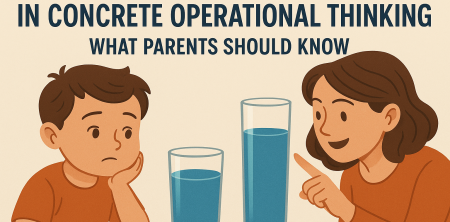
Conservation is a concept that children typically understand during the concrete operational stage. It involves recognizing that certain attributes of objects remain unchanged despite changes in their appearance. For instance, a child may realize that when water is poured from a tall, narrow glass into a short, wide bowl, the amount of water remains the same, despite its different shape. This understanding is crucial for children's logical thinking and problem-solving skills.
There are several types of conservation that children learn about during this stage:
- Volume: Understanding that the amount of liquid remains the same regardless of the container's shape.
- Mass: Recognizing that two balls of clay, when flattened, still have the same mass even though they appear different.
- Number: Knowing that the number of items remains constant even if they are spaced out or rearranged.
- Length: Realizing that two sticks of the same length remain equal in length even when one is moved.
The Importance of Conservation in Learning
Conservation is not just a cognitive trick; it's an essential part of a child's overall development. Understanding these principles helps children make sense of the world and develop critical thinking skills. When children grasp the idea of conservation, they can better tackle problems, think logically, and approach challenges with a more structured mindset.
Learning about conservation also enhances children's ability to work through mathematical problems. For instance, understanding that the number of objects stays the same, regardless of arrangement, is foundational for grasping addition and subtraction. Similarly, recognizing that liquid volume remains the same regardless of the container aids in understanding measurement.
How Parents Can Support Their Children’s Understanding of Conservation
As a parent, you play a pivotal role in helping your child navigate the complexities of concrete operational thinking. Here are some practical tips to foster an understanding of conservation:
- Engage in Playful Learning: Use games and activities that incorporate measuring, pouring, and sorting. For example, involve your child in cooking or baking, where measuring liquids and solids can reinforce the concept of conservation.
- Utilize Everyday Situations: Everyday experiences like grocery shopping can provide opportunities to discuss conservation. Ask questions such as, “If we have five apples and we eat one, how many do we have left?”
- Encourage Exploration: Allow your children to experiment with different materials. For example, give them different shaped containers and ask them to predict whether the amount of water or sand will be the same or different.
- Be Patient: Every child develops at their own pace. Some might grasp these concepts quickly, while others may need more time and reinforcement.
Real-Life Examples of Conservation
To further understand conservation, let’s consider some real-life scenarios that illustrate how children can exhibit this cognitive ability:
- Pouring Water: A child who understands conservation will know that pouring water from a tall, slender glass into a short, wide bowl does not change the amount of water, even though the height of the water appears different.
- Clay Manipulation: When given two balls of clay, a child can flatten one and understand that both pieces still have the same amount of clay, demonstrating knowledge of mass conservation.
- Counting Objects: If you spread out a set of blocks, children who understand conservation will recognize that the number of blocks remains unchanged, even if they appear more spread out.
Challenges to Understanding Conservation
While many children grasp these concepts by age seven, some may struggle with conservation. This can be influenced by various factors, including cognitive delays, lack of exposure to relevant experiences, or even cultural differences in educational practices. (See: Cognitive development overview.)
For example, children from different backgrounds may have varying levels of access to educational materials or parental engagement in learning activities. In such cases, it’s essential for parents and educators to provide additional support and targeted interventions to help those children catch up.
The Role of Educators in Fostering Conservation Awareness
Educators play a critical role in reinforcing the understanding of conservation in the classroom. They can use hands-on activities that promote exploration and inquiry-based learning. For instance, a teacher might set up science experiments that require students to measure substances, compare weights, or classify items according to volume.
Additionally, educators can facilitate group discussions to encourage children to articulate their understanding of conservation principles. This can lead to deeper cognitive processing and help solidify their knowledge. Teachers can also collaborate with parents, sharing resources and strategies to ensure that learning continues beyond the classroom.
The Long-term Impact of Understanding Conservation
Grasping conservation extends beyond immediate academic success; it lays the foundation for future learning and critical thinking. Children who understand these concepts are better equipped to tackle more complex mathematical and scientific ideas later in life.
Moreover, the skills developed during this stage — logical reasoning, problem-solving, and the ability to analyze situations — are invaluable throughout a child's educational journey and beyond. These skills contribute to personal and professional success, making early understanding of conservation a vital stepping stone in a child's development.
Current Trends in Education and Conservation
In recent years, educators have increasingly recognized the importance of concrete operational thinking and conservation in early education. Curricula now often emphasize experiential learning, where students engage directly with materials and concepts rather than passively receiving information.
Furthermore, technology in education is supporting these learning processes, with interactive apps and games designed to enhance children's understanding of mathematical concepts, including conservation. For example, virtual manipulatives allow children to visualize and interact with numbers and quantities, reinforcing their understanding in a fun, engaging way.
Concrete Operational Thinking and Real-World Applications
Understanding concrete operational thinking has practical implications that go beyond the classroom. This cognitive milestone influences how children interact with the world, making it critical for parents and educators to nurture these skills. For instance, children's ability to categorize and sort items improves their organizational skills. They can manage their belongings, follow rules for games, and even plan their activities better. These skills extend into later life, where the ability to formulate logical arguments and reason through problems becomes essential.
In real-world scenarios, such as planning a birthday party or organizing a school project, children utilize their conservation skills. They can understand that if they have a certain number of balloons, they need to account for how many guests will attend. This kind of logical reasoning helps them develop not just academically, but also socially, as they learn to negotiate and communicate with peers effectively.
Statistics on Cognitive Development during Concrete Operational Stage
Research highlights the significance of the concrete operational stage in cognitive development. Studies show that children in this age group who demonstrate strong conservation skills tend to perform better in standardized tests of mathematics and science. A study published in the Journal of Educational Psychology revealed that 78% of children who understood conservation concepts scored in the top quartile of math achievement tests.
Moreover, longitudinal studies have shown that children who struggle with conservation often need additional support, with approximately 30% of them falling behind in later academic years. This emphasizes the need for targeted early interventions to ensure that all children achieve this cognitive milestone. (See: Positive parenting and learning.)
Expert Perspectives on Concrete Operational Thinking
Experts in child psychology and education agree on the importance of fostering concrete operational thinking. Dr. Sarah Thompson, a child development specialist, states, “Concrete operational thinking is where children start to connect dots. They begin to understand relationships and make sense of the world around them. As educators and parents, we must provide them with the tools and experiences that will enhance these skills.”
Similarly, educational psychologist Dr. Mark Reynolds emphasizes the need for experiential learning: “Hands-on experiences are invaluable. When children can manipulate objects and see the outcomes of their actions, it solidifies their understanding of concepts like conservation.”
Frequently Asked Questions (FAQ)
What age do children typically reach the concrete operational stage?
Children usually enter the concrete operational stage between ages 7 and 11. However, the exact age can vary based on individual development and environmental factors.
How can I tell if my child understands conservation?
You can observe your child's ability to recognize that the properties of objects remain the same despite changes in form. For example, ask them to compare the volume of water in differently shaped containers or to rearrange objects and see if they understand that the number remains constant.
Are there specific activities to promote concrete operational thinking?
Yes! Activities that involve measurement, sorting, and categorization can be very effective. Consider engaging your child in cooking (measuring ingredients), gardening (sorting plants), or playing games that require counting and strategy.
What if my child is struggling with conservation concepts?
If you notice your child is struggling, it can be helpful to provide more hands-on learning experiences and to reinforce these concepts through play. Working with educators and possibly seeking additional resources like tutoring can also support their development.
Why is understanding concrete operational thinking important for parents and educators?
Understanding concrete operational thinking allows parents and educators to create supportive learning environments and to choose teaching methods that align with children's cognitive abilities. This understanding helps children thrive academically and socially.
New Insights: Concrete Operational Thinking in Diverse Educational Settings
In today’s diverse educational landscape, understanding concrete operational thinking requires awareness and adaptation to various learning styles and cultural contexts. Different educational systems around the world emphasize different aspects of cognitive development. For example, in some Asian educational systems, there is a strong focus on rote memorization and standardized testing, which may not fully address the need for experiential learning crucial for developing concrete operational thinking.
On the other hand, progressive educational approaches, like Montessori, prioritize hands-on learning and encourage exploration, which aligns well with the principles of concrete operational thinking. This highlights the importance of adapting teaching methods to fit the needs of diverse learners, ensuring that all children have the opportunity to develop essential cognitive skills.
The Impact of Digital Learning Tools
As technology becomes more integrated into education, digital learning tools are being developed to support concrete operational thinking. Interactive platforms such as educational games and apps provide children with virtual manipulatives, allowing them to experiment with numbers, shapes, and conservation concepts in an engaging way.
Research indicates that children who use digital tools that promote logical reasoning and problem-solving demonstrate improved understanding of concrete operational concepts. For example, platforms that simulate real-world scenarios, like managing a budget or planning an event, enable children to apply their conservation skills in practical contexts.
Concrete Operational Thinking and Emotional Intelligence
Interestingly, concrete operational thinking also intersects with emotional intelligence. As children develop logical reasoning, they also begin to understand others' perspectives, a crucial aspect of emotional intelligence. When children learn to categorize their own feelings and the feelings of others, they begin to empathize and relate better to their peers.
This development can be critical during social interactions, where reasoning and empathy work hand-in-hand. For instance, a child might understand that their friend's disappointment over a missed playdate is valid, showing that they can connect logical thought with emotional understanding. This dual development supports healthier social relationships and fosters better communication skills.
Future Implications of Concrete Operational Thinking
The implications of developing strong concrete operational thinking skills extend beyond academic performance. Children who master these skills are more likely to develop critical thinking abilities that will serve them well in adulthood. As they encounter complex problems in their personal and professional lives, their ability to analyze situations, think logically, and apply learned concepts will be invaluable.
Moreover, fostering an environment where inquiry and exploration are encouraged not only enhances academic readiness but also cultivates lifelong learners. The skills gained during the concrete operational stage form a bedrock for future cognitive development, preparing children for the challenges they will face in an increasingly complex world.
Conclusion: The Path Forward for Parents and Educators
Understanding conservation within the framework of concrete operational thinking is essential for fostering a child's cognitive development. Parents and educators can work together to create rich learning environments that support children's exploration of these concepts. Whether through playful learning, everyday experiences, or supportive educational practices, the goal remains the same: to help children thrive in their understanding of the world around them. By prioritizing this foundation, we can equip children with the tools they need for lifelong learning and success.
```
Trending Now
Frequently Asked Questions
What is concrete operational thinking in children?
Concrete operational thinking is a stage in cognitive development defined by Jean Piaget, typically occurring between ages 7 and 11. During this phase, children develop logical thinking about concrete events, understanding relationships, categorization, and cause and effect, which are essential for their cognitive growth.
What is the principle of conservation in child development?
The principle of conservation refers to a child's ability to understand that certain properties of objects, such as volume or mass, remain unchanged even when their form or appearance changes. This understanding generally develops during the concrete operational stage of cognitive development.
Why is conservation important for children's learning?
Conservation is vital for children's learning as it enhances their logical thinking and problem-solving abilities. By grasping this concept, children can better understand the world around them, leading to improved reasoning skills as they progress into adolescence and adulthood.
At what age do children develop concrete operational thinking?
Children typically develop concrete operational thinking between the ages of 7 and 11. This stage marks a significant transition in their cognitive abilities, allowing them to think logically about concrete situations rather than relying solely on trial and error.
How can parents support their child's understanding of conservation?
Parents can support their child's understanding of conservation by engaging them in activities that involve comparing quantities, such as pouring liquids between different containers. Discussing and explaining the concept during everyday situations can also reinforce their understanding of how certain properties remain constant despite changes in appearance.
What did we miss? Let us know in the comments and join the conversation.

