```html
Understanding conservation in child development is crucial for parents, educators, and anyone involved in child psychology. But what does conservation mean in this context? Essentially, it refers to a child's ability to recognize that certain properties of objects, such as volume, mass, and number, remain unchanged even when their forms or appearances change. This cognitive milestone is part of the broader developmental theories proposed by psychologists like Jean Piaget, who emphasized the stages through which children progress as they develop their thinking abilities.
The Foundations of Conservation
Conservation is a key concept in Piaget's theory of cognitive development, which breaks down child growth into four stages: sensorimotor, preoperational, concrete operational, and formal operational. Conservation typically emerges during the concrete operational stage, which spans from about ages 7 to 11. But what does this really mean for parents and educators? Understanding this progression helps us better support children as they learn and grow.
Piaget’s Stages of Development
Before diving into conservation specifically, it’s important to grasp Piaget’s overall framework. Children move through these stages at different rates, influenced by a combination of biological maturation and environmental factors. Here’s a brief overview of each stage:
- Sensorimotor Stage (0-2 years): Children learn through sensory experiences and manipulating objects. They begin to understand that their actions can affect their environment.
- Preoperational Stage (2-7 years): This is marked by symbolic thinking, egocentrism, and the development of language. Children start to engage in pretend play but struggle with understanding others' perspectives.
- Concrete Operational Stage (7-11 years): At this stage, children develop logical thinking about concrete objects. This is where conservation skills start to emerge.
- Formal Operational Stage (12 years and up): Adolescents can think abstractly, reason logically, and formulate hypotheses.
What Does Conservation Look Like?
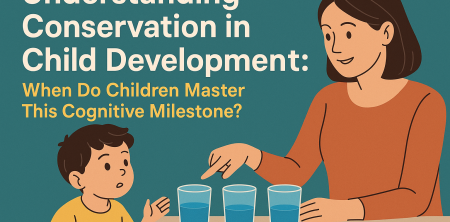
When we talk about conservation in child development, we're primarily looking at several types: conservation of number, mass, volume, and length. To illustrate, consider a classic conservation task involving liquid volume. If you pour water from a short, wide glass into a tall, thin glass, a child who has not yet mastered conservation may insist the taller glass holds more liquid simply because of its height. A child who understands conservation will recognize that the amount of liquid remains constant, despite the change in appearance.
This understanding develops through experiences and interactions with their environment. As children engage in play, education, and observation, they begin to grasp that changes in appearance don’t equate to changes in quantity.
The Role of Social Interaction
Social interaction is vital in aiding the development of conservation skills. Vygotsky, a contemporary of Piaget, emphasized the importance of social context in learning. Children often learn by observing and interacting with peers and adults. Discussions about everyday occurrences—like sharing snacks or dividing toys—can help them grasp the concept of conservation more effectively.
Group activities that require children to work together to solve problems or perform tasks involving measurement and comparison can significantly enhance their understanding of conservation. For instance, asking children to divide a pizza or share toys can provide practical and relatable scenarios to practice these skills.
Practical Activities to Foster Conservation Skills
Encouraging conservation in child development doesn’t have to be limited to formal education. There are numerous fun and practical activities that parents and teachers can implement:
- Water Play: Fill different shaped containers with water and ask children to predict which has more. Then, let them pour the water between containers to observe changes in volume.
- Cooking Together: Measuring ingredients not only engages children in a fun activity but also helps them learn about measurement and quantity.
- Sorting Games: Use everyday objects like buttons or toys and ask children to sort them by size, shape, or color, discussing how the quantity remains the same even if the arrangement changes.
- Puzzles and Building Blocks: Working with puzzles or blocks encourages logical thinking and spatial awareness, both important for grasping conservation.
Milestones and Age Ranges
Recognizing when children typically master conservation can help caregivers and educators tailor their approaches. While the general age range for this skill is between 7 and 11 years, it’s essential to acknowledge individual differences. Factors such as the child’s environment, exposure to educational opportunities, and personal interests can all play a role in when they master these skills.
Research suggests that children may begin to show some understanding of conservation as early as age 5, particularly with simple tasks involving number and mass. However, for more complex conservation tasks involving volume and length, mastery usually occurs later in the concrete operational stage. (See: Cognitive development overview on Wikipedia.)
Challenges in Learning Conservation
While many children will successfully develop conservation skills, some may struggle with this cognitive milestone. Challenges can stem from a variety of sources, including cognitive delays, lack of exposure to stimulating environments, or learning disabilities. It's crucial to observe how a child interacts with tasks involving conservation.
If a child demonstrates persistent difficulty, it may indicate a need for additional support. Educational interventions, such as one-on-one tutoring or specialized programs, can help reinforce these concepts in a more tailored manner.
The Connection to Other Cognitive Skills
Conservation is not an isolated skill; it connects to various other cognitive abilities. Mastery of conservation can enhance a child's overall mathematical understanding and logical reasoning. For instance, recognizing that the number of objects remains constant despite their arrangement fosters foundational skills necessary for addition and subtraction.
Moreover, conservation skills are linked to a child's ability to engage in scientific thinking and problem-solving. As they learn to analyze changes in properties and quantities, they become better equipped to tackle complex tasks, setting the stage for future academic success.
Current Relevance in Education
With the advent of modern educational methodologies and policies, the significance of conservation in child development is more relevant than ever. Schools are increasingly recognizing that cognitive milestones like conservation are integral to a child's readiness for higher-level learning. Curricula are evolving to include more hands-on, experiential learning that promotes critical thinking and problem-solving skills, which are essential for mastering conservation.
Additionally, educators are being trained to recognize the unique learning trajectories of their students, allowing for personalized instruction. This means that rather than a one-size-fits-all approach, education can be tailored to meet students at their current level and help them progress at their own pace, particularly in areas like conservation.
Future Research Directions
As understanding of conservation in child development grows, ongoing research continues to explore how best to teach and reinforce these skills. Current studies are delving into various factors influencing conservation mastery, such as cultural differences, the impact of technology, and how different teaching methods affect learning outcomes.
For example, researchers are examining how digital tools can support traditional learning methods, potentially offering interactive environments that foster conservation skills. This could lead to innovative educational practices that engage children in new and exciting ways.
The Impact of Cultural Context on Conservation
One fascinating area of research is how cultural context influences the development of conservation skills in children. Cultural practices determine the types of interactions and experiences children have, which can, in turn, affect their cognitive development. For instance, children from cultures that emphasize collective sharing and communal living may develop conservation skills differently compared to those from individualistic societies.
Studies have shown that children exposed to more diverse experiences in terms of materials and social interactions tend to grasp conservation concepts earlier. For example, children who frequently engage in diverse play scenarios or family activities that involve sharing and measuring may develop better conservation skills. This highlights the importance of considering cultural contexts in educational settings.
Statistics on Conservation Development
Understanding the prevalence of conservation mastery can be enhanced through statistics. Research indicates that approximately 70% of children demonstrate some understanding of conservation by the age of 6, particularly in relation to number and mass. By age 8, this number rises to about 90% for more complex tasks involving volume and length.
These statistics reveal that while most children will eventually master conservation skills, a significant number may need additional support and engaging learning activities to achieve this milestone. Recognizing these trends helps educators create targeted interventions and support systems for those children who may lag behind. (See: NIH on child development and learning.)
Expert Perspectives on Conservation Education
Educational psychologists emphasize the importance of integrating conservation skills into early learning programs. Dr. Linda K. Harlow, a child development specialist, notes, “Understanding conservation is foundational for mathematical development. When children grasp that quantity doesn’t change regardless of form, they build a strong basis for algebraic thinking later.”
Additionally, educators recommend using storytelling and real-life examples to illustrate conservation concepts. Dr. Mark J. Resnick, an education consultant, suggests that “using everyday situations—like grocery shopping or cooking—can make these abstract concepts tangible for children.” By relating conservation to everyday experiences, educators can bridge the gap between theory and practical understanding.
Frequently Asked Questions (FAQ)
1. At what age should I expect my child to master conservation skills?
While the general age range is between 7 and 11 years, some children might begin showing signs of understanding conservation as early as 5. Individual differences play a significant role, so keep an eye on your child's unique development.
2. What activities can I do at home to help my child with conservation?
Engaging in activities like cooking, sorting games, and water play can help reinforce conservation skills. The key is to make these experiences fun and interactive.
3. What if my child is struggling with conservation tasks?
If you notice persistent difficulties, consider reaching out to an educator or psychologist for advice. Additional support, such as tutoring or specialized programs, can be beneficial.
4. How can I incorporate conservation learning into play?
Look for opportunities during playtime to discuss quantities, measurements, and comparisons. Simple games that involve sharing or dividing items can be excellent teaching moments.
5. Are there specific signs that my child has mastered conservation?
Children who understand conservation will be able to explain why the quantity of objects remains the same despite changes in arrangement or shape. They should demonstrate this understanding in various contexts, such as during play or while helping with chores.
Real-World Applications of Conservation Skills
Understanding conservation has practical implications that extend beyond the classroom. For instance, children who grasp these concepts are better prepared for everyday tasks. This might include cooking, where accurate measurements are crucial, or budgeting their allowance, where understanding that money remains constant no matter how it’s divided is vital.
In corporate environments, adults often utilize conservation principles when making decisions about resource allocation. Thus, developing these skills early on lays a foundation for effective decision-making in various aspects of life.
Building a Culture of Conservation Awareness
Encouraging conservation skills can also mean building an awareness of the importance of conserving resources in the environment. Teaching children about recycling, reusing, and reducing waste can foster a mindset that values preservation. This awareness can seamlessly tie into lessons about conservation in child development, illustrating the broader implications of understanding quantity and resource management.
Initiatives like school recycling programs can engage children in discussions surrounding conservation. When they learn to apply conservation principles to real-world scenarios, such as understanding the impact of their choices on the environment, they develop a more profound understanding of their role in the world.
Technology’s Role in Supporting Conservation Learning
As technology becomes increasingly integrated into education, various tools and apps are being developed to support the learning of conservation skills. Interactive games that require children to solve conservation-related puzzles can make learning more engaging.
For example, some educational apps simulate real-world scenarios where children must use conservation principles to complete tasks. These digital platforms often include gamified elements that not only keep children engaged but also provide instant feedback, making learning both fun and effective.
Parental Involvement in Promoting Conservation Skills
Parents play a pivotal role in fostering conservation skills outside of the classroom. Active engagement in discussions about measurements, quantities, and comparisons during daily activities can reinforce these concepts. For example, when grocery shopping, parents can ask children to compare prices per unit or assess how much food is left in the pantry.
Additionally, involving children in chores, such as watering plants or sorting laundry, can provide practical applications of conservation principles. This hands-on approach allows children to see the relevance of conservation in their daily lives, making the learning process more meaningful.
Conclusion: Supporting Children in Their Development
Understanding and fostering conservation in child development is a vital aspect of supporting children as they grow cognitively. By being aware of when these skills typically develop, engaging children in practical activities, and recognizing the challenges some may face, parents and educators can create enriching environments that promote learning and mastery of conservation.
In an ever-evolving educational landscape, prioritizing cognitive milestones like conservation equips children for success not just in school, but throughout their lives. It’s about laying the groundwork for critical thinking, logical reasoning, and a love of learning that lasts well beyond the classroom.
```
Trending Now
Frequently Asked Questions
What is conservation in child development?
Conservation in child development refers to a child's ability to understand that certain properties of objects, such as volume, mass, and number, remain unchanged despite changes in their form or appearance. This cognitive milestone is essential for logical reasoning and emerges during the concrete operational stage, typically between ages 7 and 11.
At what age do children develop conservation skills?
Children typically develop conservation skills during the concrete operational stage, which occurs between the ages of 7 and 11. During this stage, they begin to understand that quantities remain constant even when their shapes or appearances change.
What are Piaget's stages of cognitive development?
Piaget's stages of cognitive development include four key phases: the sensorimotor stage (0-2 years), where children learn through sensory experiences; the preoperational stage (2-7 years), characterized by symbolic thinking; the concrete operational stage (7-11 years), where logical thinking develops; and the formal operational stage (12 years and up), marked by abstract reasoning.
Why is understanding conservation important for educators?
Understanding conservation is crucial for educators as it helps them recognize the cognitive milestones children should achieve at different ages. By knowing when conservation skills typically emerge, educators can tailor their teaching strategies to better support children's logical thinking and problem-solving abilities.
How can parents support their child's development of conservation?
Parents can support their child's development of conservation by engaging them in activities that involve comparing quantities, such as pouring liquids between different containers or grouping objects. Encouraging questions and discussions about how quantities remain the same despite changes in appearance can also enhance their understanding.
Agree or disagree? Drop a comment and tell us what you think.

