```html
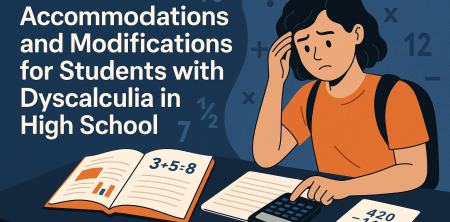
Dyscalculia is a learning disability that affects a person's ability to understand and work with numbers. While many are familiar with dyslexia, dyscalculia often flies under the radar, despite affecting a significant number of students—estimates suggest that between 3-6% of the population has it. For high school students, grappling with this condition can make mathematics classes a daunting experience. However, with effective dyscalculia accommodations in high school, these students can achieve academic success and build confidence in their mathematical abilities.
Understanding Dyscalculia: The Basics
Dyscalculia manifests in various ways, from difficulty in basic counting to challenges in understanding more complex mathematical concepts. Unlike a simple dislike for math, dyscalculia can hinder a student's ability to perform tasks such as telling time, managing money, or interpreting graphs. This disability can lead to anxiety and frustration, making it essential for educators and parents to recognize the signs early and implement appropriate strategies.
Common symptoms of dyscalculia include:
- Difficulty with basic arithmetic operations (addition, subtraction, multiplication, division).
- Struggling to memorize math facts.
- Difficulty understanding number concepts and relationships.
- Problems recognizing patterns and making estimations.
- Challenges with sequential tasks, like following multi-step instructions.
Recognizing these symptoms is the first step toward providing the necessary support. Once identified, educators can work with students to develop a tailored plan of accommodations and modifications that will enhance their learning experience.
The Importance of Accommodations and Modifications
Understanding the difference between accommodations and modifications is crucial in developing a successful educational plan. Accommodations provide support to help students access the curriculum without altering the educational standards. In contrast, modifications change what a student is expected to learn. Both are essential for students with dyscalculia to ensure they have equitable access to education.
For high school students, the right accommodations can foster an inclusive environment where they can thrive academically. These accommodations can help bridge the gap between their abilities and the curriculum requirements, ultimately improving their learning outcomes and confidence.
Key Dyscalculia Accommodations for High School Students
Here are some effective accommodations that schools can implement to support students with dyscalculia:
1. Extended Time on Tests and Assignments
Many students with dyscalculia require additional time to complete tests and assignments. Math problems can be time-consuming and frustrating, so giving extra time can alleviate pressure and lead to better performance. This accommodation allows students to approach problems at their own pace without the anxiety of strict time limits.
2. Use of Calculators and Other Technology
Allowing the use of calculators can be a game-changer for students with dyscalculia. This tool can help them focus on problem-solving rather than getting bogged down by calculations. Furthermore, educational apps and software designed for math practice can reinforce concepts in a more engaging way.
3. Visual Aids and Tools
Visual supports, such as number lines, graphic organizers, and charts, can aid in comprehension and retention of mathematical concepts. These tools offer tangible references that help students better visualize problems and solutions, making abstract concepts more concrete.
4. Alternative Assessment Methods
Traditional testing might not accurately reflect a student's knowledge or abilities, especially for those with dyscalculia. Alternative assessments, such as project-based evaluations, oral presentations, or portfolio reviews, can offer a more comprehensive view of a student’s understanding and capabilities.
Modifications: Tailoring Learning Objectives
While accommodations provide support, modifications can alter the learning objectives to better suit a student’s needs. Here are some modifications that can be effective in high school:
1. Simplified Curriculum
In some cases, modifying the curriculum by simplifying certain objectives can ensure students with dyscalculia do not feel overwhelmed. This could involve focusing on foundational skills rather than advanced mathematical concepts, allowing students to build confidence and competence step-by-step.
2. Focus on Real-Life Applications
Integrating real-life applications of math can help students see the relevance of what they're learning. Lessons that involve budgeting, cooking measurements, or shopping scenarios can make math more relatable and engaging. This approach not only aids in understanding but also fosters essential life skills. (See: Mental health and learning disabilities.)
3. Reduced Homework Loads
Limiting the amount of homework assigned can relieve stress and allow students to focus on mastery rather than quantity. Quality over quantity is vital for students with dyscalculia; spending more time on fewer problems can lead to a deeper understanding of the material.
Implementing Accommodations: A Collaborative Approach
For accommodations and modifications to be effective, a collaborative approach involving teachers, special education staff, parents, and the student is essential. Regular communication ensures that everyone is on the same page regarding the student's needs and progress.
Here’s how to facilitate this collaborative effort:
- Hold regular meetings to discuss the student's progress and any necessary adjustments to their plan.
- Encourage open communication between parents and teachers to share insights and strategies that work.
- Involve students in the discussion to empower them and allow them to voice their needs and preferences.
Creating a supportive team around the student can foster an environment where they feel understood and valued, which is vital for their academic and emotional well-being.
Utilizing Resources and Support Systems
High schools often have access to various resources that can help support students with dyscalculia. Utilizing these resources can enhance the effectiveness of accommodations and modifications:
1. Special Education Services
Engaging with special education services is crucial for students with dyscalculia. They can provide assessments, develop individualized education plans (IEPs), and offer specialized instruction tailored to the student's needs.
2. Tutoring and Peer Support
Sometimes, additional support outside of the classroom is necessary. Tutoring can provide focused attention on math concepts, while peer support groups can offer a sense of community and understanding among students facing similar challenges.
3. Professional Development for Teachers
Teachers need training in recognizing and addressing dyscalculia. Professional development programs can equip educators with strategies to support diverse learners effectively. Understanding the nuances of dyscalculia can lead to more effective teaching practices that benefit all students.
The Role of Parents in Advocacy
Parents play a critical role in advocating for their children’s educational needs. Understanding dyscalculia and its implications allows parents to more effectively communicate with teachers and administrators. Here’s how parents can advocate:
- Stay informed about the latest research and strategies related to dyscalculia.
- Request formal evaluations if you suspect your child has dyscalculia.
- Work collaboratively with teachers to ensure accommodations and modifications are being implemented effectively.
Advocacy is a continuous process, and being proactive can significantly impact the educational experience for students with dyscalculia.
Current Trends and Future Directions
As awareness of dyscalculia grows, so do the strategies and resources available for supporting affected students. Emerging trends include the use of technology in the classroom, such as adaptive learning software that personalizes the educational experience based on individual needs. Research is also ongoing to better understand the neurological aspects of dyscalculia, which may lead to more effective interventions.
Schools are increasingly recognizing the importance of social-emotional learning (SEL) in their curriculums. By integrating SEL into the learning environment, educators can help students with dyscalculia manage anxiety and develop resilience, crucial traits for academic success.
Strategies for Teachers: Best Practices
Teachers play a pivotal role in the success of students with dyscalculia. Implementing best practices can significantly enhance the learning experience for these students. Here are a few effective strategies that can be adopted:
1. Personalized Instruction
Personalized instruction acknowledges that each student learns differently. Teachers can offer individualized math instruction tailored to the student’s unique learning style. This might involve breaking down complex tasks into smaller, manageable steps. For instance, rather than presenting a complex algebra equation all at once, a teacher can guide the student through each component of the equation, ensuring they understand each part before moving on.
2. Frequent Check-Ins
Regularly checking in with students can help gauge their understanding and comfort level with the material. Quick formative assessments or informal discussions can provide insights into what concepts need reinforcement. These check-ins can also foster a supportive environment where students feel safe to express their challenges.
3. Encourage a Growth Mindset
Teaching students to adopt a growth mindset can be transformative. Emphasizing that abilities can improve with effort and practice can help reduce anxiety around math. Teachers can share stories of famous mathematicians or scientists who faced challenges and eventually succeeded. Reinforcing this mindset can motivate students to persevere, even when they encounter difficulties. (See: Understanding dyscalculia symptoms.)
Dyscalculia in the Digital Age
The digital landscape offers unprecedented opportunities for supporting students with dyscalculia. Educational technology can provide a wealth of resources tailored to individual needs. Here are some examples:
1. Interactive Learning Platforms
Many online platforms offer interactive exercises that adapt to a student’s pace and skill level. Programs like Khan Academy or Prodigy Math provide instant feedback and allow students to practice at their own pace. These platforms often gamify learning, making math more enjoyable and less intimidating.
2. Math Games and Apps
Apps designed specifically for learning math can be incredibly helpful. For instance, “Mathway” allows students to input problems and receive step-by-step solutions. “DragonBox” is another engaging app that teaches mathematical concepts through games. These resources provide a fun, low-stakes environment for students to practice math skills.
3. Virtual Tutoring Options
With the rise of remote learning, virtual tutoring has become a viable option for students needing extra help. Online tutoring services can connect students with specialized math tutors who understand dyscalculia. This flexible approach can be especially beneficial for high school students balancing various commitments.
Statistics on Dyscalculia
While we know that dyscalculia affects a significant percentage of students, further statistics can illuminate the challenges faced by these learners:
- Studies show that approximately 5-7% of the school-age population may be diagnosed with dyscalculia.
- A survey revealed that over 80% of teachers believe they need more training to effectively support students with dyscalculia.
- Research indicates that students with dyscalculia score, on average, 1-2 standard deviations below their peers in math assessments.
- Only 1 in 5 students with dyscalculia receive the accommodations they need in the classroom.
Frequently Asked Questions about Dyscalculia Accommodations
1. Are dyscalculia accommodations covered by the law?
Yes, in the United States, students with dyscalculia can receive accommodations under the Individuals with Disabilities Education Act (IDEA). This law mandates that schools provide necessary support to help students with disabilities access their education.
2. How can I tell if my child has dyscalculia?
If your child consistently struggles with math tasks despite appropriate instruction and support, it may be worth seeking a formal evaluation. Look for signs such as difficulty with basic math facts, problems with time management, or challenges in applying math to real-life situations.
3. What types of professionals can evaluate dyscalculia?
Typically, school psychologists, educational psychologists, or special education professionals can conduct formal evaluations for dyscalculia. These professionals will use a combination of assessments and observations to determine if a student has dyscalculia.
4. Is dyscalculia a lifelong condition?
Dyscalculia can affect individuals throughout their lives, but with the right interventions and accommodations, many students can learn strategies to manage their challenges and succeed in math-related tasks. Early intervention is key in helping students build a solid foundation.
5. Can students with dyscalculia excel in math?
Absolutely! With appropriate accommodations, modifications, and support, students with dyscalculia can excel in math. Their success often depends on individualized strategies that cater to their unique learning needs.
Building Confidence: The Psychological Aspect
Understanding and addressing the psychological implications of dyscalculia is as important as implementing educational accommodations. Many students with dyscalculia experience low self-esteem and anxiety, especially in subjects like math. It's essential to create an environment where these students feel supported and capable of learning. Here are some strategies to bolster their confidence:
1. Celebrate Small Wins
Recognizing and celebrating small achievements can significantly impact a student's confidence. Whether it's mastering a particular math concept or completing an assignment successfully, acknowledging these milestones reinforces the belief that they can improve and succeed.
2. Foster a Positive Classroom Environment
A classroom that promotes positivity and understanding can help students with dyscalculia feel accepted. Encouraging empathy among peers can create a supportive network. Group activities that require collaboration can also help students see that they are not alone in their struggles.
3. Professional Counseling
For some students, professional counseling may be beneficial. A trained counselor can help students navigate their feelings about dyscalculia, develop coping mechanisms, and improve their overall mental health. Counseling can also assist them in developing a positive self-image and reducing anxiety related to math. (See: Treatment strategies for learning disabilities.)
The Role of Technology in Accommodations
With the rapid advancements in technology, educators have new tools at their disposal for supporting students with dyscalculia. The incorporation of technology into accommodations not only makes learning more engaging but also offers personalized learning experiences. Here’s how technology can play a role:
1. Online Resources and Tutorials
Many websites and platforms offer tutorial videos and interactive exercises that can help reinforce mathematical concepts. Sites like YouTube have countless educators providing clear explanations and different methods to solve math problems, making it easier for students to find the approach that resonates with them.
2. Virtual Manipulatives
Digital manipulatives such as virtual blocks or counters can provide tactile learning experiences without the need for physical materials. These tools can assist students in visualizing mathematical problems and concepts, making them more comprehensible.
3. Data Tracking Apps
Several apps allow students to track their progress in math, helping them visualize their growth over time. These can serve as motivation by providing tangible evidence of improvement. For instance, apps that offer quizzes can provide immediate feedback, helping students understand their strengths and weaknesses in real-time.
Incorporating Multisensory Learning
Multisensory learning engages more than one sense at a time, making it an effective strategy for teaching students with dyscalculia. This approach involves using sight, sound, touch, and movement to help students learn mathematical concepts. Here are several methods to incorporate multisensory techniques:
1. Use of Physical Objects
Using physical objects like counting blocks or beads can help students grasp mathematical concepts more tangibly. Manipulating these objects allows students to engage in hands-on learning, which can be particularly beneficial for visual and kinesthetic learners.
2. Incorporating Music and Rhythm
Integrating music and rhythm into math lessons can make learning more enjoyable and memorable. For example, setting multiplication tables to a familiar tune can help students memorize them more easily. Engaging with rhythm can also help in learning patterns and sequencing.
3. Storytelling Techniques
Using storytelling to introduce math problems can make abstract concepts more relatable. By framing a mathematical problem within a narrative, students can better understand the context and purpose of the math they are learning, making the subject matter more engaging.
Closing Thoughts: The Future of Support for Students with Dyscalculia
The journey for students with dyscalculia can be challenging, but with the right accommodations and modifications, they can discover their potential and thrive in a mathematical environment. As awareness continues to grow, schools are more equipped than ever to provide the necessary support. Collaboration among educators, parents, and students is crucial in crafting effective strategies that meet individual needs.
Ultimately, the goal is to create an educational landscape where all students, regardless of their learning differences, can pursue their aspirations with confidence and success. With the right support systems in place, students with dyscalculia can learn to navigate their challenges and become proficient in math, paving the way for future academic and personal achievements.
```
Trending Now
Frequently Asked Questions
What are common accommodations for students with dyscalculia?
Common accommodations for students with dyscalculia include extended time on tests, use of calculators, access to visual aids, and breaking tasks into smaller steps. These adjustments help students better understand and engage with mathematical concepts, ensuring they can demonstrate their knowledge without being hindered by their learning disability.
How can teachers support students with dyscalculia?
Teachers can support students with dyscalculia by providing tailored instruction, using multi-sensory teaching methods, and offering frequent feedback. Additionally, implementing individualized education plans (IEPs) and fostering a supportive classroom environment can significantly enhance these students' learning experiences and confidence in mathematics.
What modifications can be made for students with dyscalculia?
Modifications for students with dyscalculia may include altering the curriculum to focus on practical math applications, reducing the complexity of assignments, and allowing alternative assessment methods. These changes help ensure that students can engage with mathematical concepts at their own pace and level of understanding.
What are the signs of dyscalculia in high school students?
Signs of dyscalculia in high school students include difficulty with basic arithmetic, challenges in memorizing math facts, trouble understanding number relationships, and problems with following multi-step instructions. Early recognition of these symptoms is key to providing effective support and accommodations.
How does dyscalculia differ from other learning disabilities?
Dyscalculia specifically affects a person’s ability to understand and work with numbers, distinguishing it from other learning disabilities like dyslexia, which impacts reading and language processing. While both can cause academic challenges, the strategies and accommodations needed will differ based on the specific difficulties presented.
What's your take on this? Share your thoughts in the comments below — we read every one.

