```html
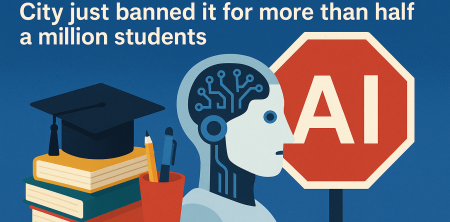
Alright, let's talk about something that's got the education world buzzing and, frankly, a lot of parents scratching their heads. New York City, a place often seen as a bellwether for national trends, just dropped a bombshell: a sweeping moratorium on generative AI for its youngest students. We're talking about kids from 2-K all the way through eighth grade, affecting over half a million learners. For the 2026-2027 academic year, student-facing AI software is out, and AI companion chatbots? Absolutely prohibited. It's a move that's sparked a huge debate, and honestly, it raises some profound questions about the role of AI in education, especially for our most impressionable minds.
Now, this isn't some quiet policy tweak. Mayor Zohran Mamdani and Schools Chancellor Kamar Samuels made this announcement with a clear message: they need time to figure out what generative AI actually means for younger students. While high schoolers are exempt from this particular ban, the district plans to use this year to rigorously study the impact. Is this a prudent pause, a necessary precaution in an uncharted technological landscape? Or is it a knee-jerk reaction that could leave hundreds of thousands of students behind as the rest of the world races forward with AI integration? Let's dig into what this decision really means, and what it tells us about the broader conversation around AI in education.
1. The Scope of the Ban: Half a Million Students and Counting
When New York City Public Schools makes a move, it's never small. We're talking about the largest school district in the United States, serving over a million students. This particular ban, targeting 2-K through eighth grade, hits a staggering demographic: more than half a million students will be directly affected. That's a huge chunk of the next generation, suddenly cut off from tools that their peers in other districts, or even their older siblings in NYC high schools, might be freely using. We covered the potential of AI in education in more detail.
The specificity of the ban is also telling. It's not just a general discouragement; it's a removal of student-facing AI software and an outright prohibition of AI companion chatbots. This isn't about teaching kids to code AI; it's about preventing them from interacting with AI as a learning or support tool. This focused approach suggests a deep concern about the direct, interactive experience younger students might have with generative AI, distinguishing it from other forms of technology or even the more complex applications high school students might encounter.
2. Mayor Mamdani and Chancellor Samuels' Stance: A Call for Caution
Mayor Zohran Mamdani and Schools Chancellor Kamar Samuels aren't just enacting a ban; they're making a statement about responsible innovation. Their announcement isn't framed as an outright rejection of AI, but rather a strategic pause, a moratorium designed to allow for careful consideration. They're essentially saying, 'Hold on, let's understand this before we fully unleash it on our youngest learners.'
This cautious approach stems from a genuine concern that the rapid development of generative AI has outpaced our understanding of its pedagogical implications, especially for developing minds. It's a classic dilemma in education: how do you embrace innovation without sacrificing fundamental learning principles? Mamdani and Samuels seem to be prioritizing the latter, arguing that a year of study is a small price to pay for ensuring that any future integration of AI in education for this age group is thoughtful and beneficial, not just trendy.
3. The Why Behind the Ban: Learning vs. Performance
At the heart of NYC's decision lies a crucial distinction: the difference between learning and performance. Generative AI tools are incredibly powerful at generating text, summarizing information, and even solving complex problems. But for younger students, the process of learning—the struggle, the critical thinking, the development of original thought—is often more valuable than the immediate output or correct answer.
The fear is that relying on AI for tasks like writing essays, solving math problems, or even generating creative ideas could short-circuit essential cognitive development. If an AI can give you the answer, do you still learn how to find it yourself? If it can write your paragraph, do you still learn to structure your thoughts? This isn't just about cheating; it's about the very mechanisms of genuine intellectual growth. The district wants to ensure that AI in education enhances, rather than replaces, the fundamental learning process for these formative years.
4. High School Exemption: A Different Standard for Older Students
It’s important to note that this ban isn't universal across all grade levels in NYC. High school students, those in grades 9-12, are notably exempt. This distinction isn't arbitrary; it reflects a recognition that older students are at a different stage of cognitive development and possess a more mature understanding of technology and its implications.
For high schoolers, the conversation around AI in education shifts from a potential crutch to a powerful tool for research, critical analysis, and even preparing for future careers. They are often deemed capable of understanding the ethical considerations, the potential pitfalls, and the strategic advantages of using AI, rather than simply letting it do the work for them. This two-tiered approach suggests that NYC believes the benefits and risks of AI vary significantly across developmental stages, highlighting a nuanced understanding of its integration into the curriculum.
5. The "Study Year": What Will NYC Be Looking For?
The 2026-2027 academic year isn't just a waiting period; it's designated as a dedicated "study year" for generative AI's impact on younger students. But what exactly will this study entail? It's likely to be a multi-faceted inquiry, looking at everything from cognitive development to pedagogical best practices. (See: New York City's AI education policy.)
They'll probably be examining how AI affects critical thinking skills, problem-solving abilities, and even creativity in elementary and middle schoolers. Are students who use AI less likely to engage in deep learning? Does it foster a reliance on external tools rather than internal reasoning? The study will also probably explore the ethical dimensions, data privacy concerns, and the potential for bias embedded in these algorithms. Essentially, NYC is trying to build a robust evidence base before making a long-term decision about the role of AI in education for this crucial age group.
6. Broader National Debate: NYC Isn't Alone
While NYC's ban is certainly attention-grabbing, it's crucial to understand that this isn't an isolated incident. The national conversation around AI in education is heating up, with districts across the country grappling with similar questions. Some are embracing AI tools wholeheartedly, seeing them as revolutionary aids for personalized learning and administrative efficiency. Others, like NYC, are proceeding with extreme caution, wary of unintended consequences. For more context, see 84% of Faculty Say AI Kills Critical Thinking.
This debate often pits innovation against tradition, efficiency against deep learning, and access against equity. There are legitimate concerns about the digital divide, where students in well-funded districts might gain an early advantage with AI tools, while others are left behind. NYC's move, therefore, serves as a significant data point in this larger national discussion, potentially influencing how other large urban districts decide to approach generative AI.
7. The Viral Potential and Emotional Charge: Why This Story Matters
Let's be real: a story about banning technology for kids in the largest school district in the country has serious viral potential. It touches on deep emotional chords for parents, educators, and even students themselves. Parents are naturally concerned about their children's education and future, and any decision that drastically alters the learning landscape is going to generate strong feelings.
Is NYC protecting its children from unproven technology, or is it denying them valuable tools that could prepare them for an AI-driven future? This tension, this emotional charge, is what makes the story so compelling. It's not just about policy; it's about the hopes and anxieties we have for the next generation, and how we believe technology should shape their learning journey. This controversy isn't going away anytime soon.
8. EdTech Niche Alignment: What This Means for the Industry
For those of us in the EdTech space, NYC's ban isn't just news; it's a seismic event. This decision directly impacts the burgeoning market for EdTech software reviews, online learning platforms incorporating AI, and AI literacy courses. It creates a fascinating tension for developers and companies that are heavily invested in integrating AI in education.
On one hand, it highlights a significant barrier to entry in a massive market. On the other, it underscores the urgent need for AI tools that are not only effective but also demonstrably safe, ethical, and pedagogically sound for younger learners. Companies will now have to work harder to prove the value and safety of their AI offerings, especially if they hope to gain traction in cautious districts. This could drive innovation towards more transparent, explainable, and age-appropriate AI solutions, catering to the comparison and buyer intent of educational institutions looking for trusted tools.
9. The Unintended Consequences: What Could Go Wrong (or Right)?
Any large-scale policy like this comes with a host of potential unintended consequences, both positive and negative. On the positive side, this ban could force educators to re-emphasize foundational skills, encouraging students to develop their own critical thinking and creative problem-solving without the immediate crutch of AI. It might lead to a renaissance of traditional teaching methods, perhaps even fostering deeper human connections in the classroom.
However, there are risks. Will this ban widen the gap between NYC students and their peers in districts that embrace AI? Could it inadvertently create a black market for AI use, where students use tools covertly at home, outside of any pedagogical guidance? Furthermore, if the study year concludes with a decision to reintroduce AI, the district will face the challenge of catching up, potentially having lost valuable time in integrating these tools effectively. The path forward for AI in education, especially for younger learners, remains incredibly complex and fraught with both promise and peril.
10. The Ethical Minefield: Data Privacy and Algorithmic Bias
Beyond the pedagogical concerns, the ethical implications of AI in education are a significant driver behind NYC's cautious stance. When we talk about AI interacting with young students, data privacy becomes a huge, flashing red light. What kind of personal information are these AI tools collecting? How is it stored? Who has access to it? Parents and educators have a right to be concerned about the digital footprints being created for children, especially given past incidents of data breaches and misuse in other tech sectors. The Children's Online Privacy Protection Act (COPPA) provides some safeguards, but AI's capabilities introduce new layers of complexity that existing regulations might not fully address.
Then there's the issue of algorithmic bias. AI models are trained on vast datasets, and if those datasets reflect existing societal biases, the AI can perpetuate and even amplify them. Imagine an AI tutor that, due to biased training data, inadvertently offers less comprehensive feedback to students from certain demographics, or a content generator that produces culturally insensitive material. For young, impressionable minds, such biases could have long-lasting, detrimental effects on their learning experience and worldview. NYC's study year is likely to delve deeply into these ethical quagmires, trying to establish clear guidelines and vetting processes for any AI tools considered in the future.
11. Expert Perspectives: Educators, Psychologists, and Technologists Weigh In
The NYC ban has naturally drawn a wide range of opinions from experts across various fields. Developmental psychologists, for instance, often express concern about the impact of generative AI on foundational cognitive skills like handwriting, original composition, and even the basic process of making errors and learning from them. They argue that the early years are crucial for developing these internal cognitive structures, and over-reliance on external AI tools could hinder that development. (See: impact of technology on youth.)
Conversely, many technologists and AI proponents argue that denying access to these tools is akin to denying students access to calculators or the internet in previous generations. They believe that AI literacy is becoming a fundamental skill for future success, and that delaying exposure could disadvantage students. Educators themselves are often split, with some seeing AI as a powerful tool for differentiation and personalized learning, while others worry about increased workload, academic integrity, and the erosion of human interaction in the classroom. This cacophony of expert voices underscores just how complex the integration of AI in education truly is, with no easy answers.
12. International Comparisons: How Other Countries Approach AI in Early Education
It's helpful to look beyond U.S. borders to see how other nations are approaching AI in education for younger students. Countries like Finland, often lauded for its progressive education system, tend to take a more measured, pilot-program approach, carefully integrating AI tools into specific curricula and assessing their impact before widespread adoption. They focus heavily on teacher training and ensuring that AI serves as a support tool, not a replacement for human instruction. For more context, see The Secret to Healthy Kids’ Screen Time.
On the other hand, some Asian countries, particularly in regions with strong governmental pushes for technological advancement, might be more aggressive in adopting AI from an earlier age, often integrating it into coding and STEM education. However, even these nations are grappling with the same questions around ethical use, data privacy, and the balance between human and artificial intelligence in learning. NYC's ban isn't an anomaly; it's part of a global conversation where different cultures and educational philosophies are trying to find their footing in a rapidly evolving technological landscape.
13. The Role of Teacher Training: Equipping Educators for an AI Future
Regardless of the ultimate decision on AI for younger students, one thing is clear: teachers need robust training. Even if generative AI is banned for students, educators still need to understand what these tools are, how they work, and how they might be used (or misused) by students outside of school. Furthermore, for high school students who are permitted to use AI, teachers need to be equipped to guide them on ethical usage, prompt engineering, critical evaluation of AI-generated content, and integrating AI as a research or creative tool.
A truly effective integration of AI in education hinges on educators being confident and competent in navigating this new terrain. This means professional development that goes beyond basic tutorials, delving into pedagogical strategies for leveraging AI, understanding its limitations, and fostering AI literacy among students. The "study year" in NYC isn't just about student impact; it should also be a critical period for developing comprehensive teacher training programs, so that if AI is reintroduced, the teaching staff is ready.
14. Long-Term Vision: Preparing Students for an AI-Driven Workforce
While the immediate focus of NYC's ban is on early cognitive development, there's a larger shadow looming: preparing students for a future workforce increasingly shaped by AI. Critics of the ban might argue that by limiting exposure to generative AI for younger students, NYC is inadvertently creating a skills gap. If future jobs will require collaboration with AI, understanding its capabilities, and knowing how to effectively prompt and utilize these tools, then delaying exposure could be detrimental.
The counter-argument, and likely the one NYC is leaning on, is that a strong foundation in critical thinking, creativity, and problem-solving – skills that are cultivated through genuine, unassisted learning – are even more crucial for navigating an AI-driven world. The belief is that these foundational human skills will enable students to adapt to any technological shift, including AI, more effectively than simply learning how to operate current AI tools. This long-term vision is a key part of the debate surrounding the prudent integration of AI in education.
Frequently Asked Questions About NYC's AI Ban and AI in Education
Q1: What exactly is generative AI?
Generative AI refers to artificial intelligence systems that can create new content, like text, images, audio, or video, often in response to a user's prompt. Think of tools like ChatGPT, which can write essays, stories, or code, or DALL-E, which can generate images from descriptions. It's about AI producing original content, not just analyzing existing data.
Q2: Why did NYC ban generative AI for younger students?
NYC implemented the ban primarily out of caution and concern for the pedagogical impact on developing minds. Mayor Mamdani and Chancellor Samuels emphasized the need for a "study year" to understand how generative AI affects critical thinking, creativity, and foundational learning skills in students from 2-K through eighth grade. They worry about AI replacing the learning process rather than enhancing it for these age groups.
Q3: Which students are affected by the ban?
The ban applies to students in New York City Public Schools from 2-K (pre-kindergarten) through eighth grade. This impacts over half a million students. High school students (grades 9-12) are exempt from this particular ban. For more context, see 3.4 Million Kids Are Ditching Traditional Schools By 2025. (See: Harvard University's research on education.) Related reading: insights from Getcosmiq's research.
Q4: What will happen during the "study year" (2026-2027)?
During the 2026-2027 academic year, NYC Public Schools will rigorously study the impact of generative AI on younger students. This likely involves research into cognitive development, ethical considerations, data privacy, algorithmic bias, and best pedagogical practices. The goal is to gather evidence to inform a long-term decision about AI integration for this age group.
Q5: Are other school districts doing something similar?
Yes, NYC is not alone. Many school districts across the United States and globally are grappling with how to integrate AI responsibly. Some are embracing it, others are proceeding with extreme caution or implementing temporary bans, while still others are in a wait-and-see mode. It's a national and international conversation with varied approaches.
Q6: What are the main concerns about AI in early education?
Key concerns include: hindering the development of foundational skills (like original writing and problem-solving), potential for over-reliance on AI, academic integrity issues, data privacy risks for young children, and the possibility of algorithmic bias perpetuating inequalities or delivering inappropriate content.
Q7: What are the potential benefits of AI in education?
Proponents argue that AI can offer personalized learning experiences, adaptive tutoring, efficiency in administrative tasks, and access to vast amounts of information. For older students, it can be a powerful tool for research, critical analysis, and preparing for future careers.
Q8: Will this ban disadvantage NYC students compared to those in other districts?
This is a major point of debate. Critics argue it could create a "digital divide," where NYC students miss out on early AI literacy. Supporters contend that prioritizing foundational human skills first will better prepare students to adapt to future technologies, including AI, more effectively in the long run.
Q9: How can parents and educators prepare for the future of AI in education?
Staying informed about AI developments, understanding its capabilities and limitations, fostering critical thinking skills in children, and engaging in discussions about ethical technology use are all crucial. For educators, seeking professional development on AI literacy and pedagogical strategies for integrating (or addressing) AI is vital.
Q10: What is the long-term outlook for AI in education for younger students in NYC?
The long-term outlook is uncertain and will depend heavily on the findings of the 2026-2027 study year. NYC may decide to reintroduce AI with strict guidelines, extend the ban, or adopt a hybrid approach. The goal is to ensure that any future integration is thoughtful, beneficial, and puts the genuine learning process of young students first.
The NYC ban on generative AI for its youngest students is far more than a local policy decision; it's a powerful reflection of the fundamental questions we're all grappling with as technology reshapes our world. It forces us to confront what we truly value in education, especially for those formative years. Is it about efficiency and access to information, or is it about the messy, human process of learning and growing? Only time, and a whole lot of careful study, will tell if NYC's bold move was a stroke of genius or a misstep in the march of progress.
```
Trending Now
- our breakdown of why 3.4 million kids are ditching traditional schools by 2025
- The Secret to Healthy Kids’ Screen Time Isn’t What You Think
- the complete explanation
- Revealed: Your College Bill Just Crossed a Terrifying New Line for 2026
- The Silent Threat to Your Future: Why New Student Loan Limits Could Crush Your Dreams
Frequently Asked Questions
Why did New York City ban AI for younger students?
New York City imposed a ban on generative AI for students from 2-K through eighth grade to assess its impact on young learners. Officials believe they need more time to understand how AI tools could affect education for impressionable minds, especially as the technology rapidly evolves.
How many students are affected by the AI ban in NYC?
The AI ban in New York City affects over half a million students, specifically targeting those in grades 2-K through eighth grade. This significant decision impacts a large demographic within the largest school district in the United States.
What is the age range for the AI ban in New York City schools?
The ban on generative AI in New York City schools applies to students from 2-K through eighth grade, which encompasses children typically aged around 4 to 14 years old.
Are high school students in New York City affected by the AI ban?
No, high school students in New York City are exempt from the AI ban. The policy specifically targets younger students in grades 2-K through eighth grade, allowing high schoolers to continue using generative AI tools.
What are the concerns regarding AI in education?
Concerns about AI in education include its potential impact on young learners' development, the appropriateness of AI tools for impressionable minds, and whether such technology could widen educational disparities. The NYC ban aims to address these concerns before implementing AI in classrooms.
Agree or disagree? Drop a comment and tell us what you think.

