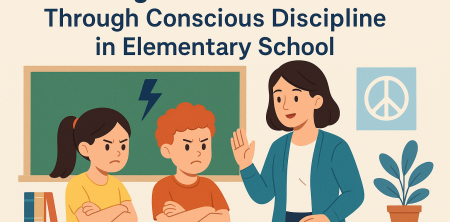
```html
In today’s classrooms, where emotions can run high and misunderstandings are commonplace, the ability to resolve conflicts effectively is crucial for fostering a positive learning environment. Conflict resolution in elementary school is not just about addressing disagreements; it’s about teaching children essential life skills that can benefit them far beyond their school years. One effective approach gaining traction is Conscious Discipline, a comprehensive, trauma-informed program that focuses on social-emotional learning and discipline strategies. This article will explore how Conscious Discipline can be utilized to teach conflict resolution skills to young students, providing them with tools to manage their emotions and navigate interpersonal relationships.
Understanding Conscious Discipline
Conscious Discipline, developed by Dr. Becky Bailey, is a framework that integrates social-emotional learning, self-regulation, and discipline into a unified approach. At its core, Conscious Discipline emphasizes the importance of building healthy relationships among students and between teachers and students. The underlying premise is that when children feel safe, connected, and in control, they are more equipped to manage their emotions and resolve conflicts constructively.
The program is structured around five key components:
- Safety: Establishing a safe environment where students feel secure enough to express themselves.
- Connection: Building relationships that foster trust and support.
- Problem-Solving: Teaching children to think critically and collaboratively to resolve conflicts.
- Discipline: Guiding behavior through empathy and understanding rather than punishment.
- Self-Regulation: Helping students manage their emotions and reactions effectively.
These components create a foundation for children to learn conflict resolution strategies while also enhancing their emotional intelligence.
The Importance of Conflict Resolution Skills
Research consistently shows that strong conflict resolution skills contribute to improved academic performance and overall well-being. Young children encounter various conflicts daily, whether it's a disagreement over a toy, miscommunication with classmates, or misunderstandings with teachers. Teaching them how to address these conflicts is vital for their social development and academic success.
According to a study published in the Journal of Educational Psychology, children who learn conflict resolution skills are better equipped to handle disagreements without resorting to aggression or withdrawal. They are more likely to use effective communication, negotiate solutions, and build stronger relationships with their peers. Moreover, these skills reduce instances of bullying and promote a positive school climate.
How Conscious Discipline Facilitates Conflict Resolution
Conscious Discipline provides educators with a roadmap to teach conflict resolution through a structured yet flexible approach. By embedding conflict resolution into the daily curriculum and interactions, teachers can create a culture of empathy and cooperation. Here’s how:
Promoting Emotional Awareness
An essential aspect of conflict resolution in elementary school is emotional awareness. Children must learn to identify and understand their feelings and the feelings of others. Conscious Discipline encourages this through the use of emotional vocabulary. For instance, teachers can regularly encourage students to express how they feel using phrases like, "I feel sad when..." or "I feel angry because..." This practice not only helps students articulate their emotions but also fosters empathy towards their peers.
Implementing the “Feeling Buddies” Technique
One method within Conscious Discipline involves the use of “Feeling Buddies,” which are pairs of activities that help children express and manage their emotions. When a conflict arises, teachers can guide students to connect with their feelings using these resources. For example, if two students argue over a game, the teacher might say, "Let's take a moment to check in with our Feeling Buddies. How did that make you feel?" Engaging children in this way not only helps them articulate their emotions but also allows them to see the conflict from the other person's perspective.
Conflict Resolution Scripts
Another vital tool in Conscious Discipline is the use of conflict resolution scripts. These scripts provide a structured approach for children to follow when resolving disputes. For instance, a simple script might include:
- State the problem clearly.
- Share how you feel about the problem.
- Listen to the other person's perspective.
- Discuss possible solutions together.
- Agree on a solution and express appreciation for each other.
This framework encourages children to communicate openly and respectfully, thereby creating a more constructive dialogue that is essential for resolving conflicts. (See: mental health resources for youth.)
Success Stories from Schools Using Conscious Discipline
Many schools have adopted Conscious Discipline with remarkable results, showcasing the effectiveness of this approach in teaching conflict resolution.
For example, a study conducted in a New York City elementary school found that students who participated in Conscious Discipline training reported a 30% decrease in classroom disruptions and conflicts. Teachers noted that students began to independently use conflict resolution strategies, such as taking deep breaths before responding or using “I” statements to express their feelings.
Another success story comes from an elementary school in California, where the implementation of Conscious Discipline led to a significant reduction in bullying incidents. Teachers observed that students were more willing to speak up about their feelings and differences, leading to a more supportive and inclusive environment.
Challenges in Implementing Conscious Discipline
While the benefits of Conscious Discipline are clear, implementing it in elementary schools is not without its challenges. Resistance can stem from various factors, including:
- Lack of Training: Teachers need comprehensive training to effectively use Conscious Discipline techniques. Without proper training, they may feel overwhelmed or unsure about how to implement the strategies.
- Time Constraints: Many educators struggle with the curriculum obligations and time constraints that limit the opportunity to focus on social-emotional learning.
- Cultural Resistance: In some cases, parents or school administrators may be hesitant to embrace a new approach to discipline, preferring traditional methods.
Addressing these challenges requires a concerted effort from school administrations, educators, and parents. Open communication and ongoing professional development can help create a supportive environment for implementing Conscious Discipline.
Best Practices for Teaching Conflict Resolution in Elementary Schools
Implementing effective conflict resolution strategies in conjunction with Conscious Discipline involves several best practices. Here are a few that can make a substantial difference:
Integrate Conflict Resolution into Daily Lessons
Conflict resolution should not be a standalone topic but rather an integral part of the daily curriculum. Teachers can incorporate discussions about emotions, empathy, and communication skills into various subjects. For instance, during a reading lesson, a teacher could analyze a character’s decision-making process in a conflict and prompt students to think about alternative resolutions.
Role-Playing Scenarios
Role-playing is an interactive way to engage students in conflict resolution. Teachers can set up scenarios that reflect common conflicts among children, allowing students to practice using the conflict resolution scripts in a safe context. This hands-on approach reinforces learning and builds confidence in handling real-life situations.
Encourage Peer Mediation
Peer mediation programs can empower students to take active roles in resolving conflicts among their peers. Training select students as mediators allows them to facilitate discussions between classmates, helping to promote understanding and resolution. This practice not only aids in conflict resolution but also instills a sense of responsibility and leadership in young learners.
The Role of Families in Conflict Resolution
The engagement of families is crucial for reinforcing conflict resolution skills taught in school. Parents can support their children’s development by modeling effective communication and conflict management at home. Here are a few suggestions:
- Open Dialogue: Encourage children to express their feelings and thoughts openly during family discussions.
- Use of “I” Statements: Teach children to communicate their emotions using “I” statements, which helps in expressing feelings without blaming others.
- Problem-Solving Together: Involve children in resolving family conflicts, allowing them to practice their conflict resolution skills in a practical setting.
When families actively engage in these practices, children are more likely to internalize the conflict resolution skills they learn at school. Related reading: Emotional intelligence tools.
Current Relevance and Future Directions
As society becomes increasingly aware of the importance of social-emotional learning, the relevance of conflict resolution in elementary school continues to grow. With the rise of bullying, mental health challenges, and social media conflicts, equipping children with the tools to resolve disputes is more important than ever. (See: importance of emotional understanding.)
The future of conflict resolution education will likely expand to include digital literacy and online conflict resolution strategies, as children navigate a world where many interactions occur online. Programs like Conscious Discipline can evolve to meet these challenges by integrating technology and providing resources that address online conflicts.
In conclusion, teaching conflict resolution through Conscious Discipline offers a transformative approach in elementary schools. By prioritizing emotional awareness, establishing effective communication practices, and fostering a supportive community, educators empower students to manage conflicts positively. This foundational skill not only enhances classroom dynamics but also equips children with essential tools for their future, creating a generation poised for success in all areas of their lives.
Expanding Conflict Resolution Skills Beyond the Classroom
While schools play an essential role in teaching conflict resolution, it's important to recognize that these skills extend into other areas of life. Conflict resolution in elementary school lays the groundwork for managing disagreements in various settings, including home, community, and even future workplaces. The skills learned now will serve students throughout their lives.
Here are some ways conflict resolution skills can be applied beyond the classroom:
- Family Dynamics: Children can utilize their conflict resolution skills at home. Whether it's resolving a minor sibling dispute or discussing family rules, the ability to communicate effectively and empathetically can lead to healthier family interactions.
- Community Engagement: As children grow, they will encounter diverse perspectives and opinions in their communities. Being equipped with conflict resolution skills enables them to engage in constructive dialogue, promoting understanding and cooperation among peers.
- Future Workplaces: In their professional lives, adults will face conflicts with colleagues, clients, and supervisors. Mastering conflict resolution at an early age prepares children for effective communication in their careers, which is crucial in today's diverse and collaborative work environments.
Statistics on Conflict Resolution in Education
Understanding the impact of conflict resolution education can be further illuminated by statistics. Numerous studies highlight the benefits of teaching these skills in schools, showcasing the importance of integrating conflict resolution frameworks like Conscious Discipline.
For example, a study by the Collaborative for Academic, Social, and Emotional Learning (CASEL) found that students who participated in social-emotional learning programs, including conflict resolution initiatives, showed an increase in academic performance by as much as 11 percentile points. In addition, schools that implement comprehensive conflict resolution strategies report a 20-30% decrease in disciplinary referrals.
Another striking statistic from the National Center for Educational Statistics indicates that more than 20% of students aged 12-18 experienced bullying in the 2018 school year. Schools that have adopted conflict resolution programs have reported a significant reduction in such incidents, emphasizing the role of effective conflict management in curbing bullying behavior.
Expert Perspectives on Conflict Resolution in Elementary Education
Experts in the field of education and child psychology emphasize the significance of teaching conflict resolution skills at a young age. According to Dr. John Mordechai Gottman, a renowned psychologist and researcher, “The ability to resolve conflicts constructively is one of the most critical skill sets for children to master. It not only affects their relationships throughout childhood but also lays the foundation for their future interpersonal interactions.”
Educators agree that implementing programs like Conscious Discipline can transform classroom environments. Mary Ann Zehr, an education writer, noted that “When students understand how to navigate their emotions and conflicts, they develop a sense of ownership over their actions and their relationships. This empowerment leads to a more positive and productive classroom atmosphere.”
Frequently Asked Questions about Conflict Resolution in Elementary School
What age should children start learning conflict resolution skills?
Children can begin learning conflict resolution skills as early as preschool. Even at this young age, they can be introduced to simple concepts such as sharing, taking turns, and expressing feelings with words. As they grow, these skills can be expanded to include more complex scenarios and problem-solving techniques.
How can parents reinforce conflict resolution skills at home?
Parents can reinforce these skills by modeling healthy communication, encouraging children to share their feelings, and guiding them through conflict resolution processes in everyday situations. Engaging in family discussions about emotions and solutions helps strengthen these skills.
What role do teachers play in teaching conflict resolution?
Teachers are pivotal in creating a safe and nurturing environment where conflict resolution can be taught. They can model appropriate behavior, facilitate discussions about emotions, and implement structured conflict resolution strategies in the classroom.
Are there specific techniques for resolving conflicts between students?
Yes, various techniques can be effective, including using conflict resolution scripts, role-playing scenarios, and peer mediation. These strategies help students navigate conflicts in a constructive manner, allowing them to practice and internalize effective resolution methods.
How does conflict resolution in school impact students' future success?
Students who learn conflict resolution skills are better equipped to handle disagreements, leading to stronger relationships, improved communication, and enhanced teamwork abilities. These skills are critical for success in both personal and professional settings as they grow older.
Strategies for Teaching Conflict Resolution in Diverse Classrooms
In increasingly diverse classrooms, it's essential to tailor conflict resolution strategies to accommodate various cultural perspectives. Recognizing and respecting differences in cultural backgrounds can enhance the efficacy of conflict resolution teaching. Here are some strategies to consider:
- Cultural Awareness Training: Educators can undergo training to understand cultural differences in communication styles and conflict resolution methods. This knowledge can help them facilitate discussions that consider students' backgrounds.
- Inclusive Role-Playing: When conducting role-playing activities, incorporate scenarios that reflect the diverse experiences of students. This practice can help everyone feel represented and engaged in the learning process.
- Community Input: Involve parents and community members in discussions about conflict resolution. Their insights can provide valuable perspectives that resonate with students and enhance the curriculum.
The Long-Term Benefits of Conflict Resolution Education
Investing in conflict resolution education at the elementary level has long-term implications for students. As they grow into adolescents and adults, the skills they develop in managing conflicts can lead to:
- Improved Mental Health: Individuals who can effectively manage conflicts tend to experience lower levels of anxiety and stress. This is crucial, especially during the transition to middle and high school, where social dynamics can become more complex.
- Better Academic Outcomes: Strong conflict resolution skills are linked to higher levels of academic achievement. Students who can navigate disagreements and work collaboratively are often more successful in group projects and cooperative learning settings.
- Stronger Relationships: The ability to resolve conflicts amicably fosters stronger relationships among peers, family members, and colleagues. This relational foundation is invaluable in both personal and professional spheres.
Conclusion
Teaching conflict resolution through Conscious Discipline offers a transformative approach in elementary schools. By prioritizing emotional awareness, establishing effective communication practices, and fostering a supportive community, educators empower students to manage conflicts positively. This foundational skill not only enhances classroom dynamics but also equips children with essential tools for their future, creating a generation poised for success in all areas of their lives.
``` Positive school climate resources offers useful background here.
Trending Now
Frequently Asked Questions
What is Conscious Discipline in education?
Conscious Discipline is a comprehensive, trauma-informed framework developed by Dr. Becky Bailey that integrates social-emotional learning, self-regulation, and discipline. It emphasizes building healthy relationships and creating a safe environment, enabling students to manage their emotions and resolve conflicts effectively.
How can conflict resolution be taught in elementary schools?
Conflict resolution can be taught in elementary schools through programs like Conscious Discipline, which focuses on teaching children critical thinking, collaboration, and empathy. By creating a safe and supportive environment, students learn to navigate disagreements constructively.
Why is teaching conflict resolution important for children?
Teaching conflict resolution is vital for children as it equips them with essential life skills, enhances their emotional intelligence, and prepares them to handle interpersonal relationships positively. These skills benefit them beyond school, fostering better social interactions in their future.
What are the key components of Conscious Discipline?
The key components of Conscious Discipline include Safety, Connection, Problem-Solving, Discipline, and Self-Regulation. These elements work together to create a supportive learning environment that helps students manage emotions and resolve conflicts effectively.
How does Conscious Discipline enhance emotional intelligence in students?
Conscious Discipline enhances emotional intelligence by teaching students to recognize and manage their emotions, build trusting relationships, and resolve conflicts collaboratively. This approach fosters self-awareness and empathy, critical components of emotional intelligence.
What did we miss? Let us know in the comments and join the conversation.


0 Responses