```html
Are you a visual learner or an auditory one? Perhaps you resonate more with reading and writing or kinesthetic approaches? For decades, the VARK theory has been a popular framework for identifying different learning styles. But is there any solid evidence supporting this concept? In this article, we’ll explore the intriguing world of learning styles, dive into the VARK model, and examine the research that sheds light on what this means for education.
Understanding Learning Styles
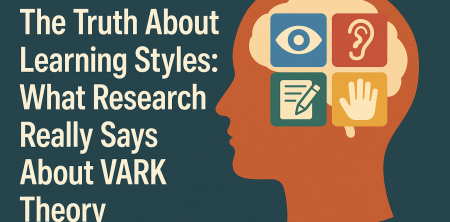
The notion of learning styles suggests that individuals have distinct preferences for how they acquire and process information. According to this theory, recognizing and catering to these preferences can enhance learning outcomes. The VARK model, developed by Neil Fleming in 1987, categorizes learners into four types: Visual, Auditory, Reading/Writing, and Kinesthetic.
While the concept of learning styles is widely embraced in educational settings, it’s essential to understand its origins and the rationale behind its popularity. Educators and learners alike find comfort in the idea that everyone learns differently, leading to personalized educational experiences. But is this belief grounded in scientific evidence?
The VARK Model Explained
The VARK model simplifies the diverse ways people learn into four primary categories:
- Visual learners prefer using images, diagrams, and charts to understand information.
- Auditory learners gain understanding through listening, discussions, and lectures.
- Reading/Writing learners favor written word, excelling in reading and note-taking.
- Kinesthetic learners thrive on hands-on experiences, learning best through doing.
The appeal of the VARK model lies in its straightforward approach. It allows educators to create tailored teaching strategies that they believe will resonate with each student's preferred learning style. However, as we dig deeper, the cracks in this widely accepted theory start to reveal themselves.
The Rise and Popularity of Learning Styles
The learning styles concept has permeated educational discourse since the late 20th century. Training programs for teachers often emphasize the importance of recognizing and addressing students' learning preferences. Workshops, seminars, and various educational resources promote the idea that by aligning teaching methods with learning styles, educators can significantly boost learning outcomes.
In schools and universities worldwide, you might encounter assessments designed to identify students' learning styles, with the hope of tailoring instruction to fit these profiles. However, the enthusiasm for these theories may have overlooked some critical evaluations of their effectiveness.
The Research Landscape: What Does Science Say?
Despite the popularity of learning styles, a growing body of research challenges their validity. A comprehensive review by the Association for Psychological Science in 2018 found no substantial evidence supporting the idea that teaching students according to their preferred learning style enhances learning. In fact, studies indicate that individuals can learn effectively through various methods, regardless of their identified learning style.
One of the most significant critiques comes from cognitive psychology, where experiments have consistently shown that mixing teaching methods—using a combination of visual aids, discussions, and hands-on activities—generally leads to better retention and understanding, regardless of the learners' style. The underlying principle here is the importance of cognitive flexibility: the ability to adapt and use different learning strategies based on the task at hand. (See: Research on learning styles effectiveness.)
Implications for Educators
With mounting evidence against the learning styles theory, how should educators approach teaching? First, it’s crucial to shift away from the rigid classifications that learning styles impose. Instead, educators should focus on a more holistic view of learning, one that accommodates different methods without labeling students.
Here are some practical insights for educators aiming to adapt their teaching strategies:
- Use a variety of instructional methods: Incorporate visual aids, lectures, discussions, and hands-on activities in your lessons. This multimodal approach caters to different preferences and promotes cognitive engagement.
- Encourage self-directed learning: Empower students to explore materials beyond their comfort zones. This encourages flexibility and adaptability in their learning process.
- Provide feedback: Foster an environment where students receive constructive feedback on their learning strategies and outcomes. This can help them identify what works best for them over time.
- Foster collaboration: Encourage group work where students can share different perspectives and approaches to problem-solving. This not only enriches learning but also helps them see the value in diverse methods.
Current Trends in Teaching and Learning
As we transition into a new era of education, several trends are shaping the way we view learning and teaching. The rise of technology in classrooms has made it easier to adopt a more flexible approach to learning. Online platforms, interactive programs, and virtual reality experiences allow for a blending of various instructional methods that can cater to different learner needs.
Moreover, educational psychology is shifting focus toward understanding how learners process and engage with information, rather than pigeonholing them into specific categories. Concepts such as growth mindset, metacognition, and emotional intelligence are gaining traction in educational frameworks, emphasizing the need for adaptable and resilient learners.
Case Studies: Schools Challenging the Learning Styles Myth
Several educational institutions have begun to challenge the traditional learning styles model, opting for more evidence-based approaches instead. For example, schools that adopted project-based learning emphasize real-world applications of knowledge rather than conforming to specific learning styles. Such methodologies encourage students to collaborate, innovate, and apply their learning in practical settings, leading to deeper understanding and retention.
In one notable case, a school district in the United States integrated blended learning techniques that combined in-person instruction with online resources. Educators reported that students began to thrive, learning at their own pace while also interacting with a diverse range of materials and methods. This tailored approach resonated with students’ individual needs without strictly adhering to the learning styles framework.
The Role of Assessment in Learning
Assessment plays a crucial role in understanding how well students are learning. Traditional assessments often favor one style of learning over another, which can misrepresent a student's true capabilities. Shifting toward formative assessments allows educators to gauge student understanding continuously, providing insights into how students learn best and what teaching methods resonate with them.
Incorporating various assessment methods—such as peer reviews, self-assessments, and performance tasks—can provide a more comprehensive understanding of student learning. This not only affirms the importance of flexible teaching strategies but also helps students recognize their strengths and areas for growth.
Exploring Further: The Science Behind Learning Styles
To dive deeper into the topic, let’s examine the neurological basis for learning styles. Some researchers argue that different types of learning may be related to distinct neurobiological processes. For instance, visual learners might have enhanced activity in areas of the brain associated with visual processing. However, this does not necessarily correlate with improved learning outcomes when teaching is aligned with these styles.
Neuroscience suggests that the brain is remarkably adaptable and capable of processing information from multiple sources. Research has shown that engaging multiple senses during learning can create stronger neural connections and improve memory retention. This supports the idea that a combination of teaching methods is more effective than rigid adherence to any single style.
Common Misconceptions About Learning Styles
Despite the ongoing debate, several misconceptions about learning styles persist. One common belief is that individuals can only learn effectively through their preferred style. In reality, research indicates that exposure to diverse teaching methods can benefit all learners, regardless of their supposed style. For instance, a student identified as a kinesthetic learner can still grasp concepts effectively through auditory lectures or visual materials. (See: The truth about learning styles theory.)
Another misconception is that adapting teaching to fit learning styles is a straightforward process. In practice, implementing a learning styles approach can be complex, as students often exhibit mixed preferences. A student may perform well with visual aids in one subject but show a preference for kinesthetic learning in another. This variability makes it challenging to label students definitively.
Comparative Analysis: Learning Styles vs. Universal Design for Learning
Universal Design for Learning (UDL) is an educational framework that contrasts sharply with the traditional learning styles approach. UDL emphasizes providing multiple means of engagement, representation, and action, ensuring that all learners have the opportunity to access and participate in the curriculum. Rather than focusing on individual learning styles, UDL promotes flexibility and inclusivity in education.
Research comparing the effectiveness of UDL and learning styles approaches indicates that UDL leads to better educational outcomes. For example, classrooms implementing UDL principles are more likely to see increased student participation and achievement. This approach aligns with current trends in educational psychology, highlighting that learner variability should inform teaching practices instead of rigid classifications.
FAQ: Your Questions About Learning Styles Answered
What are learning styles?
Learning styles refer to the idea that individuals have preferred ways of acquiring and processing information, typically categorized into groups such as visual, auditory, reading/writing, and kinesthetic.
Are learning styles supported by scientific evidence?
No substantial evidence supports the idea that teaching according to learning styles enhances learning. Most research indicates that mixing teaching methods is more beneficial for students.
What is the VARK model?
The VARK model categorizes learners into four types based on their preferred learning styles: Visual, Auditory, Reading/Writing, and Kinesthetic.
How should educators approach teaching if learning styles aren't valid?
Educators should adopt a multimodal approach, incorporating various teaching methods that promote cognitive engagement and flexibility, rather than relying solely on learning styles.
What is Universal Design for Learning (UDL)?
UDL is an educational framework that emphasizes providing multiple means of engagement, representation, and action to accommodate diverse learners, promoting inclusivity rather than strictly adhering to learning styles.
Can learners develop skills outside their preferred learning style?
Absolutely! Research shows that learners can develop skills in multiple areas, and exposure to various teaching methods can enhance their capacity to learn effectively across different contexts.
What should educators do instead of focusing on learning styles?
Instead of focusing on learning styles, educators should implement a diverse array of teaching strategies aimed at engaging students in various ways. This could include combining technology with traditional methods, fostering collaborative learning environments, and emphasizing critical thinking skills.
How can parents support their children’s learning styles at home?
Parents can encourage their children to explore different types of learning at home. For example, they can provide a variety of resources like videos, books, or hands-on projects that cater to different preferences. This exploration can help children become more adaptable learners.
Are there specific strategies for teaching different learning styles?
While research indicates that learning styles may not be as rigid as once thought, educators can still employ strategies that integrate multiple modalities. For instance, they can combine visual elements with auditory explanations and kinesthetic activities, ensuring that all students can engage with the material effectively.
Is there a risk of labeling students according to learning styles?
Yes, labeling students by their learning styles can create limiting beliefs about their abilities. Instead, it’s better to view students as individuals with unique strengths and areas for growth, encouraging them to develop skills in various modalities.
Conclusion: Moving Forward with Learning
The dialogue surrounding learning styles and the VARK theory continues to evoke debate among educators and researchers alike. While the charm of categorizing students may never fade, it's becoming increasingly clear that flexibility, adaptability, and a rich variety of teaching methods will serve students far better than rigid adherence to any single theory. As we continue to explore the complexities of how people learn, let's focus on cultivating environments that nurture curiosity, collaboration, and critical thinking.
Ultimately, the journey of learning is complex, and while labels can help us understand ourselves and others, they shouldn’t limit our potential. By embracing diverse teaching strategies and fostering a culture of inquiry, we can create a more inclusive and effective educational landscape for all learners.
```
Trending Now
- “Quick Phonemic Awareness Assessments for Kindergarten and First Grade Teachers”
- our breakdown of “why phonological awareness predicts reading success better than letter knowledge”
- the complete explanation
- “How Gross Motor Development Supports Academic Learning and School Readiness”
- read the full story
Frequently Asked Questions
What is the VARK learning style model?
The VARK model, developed by Neil Fleming in 1987, categorizes learners into four types: Visual, Auditory, Reading/Writing, and Kinesthetic. It suggests that individuals have distinct preferences for how they acquire and process information, which can influence their learning experiences.
Is there scientific evidence supporting learning styles?
While the concept of learning styles, including the VARK model, is popular in education, research has shown that there is limited scientific evidence to support the effectiveness of tailoring teaching methods to individual learning styles. Many experts argue that focusing on diverse teaching strategies is more beneficial.
How do visual learners prefer to learn?
Visual learners prefer to use images, diagrams, and charts to understand information. They often find it easier to grasp concepts when visual aids are incorporated into their learning materials, making visual representation a key component of their educational experience.
What are the characteristics of auditory learners?
Auditory learners gain understanding through listening and verbal communication. They excel in discussions, lectures, and podcasts, often retaining information better when it is spoken rather than written. This learning style emphasizes the importance of auditory input in the learning process.
Can the VARK model improve educational outcomes?
The VARK model's appeal lies in its simplicity and the idea of personalized education, but evidence suggests that it may not significantly enhance educational outcomes. Educators are encouraged to use a variety of teaching strategies to accommodate all learners rather than focusing solely on learning styles.
Agree or disagree? Drop a comment and tell us what you think.

