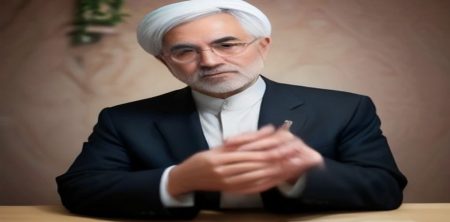
The geopolitical landscape, already a minefield of complexities, just got a whole lot more precarious. We're talking about the Middle East, specifically the simmering tensions between Iran and the United States, which have once again flared up, casting a long shadow over global stability and, frankly, your personal finances. Iran has categorically ruled out any direct talks with the US as long as an interim deal concerning the Strait of Hormuz remains, in their view, breached. If you're not familiar with it, the Strait of Hormuz isn't just a stretch of water; it's the beating heart of global energy supplies, a chokepoint through which an astounding amount of the world's oil flows every single day.
This isn't some isolated diplomatic squabble; it's a deeply entwined issue that touches everything from the price you pay at the pump to the stability of your investment portfolio. The ongoing friction, exacerbated by the wider conflict gripping the Middle East, is already contributing to a noticeably weakening global economic outlook. Just recently, the International Monetary Fund (IMF) felt compelled to lower its 2026 growth projection, citing the fallout from the region's instability and its direct impact on energy markets. It's a stark reminder that what happens in one corner of the world can, and often does, ripple across continents, affecting us all. This builds on prospects for an Iran deal.
Investment banks and financial advisors are certainly paying close attention. Rothschild & Co, in their August 2026 macro insights, specifically highlighted that these geopolitical tensions in the Middle East aren't just a minor blip; they remain a significant, persistent source of uncertainty for energy markets and, by extension, global supply chains. What does that mean for you? Well, it translates into things like rising long-term interest rates and a growing unease about trade fragmentation – essentially, a world where goods and capital move less freely. The situation is incredibly dynamic and, frankly, quite viral in its potential to disrupt global oil flows and hit economies worldwide. It's creating an emotionally charged environment for investors and consumers alike, making understanding these dynamics more crucial than ever.
The Strait of Hormuz: A Global Chokepoint You Need to Understand
Let's zoom in on the Strait of Hormuz for a moment, because its significance cannot be overstated. Imagine a narrow, winding corridor, only about 21 miles wide at its narrowest point, connecting the Persian Gulf with the Arabian Sea and the broader Indian Ocean. This isn't just any maritime route; it's the world's most important oil transit chokepoint. Approximately one-fifth of the world's total petroleum liquids consumption, and roughly one-third of all seaborne traded oil, passes through this strait every day. We're talking about millions of barrels of crude oil, liquefied natural gas (LNG), and petroleum products originating from major producers like Saudi Arabia, Iran, UAE, Kuwait, and Iraq.
Any disruption here, even a minor one, sends immediate shockwaves through global energy markets. Historically, tensions in this region have consistently led to spikes in oil prices, creating inflationary pressures and slowing economic growth. For Iran, controlling or threatening to control the strait offers a powerful geopolitical lever, a way to project influence and respond to perceived aggressions. For the rest of the world, especially major energy importers like China, India, Japan, and European nations, the reliable passage through Hormuz is an absolute necessity. The current impasse, where Iran feels an interim deal has been breached, directly threatens this vital flow, making the prospect of Iran US talks even more urgent, yet seemingly distant.
When you hear about naval exercises, seizures of tankers, or even just strong rhetoric from either side regarding the strait, understand that it's not just political posturing. These actions and words have real, tangible economic consequences. They elevate insurance costs for shipping, increase the risk premiums on oil futures, and inject a heavy dose of uncertainty into supply chains that are already stretched thin. This isn't just about big oil companies; it's about every industry that relies on affordable energy and predictable logistics, which, let's be honest, is virtually every industry.
Why Iran Rules Out US Talks: A Deep Dive into Perceived Breaches
So, what exactly is fueling Iran's steadfast refusal to engage in Iran US talks? It boils down to a fundamental disagreement over what constitutes a breach of an 'interim deal' related to the Strait of Hormuz. While the specifics of this interim arrangement aren't always publicly detailed in their entirety, the sentiment from Tehran is clear: they believe Washington has reneged on understandings or commitments that were designed to de-escalate tensions or facilitate certain activities in the strait. This could involve anything from the unfreezing of assets to the lifting of specific sanctions, or even guarantees regarding Iran's own shipping and oil exports.
From Iran's perspective, they've often viewed US sanctions and military presence in the Gulf as direct infringements on their sovereignty and economic well-being. They see the Strait of Hormuz as their backyard, a strategic asset essential for their national security and economic survival. When they speak of a 'breach,' it's often tied to actions they perceive as undermining their ability to utilize this waterway, whether through direct military threats or economic coercion that impacts their ability to export oil through it. This creates a deep-seated distrust that makes any prospect of constructive Iran US talks incredibly difficult. (See: Middle East tensions and global impact.)
It's a classic chicken-and-egg scenario: the US often imposes sanctions in response to what it views as Iran's destabilizing regional activities or its nuclear program, while Iran views these sanctions as the primary source of instability and a violation of international norms. This cycle of accusation and counter-accusation makes finding common ground for negotiations exceedingly complex. Until Iran perceives a genuine good-faith effort to address what it sees as past grievances or broken promises, particularly those directly impacting its economic lifeline through Hormuz, the door to direct dialogue with the US remains firmly shut.
The Broader Regional Conflict: A Cauldron of Instability
The current standoff over the Strait of Hormuz and the refusal of Iran US talks isn't happening in a vacuum. It's inextricably linked to a much broader, deeply entrenched regional conflict that has been simmering for decades and, in recent years, has reached boiling point. The Middle East is a complex tapestry of proxy wars, ideological divides, and competing geopolitical ambitions, with Iran and its allies often pitted against the US and its regional partners, primarily Saudi Arabia and Israel.
Think about the ongoing conflicts in Yemen, Syria, and Iraq, or the long-standing Israeli-Palestinian issue. In many of these arenas, Iran plays a significant role, supporting various non-state actors or governmental factions that align with its regional agenda. The US, in turn, often supports opposing forces or seeks to counter what it perceives as Iran's malign influence. This intricate web of alliances and rivalries means that a flare-up in one area can quickly escalate tensions across the entire region, creating a dangerous feedback loop.
For example, an attack on shipping in the Red Sea, while geographically distinct from the Persian Gulf, can still be attributed to Iranian-backed groups and thus contribute to the overall climate of distrust and hostility between Washington and Tehran. This makes any localized 'interim deal' incredibly fragile. Each incident, each accusation, adds another layer of complexity and animosity, making the prospect of genuine de-escalation, let alone successful Iran US talks, seem ever more remote. The war in the Middle East isn't a singular event; it's a collection of interconnected conflicts that collectively destabilize the global outlook.
IMF's Grim Outlook: What it Means for Global Growth
When an institution as sober and authoritative as the International Monetary Fund starts lowering its growth projections, it's not something to be taken lightly. The IMF's recent downward revision of its 2026 global growth outlook is a direct consequence of the escalating tensions in the Middle East and their chilling effect on energy markets. Why does this matter to you? Because slower global growth translates into fewer jobs, reduced investment opportunities, and potentially lower returns on your savings and investments. This builds on Rising oil prices explained.
The IMF's mandate is to foster global monetary cooperation, secure financial stability, facilitate international trade, promote high employment and sustainable economic growth, and reduce poverty around the world. So, when they flag a risk, it's because they see tangible threats to these objectives. The Middle East conflict, by driving up oil prices and disrupting supply chains, acts as a significant drag on economic activity worldwide. Higher energy costs mean businesses face increased operating expenses, which they often pass on to consumers in the form of higher prices, fueling inflation. Consumers, in turn, have less disposable income, leading to reduced spending, which then slows down economic growth. There's a fuller look at cyber threats to US infrastructure.
Moreover, the uncertainty generated by geopolitical hotspots discourages investment. Businesses are less likely to commit to long-term projects when there's a significant risk of supply chain disruptions, energy price volatility, or even broader conflict. This 'wait and see' approach can stifle innovation and productivity, further dampening economic prospects. The IMF's revised forecast isn't just an abstract number; it's a concrete warning that the current geopolitical climate is actively eroding the foundation of global prosperity, and the lack of Iran US talks contributes directly to this uncertainty.
Rothschild & Co's Warning: Interest Rates and Trade Fragmentation
Adding another layer of concern to the economic picture are the insights from Rothschild & Co's August 2026 macro report. This isn't just a general lament about global instability; it zeroes in on two specific, interconnected consequences that have direct implications for financial markets and everyday consumers: rising long-term interest rates and increasing concerns over trade fragmentation. These aren't minor issues; they represent fundamental shifts that can reshape the global economic order.
Let's tackle rising long-term interest rates first. Geopolitical risk often leads to investors demanding a higher premium for lending money over longer periods. When there's uncertainty about future energy prices, inflation, or the stability of international trade, the perceived risk of future economic downturns increases. Central banks might also be forced to keep rates higher for longer to combat inflation driven by energy costs. For you, this means everything from higher mortgage rates to more expensive business loans, slowing down economic activity and making it pricier to borrow money for any significant purchase or investment. (See: Oil prices and US-Iran talks.)
Then there's trade fragmentation. This refers to a world where global trade, instead of becoming more integrated and efficient, starts to break down into smaller, regional blocs. Geopolitical tensions, particularly those involving critical chokepoints like the Strait of Hormuz, encourage countries and companies to 'de-risk' their supply chains by bringing production closer to home or diversifying away from potentially volatile regions. While this might offer some resilience, it often comes at the cost of efficiency and lower prices. It can lead to higher production costs, reduced economies of scale, and ultimately, more expensive goods for consumers. Rothschild & Co's analysis suggests that the current environment, compounded by the absence of productive Iran US talks, is accelerating this trend, creating a less interconnected and potentially less prosperous global economy.
The Viral Nature of Disruption: Why Everyone's Talking About Oil
You've probably noticed how quickly news about oil prices or geopolitical events in the Middle East can dominate headlines and social media feeds. This isn't accidental; the situation is inherently 'viral' due to its immediate and far-reaching impact. When the Strait of Hormuz is mentioned in the context of rising tensions, it immediately triggers a cascade of concerns because everyone understands, at a fundamental level, what disrupted oil flows mean for their daily lives.
Think about it: a sudden spike in oil prices isn't just an abstract number on a screen. It means more expensive fuel for your car, higher shipping costs for everything you buy, and increased utility bills. This directly hits your wallet and affects your purchasing power. Because energy is such a foundational input for virtually every economic activity, any threat to its supply or stability resonates deeply and broadly. This creates an emotionally charged environment, where fear and uncertainty can spread rapidly, influencing consumer behavior and investment decisions.
For investors, the volatility in energy markets presents both risks and, for some, opportunities. Speculators might jump in, further amplifying price swings. For the average person, however, it's usually a source of anxiety. The constant news cycle about potential disruptions, coupled with the real-world impact of higher prices, makes this topic highly engaging and sharable. It's not just a niche financial story; it's a kitchen-table conversation, a topic that directly impacts household budgets and future planning. The lack of Iran US talks only fuels this sense of uncertainty, making every update feel critical.
Protecting Your Portfolio: Investing in Volatile Times
Given the emotionally charged and economically uncertain environment, it's natural to wonder how to protect your investments. Geopolitical instability, particularly in regions vital for global energy, necessitates a thoughtful and disciplined approach to personal finance and investing. The knee-jerk reaction might be to panic sell, but that's rarely the wisest move. Instead, consider diversification, a timeless principle that becomes even more critical during turbulent periods. For more on this, see escalating tensions in Iran.
Review your asset allocation. Are you overly concentrated in a single sector or geographic region? Spreading your investments across different asset classes (stocks, bonds, real estate, commodities), industries, and countries can help cushion the blow if one area underperforms due to geopolitical events. For instance, while energy stocks might surge with rising oil prices, other sectors could suffer. A balanced portfolio aims to mitigate extreme swings.
Consider defensive sectors. During periods of uncertainty, sectors like utilities, consumer staples, and healthcare often demonstrate more resilience. People still need electricity, food, and medicine regardless of geopolitical headlines. Additionally, some investors explore commodities like gold, which historically has served as a safe-haven asset during times of economic and political instability. However, always remember that past performance is not indicative of future results, and commodities can be volatile themselves. Consulting a financial advisor who can help tailor a strategy to your specific risk tolerance and financial goals is always a smart move, especially when the specter of stalled Iran US talks looms large.
Analyzing Energy Stocks: Opportunities Amidst the Risk
While geopolitical tensions pose significant risks, they can also create specific opportunities, particularly within the energy sector. When oil prices are elevated due to supply concerns, energy companies often see increased revenues and profits. This makes energy stocks a focal point for many investors looking to capitalize on the current environment, but it's crucial to approach this with a clear understanding of the inherent volatility.
When evaluating energy stocks, don't just look at the current oil price. Dig deeper into the company's fundamentals. Consider its production costs, debt levels, and hedging strategies. Companies with lower production costs will be more profitable even if prices dip. Those with strong balance sheets are better equipped to weather market downturns. Also, look at their diversification – do they only produce oil, or do they have natural gas, refining, or renewable energy assets that could provide stability or growth? impact of stagflation in Iran offers useful background here. There's a fuller look at Escalating tensions in the region.
Furthermore, consider the long-term outlook. While current tensions might boost short-term profits, the global push towards renewable energy means that traditional fossil fuel companies face long-term challenges. Some energy companies are actively investing in green technologies or transitioning their business models, which could make them more resilient in the future. Investing in this sector requires careful analysis and an acknowledgment that it's highly susceptible to geopolitical whims, especially when the possibility of Iran US talks remains so uncertain. It's not a set-it-and-forget-it type of investment; it demands ongoing monitoring and a willingness to adapt.
The Broader Economic Implications: Beyond Oil Prices
The impact of prolonged tensions and the lack of Iran US talks extends far beyond the immediate fluctuations in oil prices. We're talking about fundamental shifts in the global economic architecture. One significant implication is persistent inflation. As mentioned, higher energy costs permeate every aspect of the economy, driving up prices for everything from food to manufactured goods. If this becomes entrenched, it erodes purchasing power and can lead to a wage-price spiral, making it harder for central banks to bring inflation under control without triggering a recession.
Another profound implication is the acceleration of 'de-globalization' or 'nearshoring/friend-shoring' trends. Businesses and governments, spooked by supply chain vulnerabilities exposed by geopolitical events, are increasingly looking to reduce their reliance on distant, potentially unstable regions. This means rethinking where goods are manufactured, where raw materials are sourced, and how logistics are managed. While this might enhance national security or resilience, it often comes at a higher cost, as moving production to closer or 'friendlier' nations might mean foregoing the cost efficiencies of globalized supply chains. This could lead to a less efficient, but perhaps more resilient, global economy.
Finally, there's the long-term impact on international relations and cooperation. Persistent geopolitical friction, especially between major powers, undermines trust and makes it harder to address shared global challenges like climate change, pandemics, or indeed, future economic crises. The inability to engage in constructive dialogue, like the stalled Iran US talks, fosters an environment of suspicion and rivalry, which ultimately makes the world a less predictable and more dangerous place for everyone. These are not just abstract worries for economists; they are real forces shaping the economic environment you operate in, influencing everything from job markets to the cost of living for years to come.
Trending Now
Frequently Asked Questions
Why are Iran US talks off?
Iran has ruled out direct talks with the US due to perceived breaches of an interim deal concerning the Strait of Hormuz. This situation has escalated tensions, impacting geopolitical stability and global energy supplies.
How does the Iran US conflict affect global oil prices?
The ongoing tensions between Iran and the US create uncertainty in energy markets, which can lead to rising oil prices. The Strait of Hormuz is a critical chokepoint for global oil, and any instability there directly influences supply and costs.
What impact does the Iran situation have on the global economy?
The geopolitical tensions in Iran are contributing to a weakening global economic outlook, as indicated by the IMF's lowered growth projections. Instability in the region affects energy markets, trade, and overall economic confidence.
How should investors react to Iran US tensions?
Investors should be cautious as the geopolitical tensions create uncertainty in energy markets and global supply chains. Financial advisors suggest monitoring these developments closely, as they may lead to rising interest rates and trade fragmentation.
What does the Strait of Hormuz have to do with my wallet?
The Strait of Hormuz is vital for global oil transport, and any disruptions can lead to increased fuel prices. This affects consumers directly through higher costs at the pump and can impact broader economic conditions, influencing personal finances.
Have you experienced this yourself? We'd love to hear your story in the comments.

