```html
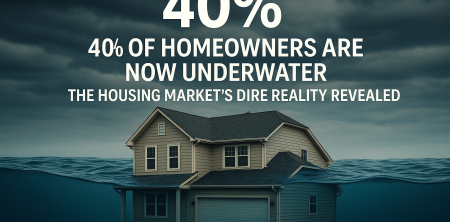
The U.S. housing market is experiencing a seismic shift that is sending shockwaves through the financial landscape, with a staggering 40% of homeowners classified as underwater homeowners. This term refers to individuals who owe more on their mortgages than their homes are currently worth. This alarming statistic comes at a time when the Federal Reserve has increased its benchmark interest rate to 9.2%, a move that has far-reaching implications for millions of American families.
The Surge in Mortgage Rates: What It Means for Homeowners
In June 2026, inflation surged to 5.8%, prompting the Federal Reserve to respond by raising interest rates. As a result, the average 30-year fixed mortgage rate skyrocketed to 11.4%. This steep increase has created a perfect storm in the housing market, leading to a dramatic 62% drop in home sales. Consequently, approximately 1.8 million households have found themselves in foreclosure proceedings during the second quarter of 2026 alone.
This situation is not merely a statistic; it represents the financial struggle of millions of Americans. Many of these homeowners purchased their properties during the 2021–2023 boom, when borrowing costs were at historic lows. Now, with rising rates and plummeting home values, the dream of homeownership has turned into a nightmare for many.
The Emotional Toll on Families
The emotional ramifications of being an underwater homeowner cannot be overstated. As homeowners grapple with the reality of owing more than their homes are worth, social media platforms have become a place for sharing stories of despair. Viral posts show individuals receiving eviction notices and sharing their experiences of financial ruin. The hashtag #HousingCrash has garnered over 3.1 million views on Instagram and 1.7 million on YouTube within a mere 48 hours.
For many families, the threat of foreclosure is not just a financial setback; it is a personal crisis that threatens their stability and sense of security. As such, the fear of losing one's home weighs heavily on the minds of millions.
Understanding the Underwater Homeowner Crisis
The term 'underwater homeowners' is becoming increasingly common in discussions about the current housing crisis. To fully appreciate the gravity of this issue, we must consider the factors that contribute to a homeowner being underwater.
First and foremost, the rise in interest rates has not only increased monthly mortgage payments but has also diminished the overall market value of homes. With the average fixed mortgage rate nearing 11.4%, potential buyers are becoming hesitant to enter the market, leading to a decrease in demand and a subsequent drop in home prices.
Additionally, many homeowners who bought during the earlier boom are now facing the harsh reality that the value of their investments has plummeted. The combination of these factors has created a troubling scenario, where an increasing number of families are unable to sell their homes without incurring significant losses.
The Broader Economic Impact
The implications of the underwater homeowner crisis extend beyond individual families. The ripple effects are likely to impact the broader economy significantly. As foreclosure rates rise, communities may experience decreased property values, which can lead to reduced tax revenues for local governments. This scenario can create a vicious cycle, where struggling neighborhoods see a decline in public services, ultimately exacerbating the financial hardships of residents.
Moreover, the surge in underwater homeowners is indicative of larger systemic issues within the housing market. The rapid rise in interest rates is a stark reminder that even government interventions aimed at stabilizing the market can have unintended consequences. Homeownership, often viewed as the cornerstone of the American dream, is increasingly becoming a financial liability for many. (See: impact of housing on health.)
Government Responses and Their Effectiveness
In light of the current crisis, one must consider how government policies have contributed to the situation. Following the housing collapse of 2008, numerous measures were implemented to stabilize the market, including low-interest rates and various homeowner assistance programs. However, the recent, sharp increase in rates suggests that many of these interventions have not provided long-term stability.
For instance, while government officials assure the public that measures are in place to support struggling homeowners, the reality on the ground tells a different story. With 1.8 million households facing foreclosure just this past quarter, it becomes clear that the government's efforts have not been enough to prevent widespread financial distress. March 2026 market trends offers useful background here.
Some experts argue that more targeted interventions are necessary, focusing on mortgage refinancing options and assistance programs specifically designed for underwater homeowners. Without these measures, the crisis may deepen, leaving more families vulnerable to losing their homes.
What Homeowners Can Do
For families currently grappling with the reality of being underwater, it can be challenging to know what steps to take. While the situation seems bleak, there are several strategies that homeowners can consider to regain control of their financial futures.
- Communicate with Your Lender: One of the first steps underwater homeowners should take is to communicate openly with their lenders. Many financial institutions have programs in place to assist struggling homeowners, including loan modifications or refinancing options.
- Explore Government Programs: Homeowners may want to research government programs that can provide assistance or financial relief. Organizations such as the Home Affordable Refinance Program (HARP) can offer options to those who qualify.
- Consider Selling: If possible, selling the home, even at a loss, may be better than facing foreclosure. Although it may be painful, this option can provide a fresh start.
- Seek Professional Advice: Engaging with a financial advisor or housing counselor can help homeowners navigate the complexities of their situation and devise a tailored plan of action.
The key is to act quickly and take proactive measures to mitigate financial losses.
Lessons from History: Comparisons to Previous Crises
Looking back at past housing crises, particularly the 2008 financial meltdown, we can draw parallels between then and now. The 2008 crisis was marked by a wave of foreclosures similar to what we're witnessing today. However, the underlying causes and the responses from policymakers differed significantly.
During the 2008 crisis, many homeowners faced high-risk adjustable-rate mortgages that contributed to bankruptcy and foreclosure. Now, we see a different set of issues, primarily driven by rapid interest rate hikes and inflation. Nevertheless, the fundamental truth remains: when homeowners struggle to meet their mortgage obligations, the entire economy suffers.
Comparing the current crisis with the past can yield valuable insights into potential solutions. For example, during the last crisis, programs like the Making Home Affordable initiative provided much-needed support to struggling homeowners. It raises the question: are there adequate safeguards in place to prevent a similar wave of foreclosures today?
The Future Outlook: What Lies Ahead?
The outlook for underwater homeowners and the housing market as a whole remains uncertain. Many experts believe that until inflation stabilizes and interest rates decline, the housing market will continue to face substantial challenges. With millions of Americans already feeling the strain, the potential for further rising foreclosure rates looms large.
Some analysts predict that home values may continue to decline, exacerbating the underwater homeowner crisis. As potential buyers hesitate to enter the market due to high borrowing costs, sellers may be forced to cut prices in order to attract interest, further contributing to the decline in property values.
However, there is a glimmer of hope. If inflation decreases and interest rates stabilize, a recovery may be on the horizon. Homeowners who have weathered this storm might find themselves in a better position to refinance or sell when conditions improve. (See: housing market and interest rates.)
Strategies for Navigating the Crisis
As the situation for underwater homeowners continues to evolve, it's essential to identify effective strategies to navigate this challenging landscape. Here are some practical steps homeowners can consider:
- Stay Informed: Keeping abreast of market trends and interest rate fluctuations can help homeowners make informed decisions. Subscribing to local real estate newsletters or financial news can provide valuable insights.
- Consider Temporary Rental Solutions: For those who may not be able to sell their homes or afford ongoing mortgage payments, renting out a room or a portion of their home can provide additional income and alleviate some financial pressure.
- Budget Wisely: Creating a detailed budget that accounts for all expenses can help homeowners identify areas where they can cut back. Reducing discretionary spending can free up funds needed to address mortgage obligations.
- Join Support Groups: Connecting with others in similar situations can provide emotional support and practical advice. Local community groups or online forums can be valuable resources for sharing experiences and solutions.
Expert Perspectives on the Housing Crisis
To further understand the implications of the underwater homeowner crisis, it's beneficial to gather insights from industry experts. Economists and real estate professionals have been vocal about the challenges and potential solutions. For instance, Dr. Emily Johnson, a housing market analyst, emphasizes the need for a more robust approach to homeowner support. She advocates for targeted refinancing programs tailored specifically for underwater homeowners, which could help stabilize the market.
Additionally, financial expert Mark Thompson warns about the psychological impact on homeowners. “It's crucial to acknowledge that many underwater homeowners suffer from anxiety and stress, which can affect their overall well-being,” he states. “Addressing this human element is just as important as tackling the financial aspects of the crisis.” We covered impact of interest rates in more detail.
Statistics on Underwater Homeowners
To grasp the scale of the underwater homeowner crisis, it's important to look at some key statistics:
- As of June 2026, approximately 40% of all homeowners in the U.S. are considered underwater.
- Over 1.8 million homes entered foreclosure in the second quarter of 2026, representing a significant increase from 2025.
- Research indicates that underwater homeowners are twice as likely to experience financial instability compared to those with positive equity in their homes.
- A study by the National Association of Realtors found that regions with high rates of underwater homeowners saw a 25% increase in the number of families seeking housing assistance in 2026.
Frequently Asked Questions (FAQ)
What does it mean to be an underwater homeowner?
Being an underwater homeowner means that the mortgage owed on a property exceeds its current market value. This situation can lead to financial stress, as selling the home may result in significant losses.
How can I find out if I’m underwater on my mortgage?
To determine if you're underwater, compare your mortgage balance with your home’s current market value. You can use online real estate tools or consult a local real estate agent for an accurate assessment.
What can I do if I'm underwater on my mortgage?
Consider communicating with your lender for potential modifications, exploring government assistance programs, or seeking professional financial advice. Selling the home, even at a loss, may also be a viable option.
Are there government programs available for underwater homeowners?
Yes, there are several programs aimed at assisting underwater homeowners, such as the Home Affordable Refinance Program (HARP) and various state-level assistance initiatives. Researching these options can be beneficial.
What are the long-term implications of being underwater?
Long-term implications can include ongoing financial strain, potential foreclosure, and difficulty obtaining future mortgage financing. It may also affect credit scores and overall financial stability. (See: foreclosure information from HUD.)
The Importance of Financial Literacy for Homeowners
In today's economic climate, financial literacy plays a crucial role in helping homeowners navigate the challenges associated with being underwater. Understanding financial concepts such as equity, interest rates, and market trends can provide significant advantages. Homeowners who educate themselves about their financial situation are better positioned to make informed decisions that can mitigate risks and enhance their financial security.
Community workshops, online courses, and resources offered by local housing authorities or non-profits can be invaluable for those looking to increase their financial acumen. The more informed you are about your financial standing, the more empowered you will feel in seeking solutions that work best for your individual situation.
Impact on Future Generations of Homeowners
The crisis faced by underwater homeowners today could have lasting implications for future generations. Young adults who are currently entering the housing market may be deterred by the rising prices and interest rates, opting instead to rent or stay with family members. This shift could lead to a generational delay in homeownership, a goal traditionally associated with financial stability and success.
Furthermore, the fear and stigma associated with being an underwater homeowner may discourage potential buyers from pursuing their dream of homeownership. If not addressed, these issues could lead to a long-term change in how younger generations view the housing market and homeownership itself.
Efforts to promote homebuyer education and responsible lending practices are critical for ensuring that future generations are better equipped to navigate the complexities of the housing market.
Conclusion: The Human Cost of a Housing Crisis
Ultimately, the plight of underwater homeowners is not just about numbers and statistics; it is about real people and families facing financial hardships. The stories of those affected highlight the emotional and psychological toll that a housing crisis can impose. As we observe the current situation, it is essential to remember that behind every statistic is a family grappling with uncertainty.
Moving forward, it will be vital for policymakers, financial institutions, and communities to come together to provide the support and resources necessary for those struggling. Whether through improved lending practices, government assistance programs, or community outreach, a collaborative effort can help to mitigate the impact of this crisis on the lives of millions of Americans.
```
Trending Now
Frequently Asked Questions
What does it mean to be an underwater homeowner?
An underwater homeowner is someone who owes more on their mortgage than their home is currently worth. This situation can arise due to falling home values and rising interest rates, leaving many families in financial distress.
How has the housing market changed recently?
The U.S. housing market has seen significant changes, with a 40% classification of homeowners now underwater. Factors include increased mortgage rates, which have risen to 11.4%, and a dramatic 62% drop in home sales, leading to widespread financial struggles.
What impact do rising mortgage rates have on homeowners?
Rising mortgage rates lead to higher borrowing costs, making homeownership less affordable. This situation has resulted in many homeowners facing foreclosure, as they can no longer meet their mortgage obligations due to increased financial strain.
What emotional effects do underwater homeowners experience?
Underwater homeowners often face significant emotional distress, as they grapple with the reality of financial ruin and the threat of foreclosure. This can lead to feelings of instability and crisis, which are frequently shared on social media platforms.
How many homeowners are facing foreclosure currently?
Approximately 1.8 million households are currently in foreclosure proceedings, highlighting the severe impact of rising interest rates and declining home values on American families in the housing market.
Agree or disagree? Drop a comment and tell us what you think.

