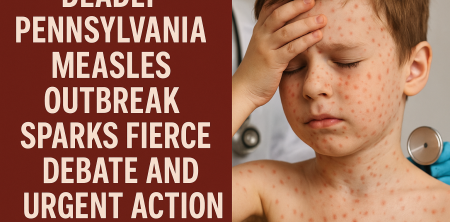
The air in Pennsylvania feels different these days, doesn't it? There's a palpable tension, a hum of anxiety that wasn't there just months ago. It's not about politics or the economy this time; it's about something far more primal: the health of our children. We're in the midst of the largest and deadliest measles outbreak the United States has seen this year, and Pennsylvania is right at its epicenter. With a staggering 767 reported cases in the state alone, and 93 new diagnoses just last week, this isn't just a news story; it's a deeply personal concern for every parent, grandparent, and caregiver in the region and beyond. The numbers are grim: four lives lost and 150 people hospitalized since April. This isn't just about a childhood rash; it's a high-stakes public health crisis that demands our immediate attention.
Nationwide, the picture is equally troubling. More than 3,400 measles cases have been reported across the U.S. in 2026, marking this as the worst year for the disease since it was declared eliminated in 2000. That's a quarter-century of progress unraveling before our eyes. The sheer scale of the Pennsylvania measles outbreak, and its national implications, has naturally ignited a firestorm of debate, fear, and urgent questions. How do we protect our families? What does this mean for school and travel plans? And perhaps most fundamentally, how did we get here? Let's unpack the situation, understand the risks, and explore the crucial steps we can all take to navigate this challenging time.
1. The Unsettling Numbers Behind the Pennsylvania Measles Outbreak: A Stark Reality
When we talk about numbers, it's easy for them to feel abstract, but these are anything but. The 767 confirmed measles cases in Pennsylvania represent a devastating surge, painting a grim picture of a highly contagious disease making a terrifying comeback. Imagine nearly 800 families grappling with this illness, many of them facing severe complications. This isn't just a statistical blip; it's a profound public health emergency unfolding in real-time, right here in our communities. Just last week, the addition of 93 new cases underscores the rapid and relentless spread of the virus, making it clear that the outbreak is far from contained.
Zooming out to the national level only amplifies the concern. Over 3,400 measles cases reported across the U.S. in 2026 marks a catastrophic reversal of decades of public health success. For context, measles was declared eliminated from the United States in 2000, a monumental achievement attributed to widespread vaccination efforts. To see such numbers now, a mere 26 years later, is not just disappointing; it’s a stark reminder of how quickly collective immunity can erode when vaccination rates drop. The implications for public health infrastructure, healthcare systems, and everyday life are immense, placing an unprecedented burden on our communities.
2. A Return to the Past: Why 2026 is the Worst Year Since Elimination
The year 2000 was a landmark for public health in the U.S. when measles was officially declared eliminated. This wasn't some minor victory; it meant that the disease was no longer endemic, no longer continuously transmitted within the country. It was a testament to robust vaccination programs, effective surveillance, and dedicated public health efforts. Fast forward to 2026, and we're seeing those gains eroded in a way that many experts feared but hoped to avoid. The current 3,400+ cases nationwide represent a dramatic regression, effectively setting us back to a pre-elimination era in terms of disease prevalence.
What changed? A confluence of factors, certainly, but a significant contributor has been the rise in vaccine hesitancy and refusal. As memory of the devastating impact of measles faded, replaced by misinformation and distrust, vaccination rates began to dip in certain communities. Measles is incredibly contagious – one infected person can spread it to 9 out of 10 unvaccinated people close to them. So, even small pockets of unvaccinated individuals can act as kindling for an outbreak, especially when the virus is reintroduced from international travel. This year's numbers are a painful lesson in the fragility of public health achievements.
3. The Human Cost: Deaths and Hospitalizations Mount
Behind every statistic is a human story, and in the case of this Pennsylvania measles outbreak, some of those stories have ended in tragedy. Four people have lost their lives to measles since April, a heartbreaking reminder that this is not a benign childhood illness. While often associated with a mild rash, measles can lead to severe complications, particularly in infants, young children, and immunocompromised individuals. These four deaths are not just numbers; they represent families torn apart, futures cut short, and a profound loss that could have been prevented.
Beyond the fatalities, 150 individuals have been hospitalized due to measles-related complications. That's 150 people requiring intensive medical care, often for conditions like pneumonia, encephalitis (brain swelling), or severe dehydration. Imagine the stress on their families, the strain on our hospitals, and the long-term health implications for those who recover from such severe illness. These hospitalizations underscore the seriousness of measles and the critical importance of preventing its spread. It's a disease that can take a heavy toll, both physically and emotionally.
4. Fear and Vaccination Debates: The Outbreak's Viral Impact
It's no surprise that the Pennsylvania measles outbreak has gone viral, not just in terms of disease transmission, but also in public discourse. This story taps into deep-seated fears – fear for our children's safety, fear of a disease many thought was relegated to history books, and fear of the unknown. When something threatens the health of our kids, every parent sits up and takes notice. This emotional resonance is what makes the outbreak such a dominant topic in conversations, on social media, and in news cycles. (See: CDC Measles Information.)
Naturally, this has reignited the fiercely contentious debate surrounding vaccination. On one side, public health officials and medical professionals are urgently advocating for increased vaccination rates, emphasizing the proven safety and effectiveness of the MMR (measles, mumps, and rubella) vaccine. On the other, vaccine-hesitant groups continue to voice concerns, often citing misinformation or personal beliefs. This clash of perspectives creates a complex and emotionally charged environment, making it challenging for accurate public health information to cut through the noise. It's a landscape of genuine fear mixed with deeply entrenched beliefs, making the public health challenge even greater.
5. Urgent Questions About School, Travel, and Protecting Our Children
For parents, the immediate aftermath of news about a measles outbreak is a barrage of practical, urgent questions. What does this mean for my child's school? Will there be closures? What if we have travel plans, especially internationally? How can I truly protect my children, especially if they're too young to be vaccinated or have medical contraindications? These aren't hypothetical concerns; they are real, immediate worries that shape daily decisions.
Schools, as hubs of child interaction, become central to the discussion. Unvaccinated children pose a risk not only to themselves but also to the wider school community, including infants and immunocompromised students who cannot receive the vaccine. Public health guidelines often involve excluding unvaccinated children from school during outbreaks to prevent further spread. Travel is another major concern; measles can easily be imported from countries where it's more common, and unvaccinated travelers risk both contracting and spreading the disease. For parents, understanding these risks and knowing the specific recommendations from local health authorities is paramount to making informed choices and safeguarding their families.
6. How Measles Spreads: Understanding the Enemy
To effectively protect ourselves and our families, it's crucial to understand how measles spreads. This isn't a casual contact disease; it's one of the most contagious infectious diseases known to man. The measles virus lives in the nose and throat mucus of an infected person. It spreads through the air when an infected person coughs or sneezes. The virus can remain active and contagious in the air and on surfaces for up to two hours after an infected person has left the area. Think about that for a moment: two hours. This means you don't even need to be in the same room as an infected person to catch it.
Symptoms typically appear 7-14 days after exposure and include a high fever (often over 103°F), cough, runny nose, and red, watery eyes. A few days later, tiny white spots with bluish-white centers (Koplik spots) might appear inside the mouth. Then, the characteristic measles rash breaks out, usually starting on the face and spreading down the body. An infected person can spread measles to others from four days before the rash appears to four days after, meaning they're contagious before they even know they have it. This long contagious window, combined with its airborne nature, makes measles incredibly difficult to contain without high levels of immunity in the population.
7. The Power of the MMR Vaccine: Your Best Defense
Against such a formidable foe, what's our most powerful weapon? The MMR (measles, mumps, and rubella) vaccine. This vaccine is incredibly effective and safe, providing robust, long-lasting immunity against all three diseases. The CDC recommends two doses of the MMR vaccine for most children: the first dose at 12 to 15 months of age, and the second dose at 4 to 6 years of age, before they start kindergarten. With two doses, the MMR vaccine is about 97% effective at preventing measles. That's an astonishing level of protection.
For adults, if you were born in 1957 or later and haven't had measles or been vaccinated, you should get at least one dose of the MMR vaccine. Healthcare workers, international travelers, and college students might need two doses. The vaccine not only protects the individual but also contributes to 'herd immunity,' a crucial concept where a high percentage of vaccinated individuals protects those who cannot be vaccinated (like infants or those with compromised immune systems). The science is clear, the data is overwhelming, and the safety record is impeccable. The MMR vaccine is, quite simply, the cornerstone of measles prevention.
8. Public Health Response: Containing the Pennsylvania Measles Outbreak
In the face of such a severe Pennsylvania measles outbreak, public health agencies are working tirelessly to contain its spread and mitigate its impact. This involves a multi-pronged approach. First, there's aggressive contact tracing, identifying every individual who may have come into contact with a confirmed case. These contacts are then monitored for symptoms, and unvaccinated contacts are often advised to quarantine or receive a post-exposure vaccination if eligible, which can sometimes prevent or lessen the severity of the disease if given within 72 hours of exposure.
Secondly, public health campaigns are in full swing, aiming to educate the public about the risks of measles and the importance of vaccination. This includes disseminating accurate information, countering misinformation, and making vaccines easily accessible through clinics and healthcare providers. Schools and childcare centers are also implementing stricter policies regarding vaccination status and exclusions during outbreaks, all in an effort to create a ring of protection around the most vulnerable. It's a monumental undertaking, requiring cooperation from individuals, communities, and government agencies alike. (See: WHO Measles Fact Sheet.)
9. Moving Forward: What You Can Do Right Now
So, what can you, as a concerned parent or community member, do right now to help stem the tide of this Pennsylvania measles outbreak? The most important step is to ensure that you and your family are up-to-date on your MMR vaccinations. Check your family's immunization records; if you're unsure, speak with your doctor. It's never too late to get vaccinated, and it's your best defense against this highly contagious disease. If you have an infant too young for vaccination, or a family member with a compromised immune system, it's even more critical that everyone around them is vaccinated to create that protective herd immunity.
Beyond vaccination, practice good hygiene: frequent hand washing, covering coughs and sneezes, and avoiding touching your face. If you or a family member develops symptoms consistent with measles, isolate yourselves immediately and call your doctor before going to a clinic or emergency room. This helps prevent further spread in healthcare settings. Stay informed by relying on credible sources like the CDC and your local health department, and share accurate information with your social circles. This is a collective challenge, and our collective action is the only way we'll overcome it. Let's work together to protect our communities and ensure that the devastating numbers we're seeing in 2026 become a cautionary tale, not a continuing reality.
10. The Economic Ripple Effect: More Than Just Health Costs
When we talk about an outbreak of this scale, it’s not just about the direct medical costs. A Pennsylvania measles outbreak, or any widespread infectious disease, creates significant economic ripple effects that touch almost every aspect of daily life. Think about the strain on healthcare systems: overflowing emergency rooms, increased demand for specialized care, and the need for more staff. Hospitals face immense pressure, diverting resources from other areas to handle the surge in measles cases. This isn't cheap; diagnosis, treatment, and isolation protocols all come with hefty price tags.
But the economic impact goes far beyond hospital bills. Consider the lost productivity. Parents have to miss work to care for sick children or because schools are closed. Adults who contract measles can be out of commission for weeks, impacting their employers and the wider economy. Businesses, especially those reliant on foot traffic or large gatherings, might see a downturn as people become more cautious. Travel industries take a hit. Public health agencies also incur significant costs for contact tracing, public awareness campaigns, and providing free or subsidized vaccinations. The total economic burden of a large-scale outbreak like this can quickly reach into the millions, if not billions, of dollars, highlighting why prevention is always the most cost-effective strategy.
11. The Psychology of an Outbreak: Trust, Fear, and Community Response
An outbreak like the Pennsylvania measles outbreak doesn't just affect physical health; it deeply impacts the psychological landscape of a community. There's an undeniable sense of fear and anxiety, especially for parents of young children or those with vulnerable family members. This fear can lead to changes in behavior, like avoiding public spaces or canceling plans, which in turn affects social cohesion and local economies.
Crucially, an outbreak also tests the public's trust in institutions – in government, in healthcare providers, and in scientific experts. When information is conflicting or when misinformation spreads rapidly, that trust can erode, making public health efforts even harder. The debates around vaccination aren't just about science; they're deeply rooted in personal beliefs, values, and trust in authority. Public health communicators face the delicate task of providing clear, consistent, and empathetic information to rebuild and maintain that trust. A strong, unified community response, built on factual information and mutual support, is essential to navigating the psychological challenges that come with a public health crisis.
12. Lessons from History: Why Measles Elimination Was a Triumph
To truly grasp the severity of the current situation, it helps to look back at what life was like before the MMR vaccine. Measles wasn't just a common childhood illness; it was a devastating scourge. In the years before the vaccine became widely available in the U.S. in 1963, almost all children got measles by age 15. Each year, there were around 3 to 4 million cases, resulting in approximately 48,000 hospitalizations, 1,000 cases of encephalitis (brain swelling), and 400 to 500 deaths. Imagine those numbers in today's population – it would be catastrophic.
The elimination of measles in the U.S. in 2000 was heralded as one of the greatest public health achievements of the 20th century. It wasn't an accident; it was the direct result of a sustained, nationwide effort to vaccinate children and maintain high levels of population immunity. This historical context is vital because it reminds us of the true power of vaccination and the very real dangers we've successfully pushed back against. The current Pennsylvania measles outbreak isn't just a setback; it's a stark warning that if we forget these lessons, history has a way of repeating itself, with tragic consequences. (See: NIH on Measles Outbreaks.)
Frequently Asked Questions (FAQ) About the Pennsylvania Measles Outbreak
Q1: How do I know if I or my child is immune to measles?
A1: The best way to know if you're immune is through vaccination records. Most people born in 1957 or later need two doses of the MMR vaccine for robust protection. If you had measles confirmed by a doctor before 1957, you're likely immune. If you're unsure, or don't have records, your doctor can order a blood test to check for measles antibodies. For most adults without clear records, getting an MMR vaccine is a safe and effective way to ensure protection.
Q2: My child is too young for the MMR vaccine. How can I protect them?
A2: Infants under 12 months are particularly vulnerable. The most effective way to protect them is to ensure everyone around them – parents, siblings, caregivers, and anyone who will have close contact – is fully vaccinated against measles. This creates "herd immunity" or a "cocooning effect" around the infant. Also, try to limit their exposure to large crowds, especially during an outbreak, and practice excellent hand hygiene.
Q3: What should I do if I think I've been exposed to measles?
A3: If you suspect exposure, contact your doctor or local health department immediately. Do NOT just show up at an emergency room or clinic without calling first, as this could expose others. They will advise you on testing, monitoring symptoms, and potential post-exposure prophylaxis (like an MMR vaccine or immune globulin, depending on your vaccination status and time since exposure) which can sometimes prevent or lessen the severity of the illness.
Q4: Can I get measles even if I'm fully vaccinated?
A4: While rare, it is possible for fully vaccinated individuals to get measles, though it's usually a much milder illness. This is called "breakthrough measles." The MMR vaccine is about 97% effective with two doses, meaning a small percentage of people may not develop full immunity. However, being vaccinated significantly reduces your risk of severe complications, hospitalization, and death.
Q5: Is there any treatment for measles once someone has it?
A5: There is no specific antiviral treatment for measles. Treatment focuses on supportive care to manage symptoms and prevent complications. This might include fever reducers, plenty of fluids, and rest. In some cases, vitamin A supplements may be recommended, especially for children in developing countries, to reduce the severity of the disease. Hospitalization is necessary for severe complications like pneumonia or encephalitis.
Q6: How long do I need to isolate if I get measles?
A6: If you have measles, you are contagious from four days before the rash appears to four days after the rash starts. Public health guidelines typically recommend isolation for at least four full days after the rash onset to prevent further spread. Your doctor or local health department will provide specific guidance based on your individual case.
Trending Now
Frequently Asked Questions
What caused the measles outbreak in Pennsylvania?
The current measles outbreak in Pennsylvania is attributed to a decline in vaccination rates and misinformation about vaccines. This has led to a resurgence of the disease, with 767 confirmed cases reported, marking a significant public health crisis.
How many measles cases have been reported in the U.S. this year?
In 2026, there have been over 3,400 reported cases of measles across the United States, making it the worst year for the disease since it was declared eliminated in 2000.
What are the symptoms of measles to watch for?
Measles symptoms typically include high fever, cough, runny nose, inflamed eyes, and a distinctive red rash that usually appears 3-5 days after the onset of initial symptoms. Early identification is crucial for preventing further spread.
What steps can families take to protect against measles?
Families can protect against measles by ensuring that all members are up-to-date on vaccinations, especially the MMR (measles, mumps, rubella) vaccine. Staying informed and avoiding exposure to infected individuals are also essential preventative measures.
What should parents do if their child shows measles symptoms?
If a child shows symptoms of measles, parents should contact their healthcare provider immediately. It's important to keep the child isolated from others to prevent spreading the virus and to follow medical advice for further steps.
What's your take on this? Share your thoughts in the comments below — we read every one.

