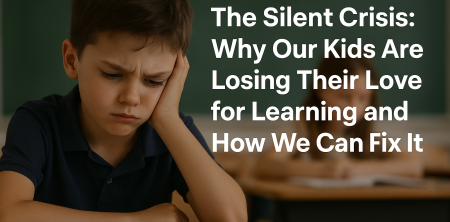
It's an unsettling reality that quietly permeates homes and classrooms across the globe: our children are disengaging from learning at an alarming rate. It’s not just a hunch; the data paints a stark picture of a 'learning recession' that has been deepening for over a decade. We're seeing fewer students showing up, less enthusiasm when they do, and a worrying slide in academic performance that has serious implications for their futures and ours.
Consider the numbers: studies have charted a steady, disheartening decline in reading and math scores since as far back as 2013. This isn't some post-pandemic blip; the crisis was brewing long before COVID-19 forced us all into remote learning. And it's not just about test scores; it's about a fundamental shift in how young people relate to education. They're bored, they're anxious, and frankly, many just don't see the point anymore. As we grapple with this complex issue, the urgent need for genuine education reform becomes undeniable.
The Unsettling Truth: A Decade of Decline
When we talk about a 'learning recession,' it's crucial to understand that this isn't a recent phenomenon. While the pandemic certainly exacerbated many existing issues, the roots of student disengagement and declining academic performance stretch back much further. Data from various international assessments, like the Programme for International Student Assessment (PISA), have shown a consistent downward trend in key subjects such as reading and mathematics across many developed nations since 2013. This wasn't a sudden drop; it was a gradual erosion, almost imperceptible in its early stages, but now undeniable in its cumulative effect.
This long-term decline suggests that the problems run deeper than simply adjusting to new teaching methods or recovering from missed classroom time. It points to systemic issues, shifts in societal norms, and perhaps even fundamental changes in how young brains are developing and interacting with the world. We can't simply blame the pandemic and expect things to magically revert to some golden age. The challenge demands a more rigorous self-examination of our educational models and a willingness to confront uncomfortable truths about the world our children inhabit.
The Digital Shadow: Smartphones, Screens, and Shifting Minds
One of the most frequently cited culprits in this educational downturn is the omnipresent screen. Think about it: our kids are growing up in a world saturated with digital devices, from tablets to laptops to, most powerfully, smartphones. The sheer volume of screen time, coupled with the addictive nature of social media and instant entertainment, has fundamentally altered attention spans and the very way young people process information. Jenny Anderson, a journalist and author of 'The Disengaged Teen,' has extensively explored this connection, arguing that the constant stimulation and instant gratification offered by screens make the slower, more demanding process of traditional learning feel… well, boring.
It's not just about distraction during class, though that's certainly a major factor. The issue extends to how brains are being rewired. Deep reading, sustained concentration, critical analysis – these are skills that require focused, uninterrupted attention. But if a young person's brain is constantly anticipating the next notification, the next 'like,' the next viral video, then cultivating that deep focus becomes incredibly difficult. This isn't to say technology is inherently evil, but its unchecked integration into daily life, particularly for developing minds, has clearly had unintended and largely negative consequences on cognitive development and academic readiness. Any meaningful education reform must seriously contend with the digital environment.
The Mental Health Fallout: A Generation Under Strain
Hand-in-hand with declining academic performance and increasing disengagement is a deeply concerning rise in youth mental health struggles. This isn't anecdotal; it's backed by a growing body of research indicating higher rates of anxiety, depression, and other mental health conditions among adolescents. The pressure to perform, the constant comparison fostered by social media, cyberbullying, and a general sense of uncertainty about the future all contribute to a significant burden on young people's emotional well-being. And let's be honest, it's incredibly hard to learn effectively when you're struggling with your mental health.
When a student is battling anxiety, focusing on a history lesson feels like an insurmountable task. When depression saps their energy, attending school at all can be a monumental effort. We're seeing the consequences in higher rates of absenteeism, decreased participation, and a general malaise that permeates many classrooms. Addressing this mental health crisis isn't just a humanitarian concern; it's an educational imperative. Effective education reform needs to integrate robust mental health support into the very fabric of our schools, recognizing that a healthy mind is a prerequisite for effective learning.
Are Phone Bans Enough? A Misplaced Focus?
In response to the undeniable impact of smartphones, many authorities are taking action. The UK, for instance, is moving to ban social media for under-16s starting next spring, and numerous schools globally are implementing or strengthening phone bans during the school day. On the surface, this seems like a logical and necessary step. Removing the immediate source of distraction in the classroom can only be a good thing, right?
While these measures are certainly a step in the right direction – and frankly, long overdue in many instances – there's a risk they might be viewed as a silver bullet. Journalist Jenny Anderson, among others, suggests that while phone bans are helpful, they might be addressing a symptom rather than the underlying disease. If students are already deeply disengaged, simply removing their phones might lead to more boredom, frustration, or a search for other distractions, rather than a sudden rekindling of their love for learning. The problem isn't just that phones are present; it's that learning itself has, for many, lost its intrinsic appeal. True education reform demands we look beyond the obvious. (See: CDC Youth Risk Behavior Surveillance.)
Rediscovering the Joy of Learning: Shifting Our Approach
If phone bans are merely a starting point, what's the deeper work involved in truly turning this around? The answer, many experts believe, lies in helping students rediscover the inherent joy and purpose of learning. This means moving beyond rote memorization and standardized tests to create educational experiences that are genuinely engaging, relevant, and inspiring. It's about fostering curiosity, critical thinking, and a sense of agency in their own education.
Consider the difference between being told to memorize dates for a history exam versus embarking on a project where students research a historical event, interview local experts, and present their findings in a creative way. One is passive and often tedious; the other is active, collaborative, and deeply meaningful. We need to create environments where students feel challenged but supported, where their voices are heard, and where they can see a clear connection between what they're learning and the real world around them. This shift in pedagogical approach is central to any successful education reform effort.
Curriculum for the 21st Century: Relevance and Rigor
Part of the disengagement problem stems from a curriculum that, in many places, feels outdated and disconnected from the realities of the modern world. While foundational knowledge in subjects like math, science, and literature remains crucial, how we teach it and what we prioritize needs a serious re-evaluation. Are we preparing students for jobs that no longer exist? Are we equipping them with the skills they'll actually need in a rapidly evolving global economy and society?
True education reform demands a curriculum that balances traditional academic rigor with skills like critical thinking, problem-solving, creativity, collaboration, and digital literacy. It means incorporating real-world projects, interdisciplinary studies, and opportunities for students to explore their passions. Imagine a science class that partners with a local environmental group to analyze water quality, or a literature class that uses contemporary media to explore timeless themes. When learning feels relevant and empowers students to make a difference, engagement naturally follows. We need to move away from a 'one-size-fits-all' model and embrace more personalized learning pathways.
Empowering Educators: The Linchpin of Change
No amount of curriculum redesign or policy changes will succeed without a highly skilled, motivated, and supported teaching force. Our educators are on the front lines, navigating increasingly complex classrooms, dealing with mental health crises, and trying to inspire a generation often more captivated by TikTok than textbooks. Yet, too often, they are underpaid, overworked, and burdened by excessive administrative tasks and rigid testing mandates.
Effective education reform must prioritize empowering teachers. This means investing in ongoing professional development that equips them with modern pedagogical strategies, particularly those focused on engagement and technology integration. It means reducing class sizes, providing adequate support staff (counselors, social workers), and offering competitive salaries that attract and retain top talent. Most importantly, it means trusting teachers as professionals, giving them the autonomy to adapt lessons to their students' needs, and fostering a culture of innovation rather than stifling it with bureaucratic red tape. We can't expect miracles from burnt-out, undervalued professionals.
The Role of Community and Parental Engagement
Schools don't operate in a vacuum. The broader community and, most importantly, parents play an absolutely vital role in fostering a love for learning and supporting educational success. When students see that their education is valued at home, by their families, and by their community, it reinforces the message that learning matters. This isn't just about attending parent-teacher conferences; it's about creating a culture where learning is celebrated, where curiosity is encouraged, and where parents are active partners in their children's educational journey.
This could involve schools actively reaching out to families, offering workshops on supporting learning at home, or creating community-based learning opportunities outside of school hours. For instance, local businesses could offer mentorships, libraries could host interactive learning programs, and community centers could provide safe spaces for homework and group projects. When schools, families, and communities work together, they create a powerful ecosystem that can truly transform the educational landscape and make substantial progress in education reform.
Leveraging Technology Thoughtfully: Beyond Distraction
While the digital shadow is a concern, it's also true that technology, when used purposefully, can be a powerful tool for education reform. The challenge isn't to eliminate technology, but to harness its potential in ways that enhance learning, rather than hinder it. This means moving beyond simply putting screens in front of kids and instead integrating tools that facilitate personalized learning, adaptive assessments, and collaborative projects. Think about virtual reality field trips that make history come alive, or AI-powered tutors that provide individualized support for struggling students.
However, this requires significant investment in teacher training so educators feel confident and competent using these tools effectively. It also demands careful curation of digital content to ensure it's educational, age-appropriate, and aligns with learning objectives. The goal should be to make technology a bridge to deeper understanding and engagement, not just another source of passive consumption. Thoughtful integration can help create dynamic learning environments that cater to diverse learning styles and prepare students for a technologically advanced future. (See: NIH Learning Disorders Overview.)
Addressing Educational Equity: Closing the Gaps
Any discussion of comprehensive education reform would be incomplete without addressing the persistent issue of educational equity. The 'learning recession' disproportionately impacts students from disadvantaged backgrounds, widening existing achievement gaps. Factors like poverty, lack of access to resources (both digital and traditional), and systemic inequalities create significant barriers to learning for many children. This isn't just about fairness; it's about the future potential of our entire society.
Real reform needs to prioritize equitable access to high-quality education for all students, regardless of their socioeconomic status, location, or background. This might mean increased funding for schools in low-income areas, targeted support programs, access to early childhood education, and addressing issues like food insecurity and housing instability that directly impact a child's ability to learn. We need to dismantle systemic barriers and ensure every child has the opportunity to succeed, not just a privileged few. Ignoring these disparities means we're only patching holes, not rebuilding the foundation.
Measuring What Matters: Beyond Standardized Tests
The current reliance on high-stakes standardized tests often narrows the curriculum, encourages rote memorization, and fails to capture the full spectrum of a student's abilities and growth. While some form of assessment is necessary, a true education reform agenda would re-evaluate how we measure success. We need to move towards more holistic assessment methods that value critical thinking, creativity, problem-solving, and socio-emotional development. This could include project-based assessments, portfolios, presentations, and ongoing formative assessments that provide actionable feedback to students and teachers.
When tests dictate teaching, the joy of learning often gets squeezed out. Shifting our focus to measuring skills and understanding, rather than just recall, would free up educators to innovate and create more engaging learning experiences. It would also reduce the immense pressure on students and potentially alleviate some of the mental health strain associated with high-stakes testing. What we measure signals what we value, and right now, we're not always valuing the right things for a 21st-century education.
Expert Perspectives on the Path Forward
Leading education reformers and cognitive scientists often echo similar themes when discussing solutions. Dr. Carol Dweck, known for her work on growth mindset, emphasizes fostering a belief in students that intelligence can be developed, not just something you're born with. This means celebrating effort and perseverance, rather than just innate talent. Sir Ken Robinson famously argued for nurturing creativity and recognizing diverse intelligences, pushing back against a standardized system that often stifles individual strengths.
Many experts also highlight the importance of play and experiential learning, especially in early childhood, but extending into higher grades. Learning isn't confined to a desk; it happens through exploration, experimentation, and interaction with the world. Drawing on these perspectives means designing learning environments that are dynamic, responsive, and deeply human, resisting the urge to turn education into a factory model. The consensus leans towards a more personalized, human-centered approach that understands the unique needs and potential of each learner.
A Holistic Vision for Education Reform
Ultimately, turning around our struggling education system requires a holistic vision – one that acknowledges the interconnectedness of academic performance, mental well-being, technological influence, and societal shifts. It's not about implementing one quick fix; it's about a comprehensive, sustained effort that rethinks the very purpose and structure of education for the 21st century. We need to move beyond simply transmitting information and instead focus on cultivating critical thinkers, compassionate citizens, and lifelong learners who are equipped to thrive in an unpredictable world.
This means brave leadership willing to challenge entrenched ideas, policymakers committed to long-term investment, and educators empowered to innovate. It means parents who understand their crucial role in fostering a learning-rich environment, and communities that see their schools as vital hubs of growth and development. The 'learning recession' is a serious challenge, but it also presents an opportunity – an opportunity to reimagine what education can be, to reignite the spark of curiosity in our young people, and to build a future where learning is not just a requirement, but a genuine source of joy and empowerment for every child.
The path forward won't be easy, and there will be debates and disagreements along the way. But one thing is clear: we cannot afford to continue down the current trajectory. Our children, and the future of our societies, depend on us getting this right. It's time for bold, thoughtful, and sustained education reform that truly puts the learner at its heart.
Frequently Asked Questions About Education Reform
What exactly is "education reform"?
Education reform refers to any systematic effort to improve public or private education. This can involve changes to curriculum, teaching methods, school administration, funding models, assessment practices, and policies related to student well-being. The goal is usually to enhance student outcomes, improve equity, and better prepare students for future challenges.
Why is education reform needed now more than ever?
Several factors highlight the urgent need for education reform. We're seeing declining academic performance, widespread student disengagement, a growing youth mental health crisis, and the pervasive influence of digital technology. Our current educational models often feel outdated for the demands of the 21st century, making reform essential to address these complex, interconnected challenges.
Is technology a friend or foe in education reform?
Technology is neither inherently friend nor foe; it's a tool. Its impact depends entirely on how it's used. Unchecked use, like excessive smartphone time, can lead to distraction and reduced attention spans. However, when integrated thoughtfully, technology can personalize learning, provide adaptive support, and create engaging, interactive experiences that enhance education. The key is purposeful, pedagogical integration.
How can we better support teachers in this reform process?
Supporting teachers is critical. This means investing in ongoing professional development that equips them with modern strategies, reducing administrative burdens, providing adequate support staff (like counselors), and offering competitive salaries. Empowering teachers also involves giving them more autonomy in the classroom and fostering a culture of innovation and trust, rather than stifling them with rigid mandates.
What role do parents and the community play in education reform?
Parents and the broader community are absolutely vital. When families are engaged and value education at home, it reinforces the importance of learning for children. Communities can support schools through partnerships with local businesses, mentorship programs, and providing safe, enriching learning spaces outside of school hours. A strong school-family-community partnership creates a powerful support system for students and reform efforts.
What are some examples of successful education reform?
Successful reforms often involve a combination of factors. Finland's education system, for example, is renowned for its focus on highly trained teachers, less standardized testing, and equitable access. Other examples include schools that have successfully implemented project-based learning models, integrated robust mental health services, or adopted personalized learning pathways that cater to individual student needs and interests. The common thread is a learner-centered approach.
How long does it take to see the results of education reform?
Education reform is a long-term endeavor, not a quick fix. Systemic changes can take years, even decades, to fully manifest their impact. While some immediate improvements might be seen, like reduced absenteeism with a phone ban, cultural and academic shifts require sustained effort and patience. It's an ongoing process of adaptation and improvement.
Trending Now
- our breakdown of british man fined £2,500 after son fell to death from cyprus hotel window | itv news
- 53% of Dads Admit This Devastating…
- this guide on this one thing is unleashing a catastrophe on our kids online — and no one’s stopping it
- this guide on unbelievable: ai joins the school culture wars — here’s how your kids’ education could change forever
Frequently Asked Questions
Why are kids losing interest in learning?
Kids are losing interest in learning due to a combination of factors, including boredom, anxiety, and a perceived lack of purpose in education. This disengagement has been exacerbated by a long-term decline in academic performance and societal shifts that impact how children relate to learning.
What is the learning recession?
The learning recession refers to a significant decline in student engagement and academic performance over the past decade, particularly in reading and math scores. This trend predates the COVID-19 pandemic and highlights systemic issues in education that need urgent reform.
How has the pandemic affected children's education?
While the pandemic intensified existing challenges in education, the decline in student engagement and performance began well before COVID-19. The shift to remote learning highlighted deeper issues within the education system rather than being the sole cause of the crisis.
What are the signs of declining student engagement?
Signs of declining student engagement include fewer students attending school, decreased enthusiasm during lessons, and a noticeable drop in academic performance. These trends indicate a worrying disconnect between students and their educational experiences.
What can be done to improve children's love for learning?
Improving children's love for learning requires genuine education reform that addresses systemic issues, engages students in meaningful ways, and fosters a supportive environment that reduces anxiety and boredom, ultimately helping students find purpose and motivation in their education.
Agree or disagree? Drop a comment and tell us what you think.

