```html
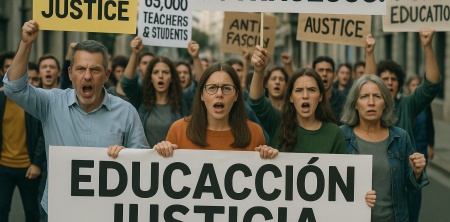
Imagine a crisp autumn morning, not too far in the future – October 17, 2026, to be precise. The streets of Madrid, usually bustling with the rhythmic hum of daily life, are instead filled with a different kind of energy: a powerful, resonant roar. This isn't a celebration; it's a protest. Tens of thousands of teachers and students, an estimated 65,000 strong, have poured out of their classrooms and onto the streets, driven by a deep well of frustration and a fervent desire for change. This massive Spain teachers strike isn't just a local spat; it's a stark, emotionally charged demonstration of the severe pressures buckling under the weight of Spain's public education system, particularly in the Madrid region. And as we'll explore, it’s a situation that echoes far beyond the Iberian Peninsula.
The demands are clear, echoing grievances heard in countless education systems worldwide: better teacher salaries, a desperate need to reduce punishing working hours, smaller class sizes that allow for genuine teaching, and a significant, tangible increase in investment across the entire education infrastructure. What started as a coordinated strike quickly escalated. Students, those most directly impacted by the system's failings, took matters into their own hands, blockading educational institutions. The air grew tense, and before long, clashes erupted with riot police. The images, if you can picture them, are sobering: confrontations in the streets, several arrests made, and injuries reported. This isn’t a gentle negotiation; it’s a full-blown confrontation, highlighting the critical juncture at which public education finds itself.
The Spark That Ignited the Spain Teachers Strike: A Deep Dive into Madrid's Woes
To truly understand the intensity of the Spain teachers strike, we need to peel back the layers of what's been happening in Madrid. For years, educators and parents have watched with growing concern as the public education system in the capital region faced what many describe as a slow strangulation. Budget cuts, often framed as necessary austerity measures, have chipped away at the very foundations of quality learning. These aren't abstract numbers on a spreadsheet; they translate directly into fewer resources for classrooms, a reduction in vital support staff, and a tightening of the belt that often forces teachers to do more with less – far less.
Think about what that means in practice: a teacher, already passionate and dedicated, might find their class size creeping up year after year, making individualized attention a near impossibility. Art programs might get cut. Library hours might be reduced. Crucially, the pay for these professionals, who dedicate their lives to shaping future generations, often stagnates or even declines in real terms, failing to keep pace with the rising cost of living in a major European city like Madrid. This steady erosion of support and compensation creates an environment where burnout becomes rampant, morale plummets, and the best and brightest might think twice about entering or staying in the profession. The October 2026 strike wasn't an isolated incident; it was the culmination of years of simmering discontent finally boiling over.
More Than Just Money: The Core Demands of the Strikers
While increased salaries are a significant driver behind any labor action, particularly in a high-cost area, the Spain teachers strike in Madrid is about much more than just a pay raise. The demands articulated by the 65,000 participants point to a systemic breakdown that requires a holistic solution. Let's break down these critical areas:
First, the call for reduced working hours isn't about teachers wanting to work less; it's about ensuring they can work effectively. Beyond classroom instruction, teachers spend countless hours planning lessons, grading papers, meeting with parents, attending professional development, and managing administrative tasks. When these hours become excessive and uncompensated, it eats into personal time, leads to exhaustion, and ultimately impacts the quality of teaching. A reasonable workload is essential for sustained performance and mental well-being.
Second, smaller class sizes are a pedagogical imperative. It's a simple truth: a teacher with 15 students can offer far more personalized attention, identify learning difficulties sooner, and foster a more engaging environment than one with 30 or 35 students. Large classes dilute the educational experience for everyone, making it harder for teachers to connect with individual learners and for students to receive the tailored support they need. The demand for smaller classes is a direct plea for better learning outcomes.
Finally, the overarching demand for increased investment in education speaks to the long-term vision. This isn't just about patching immediate holes; it's about building a robust, resilient system capable of preparing students for a rapidly changing world. This includes everything from modernizing facilities and updating technology to providing adequate funding for extracurricular activities, special education services, and ongoing professional development for educators. When a society underinvests in its schools, it’s essentially shortchanging its own future, and the striking teachers and students in Madrid are making that point unequivocally clear.
Student Voices: Why They Joined the Front Lines
It's one thing for teachers to strike; it's another entirely for students to join them in such significant numbers, even blockading their own schools. This isn't just kids skipping class; it’s a powerful statement of solidarity and a testament to how deeply the issues are affecting them. When students feel compelled to take such drastic action, it signals a fundamental breakdown in their learning environment. They are, after all, the direct recipients of the education system's strengths and weaknesses. (See: Spain's education system challenges.)
Imagine being a student in a class of 35, struggling with a concept, and knowing your teacher is stretched thin, unable to give you the one-on-one time you desperately need. Or perhaps you've seen beloved teachers leave mid-year, driven away by untenable conditions, leading to a revolving door of substitutes and a lack of continuity. Students are keenly aware when their schools lack up-to-date textbooks, functional equipment, or even basic supplies. They see the toll it takes on their teachers – the stress, the exhaustion, the quiet desperation. Their participation in the Spain teachers strike isn't just about abstract principles; it's about their lived experience, their daily reality within underfunded and understaffed classrooms. Their willingness to confront riot police and face arrests underscores the depth of their commitment and the seriousness of the situation. They are fighting for their own future, a future they believe is being compromised by inadequate educational investment.
Clashes and Consequences: The Human Cost of Protest
The transition from peaceful protest to confrontation with riot police is always a sobering moment, and the events of October 17, 2026, in Madrid were no exception. The reports of clashes, arrests, and injuries paint a stark picture of the emotional intensity and the stakes involved. When citizens, especially students, are met with force while advocating for fundamental rights like quality education, it raises serious questions about the state's response to dissent.
For those involved, an arrest isn't just a legal procedure; it can carry lasting consequences, from criminal records to psychological trauma. Injuries, even minor ones, are a physical manifestation of the conflict and a reminder of the risks taken. Such events can also galvanize public opinion, drawing more attention and sympathy to the cause, but they also highlight the potential for escalation and the difficult choices faced by both protesters and authorities. The fact that the situation devolved to this point speaks volumes about the level of frustration that had built up within the educational community and the perceived lack of responsiveness from the government. It becomes a cycle: unmet demands lead to protest, protest sometimes leads to confrontation, and confrontation can either solidify resolve or sow fear. In Madrid, it seems to have solidified the resolve of many.
A Global Echo: Spain's Crisis Resonates Beyond Its Borders
While the Spain teachers strike is specific to Madrid and its unique political and economic context, the underlying issues are far from isolated. This isn't just a Spanish problem; it’s a global phenomenon. Look across continents, and you'll find similar narratives of underfunded public education systems, overworked teachers, and students whose learning experiences are being compromised. The universal importance of teacher welfare and quality education means these issues resonate deeply, sparking social media engagement and broader conversations.
Consider the United States, for instance. Reports of climbing teacher turnover are becoming increasingly common, especially in areas where schools already face significant challenges. Memphis, Tennessee, provides a particularly poignant example. Lower-performing schools in that city are struggling with deepening staffing issues, creating a vicious cycle where a lack of experienced educators further hampers student progress. When teachers leave, often citing low pay, excessive workload, and a lack of support, it creates instability. New teachers, often less experienced, step into difficult situations, and the cycle continues. This parallel isn't accidental; it points to a systemic challenge that transcends national borders, economic systems, and cultural differences. Every country grapples with how to adequately fund and support its education system, and every country risks a similar crisis if it fails to prioritize its educators.
The Economic Imperative: Why Investing in Education Pays Off
Some might view the demands of the Spain teachers strike as purely a cost, a drain on public coffers. However, a wealth of economic research consistently demonstrates that investing in education is not merely an expense but a critical investment with substantial long-term returns. Quality education is a cornerstone of economic growth, social mobility, and democratic stability.
When you adequately pay teachers, reduce their workload, and provide them with well-resourced classrooms, you attract and retain top talent. These skilled educators, in turn, produce a more highly educated workforce. A better-educated populace is more innovative, more productive, and more adaptable to changing economic landscapes. They earn higher wages, contribute more in taxes, and are less reliant on social safety nets. This creates a virtuous cycle: investment in education leads to a stronger economy, which in turn provides more resources for further investment. Conversely, underinvestment leads to a less skilled workforce, reduced economic competitiveness, and increased social costs down the line. The Madrid teachers and students are not just asking for charity; they are arguing for a strategic investment in Spain's future prosperity.
Beyond the Headlines: The Daily Reality for Educators
It's easy to read about a strike and see it as a political maneuver or a battle over budgets. But behind every headline are the daily realities of thousands of dedicated professionals. For teachers in Madrid, and indeed across many parts of the world, the decision to strike is rarely taken lightly. It’s often a last resort, a desperate measure when all other avenues of negotiation and advocacy have been exhausted. These are individuals who often spend their own money on classroom supplies, work late into the evenings, and worry constantly about the well-being and academic progress of their students.
The emotional toll of being underpaid, undervalued, and overworked is immense. Imagine the frustration of knowing you could do more for your students if only you had smaller class sizes, or the demoralization of seeing your salary stagnate while the cost of living climbs. The passion that draws people to teaching can only sustain them for so long in the face of systemic neglect. The Spain teachers strike is a collective cry for recognition, for respect, and for the resources necessary to do their vital work effectively. It's about restoring dignity to a profession that is fundamental to any thriving society.
The Path Forward: What Happens After the Strike?
A strike, by its very nature, is a temporary disruption designed to force action. But what happens after the protests subside, after the headlines fade, and the students return to their classrooms? The real work, the hard work, begins in the negotiating rooms. For the Spain teachers strike in Madrid to achieve lasting impact, it will require sustained dialogue, genuine political will, and a commitment from all parties to find sustainable solutions. (See: Recent education reforms in Spain.)
This isn't just about handing out raises; it's about fundamental structural changes. Will the Madrid regional government commit to a multi-year plan to increase educational funding? Will they agree to binding targets for class size reduction? Will there be a serious review of teacher workload and compensation structures? The stakes are incredibly high. Failure to address these deeply rooted issues could lead to further strikes, continued teacher exodus, and a permanent weakening of the public education system. Success, however, could pave the way for a revitalized system, one that truly serves its students and values its educators, offering a blueprint for other regions and nations facing similar challenges.
Comparative Perspectives: How Does Spain Compare to Other European Nations?
It's helpful to put Spain's situation into a broader European context. Are Spanish teachers uniquely underpaid or overworked, or is this a widespread issue across the continent? While direct comparisons can be tricky due to varying economic conditions and cost of living, general trends can be illuminating. For example, countries like Finland, often lauded for its high-performing education system, consistently invest a significant portion of their GDP in education and boast highly respected, well-compensated teachers. Finnish teachers also enjoy considerable autonomy in their classrooms and benefit from robust professional development opportunities.
Contrast that with some Southern European nations, where economic downturns and austerity measures have often hit public services hard. Teachers in countries like Portugal, Italy, and even parts of Greece have also staged protests in recent years, citing similar grievances about pay, workload, and resource allocation. While Spain's situation in Madrid might be particularly acute due to regional political dynamics and high urban living costs, it's not entirely isolated. Many European governments face the challenge of balancing fiscal responsibility with the imperative to adequately fund education. The difference often lies in the political priority given to education and the willingness to make difficult budget choices that favor long-term societal well-being over short-term savings.
The Role of Teacher Unions and Advocacy Groups
Behind every large-scale strike like the Spain teachers strike in Madrid are organized labor unions and advocacy groups working tirelessly to represent their members and push for change. These organizations play a crucial role in consolidating individual grievances into collective demands, negotiating with government bodies, and mobilizing support for protests. In Spain, several major teacher unions, such as Comisiones Obreras (CCOO) and Unión General de Trabajadores (UGT), along with regional unions, are typically at the forefront of such movements.
Their work involves extensive research to back up salary demands, detailed proposals for class size reductions, and policy recommendations for increased educational investment. They also serve as vital communication channels, informing teachers of their rights, the progress of negotiations, and the next steps in any protest action. The strength and unity of these unions directly influence the impact of a strike. When 65,000 people take to the streets, it's a testament to effective organization and a shared sense of purpose fostered by these groups. They provide the institutional backbone for what might otherwise be disparate, individual complaints, transforming them into a powerful, unified voice that governments can't easily ignore.
The Impact on Student Learning and Future Prospects
While the immediate disruption of a strike is clear, the long-term impact of underfunded education on students is far more insidious. When class sizes are too large, teachers are stressed, and resources are scarce, student learning inevitably suffers. This isn't just about test scores; it's about critical thinking skills, creativity, social-emotional development, and overall readiness for the future. Students in under-resourced schools might miss out on opportunities for extracurricular activities that foster leadership and teamwork, or access to advanced courses that prepare them for higher education.
Over time, these cumulative disadvantages can widen achievement gaps, particularly affecting students from lower socioeconomic backgrounds who rely most heavily on public education. A less-educated populace can lead to higher unemployment rates, decreased civic participation, and a less competitive national economy. The students joining the Spain teachers strike aren't just reacting to current conditions; they're intuitively understanding that the quality of their education today directly shapes their opportunities tomorrow. They're fighting for a future where they are well-equipped to thrive, rather than just survive, in an increasingly complex world. Their participation underscores that the crisis isn't hypothetical; it's happening right now, impacting real lives and real futures.
Frequently Asked Questions About the Spain Teachers Strike
What specifically caused the October 2026 Spain teachers strike in Madrid?
The strike was a culmination of years of frustration over budget cuts to public education in Madrid, leading to stagnant teacher salaries, increasing workloads, larger class sizes, and a general lack of investment in school infrastructure and resources. Teachers and students felt their concerns were not being adequately addressed by the regional government.
What were the main demands of the striking teachers and students?
The core demands centered on better teacher salaries, a reduction in working hours to allow for more effective teaching and preparation, smaller class sizes to enable personalized student attention, and a significant overall increase in public education funding across the board. (See: Impact of teacher salaries on education.)
Why did students participate so actively, even blockading schools?
Students joined the strike because they are directly experiencing the negative impacts of underfunded education. They see overworked teachers, struggle in overcrowded classrooms, and notice the lack of resources. Their participation was a powerful statement of solidarity with their teachers and a fight for their own educational future.
Were there any violent incidents during the strike?
Yes, reports indicated clashes between protesters and riot police, leading to several arrests and injuries. This escalation highlighted the high emotional intensity of the protest and the perceived lack of responsiveness from authorities.
Is this teachers' strike unique to Spain, or is it a broader issue?
While the specifics are unique to Madrid's context, the underlying issues of underfunded public education, teacher workload, and stagnant salaries are global phenomena. Many countries, including parts of the United States and other European nations, face similar challenges and have seen similar protests.
What is the economic argument for investing more in education?
Economic research consistently shows that investing in quality education yields significant long-term returns. It leads to a more skilled, innovative, and productive workforce, higher earning potential for individuals, increased tax revenues, and greater economic competitiveness for the nation as a whole.
What happens after the strike ends?
The cessation of protest action typically shifts the focus to negotiations. For the strike to have a lasting impact, it requires sustained dialogue between teacher unions, student representatives, and the Madrid regional government to develop and implement long-term, sustainable solutions to the systemic issues raised.
The events of October 17, 2026, in Madrid were more than just a local labor dispute. They were a powerful, visceral demonstration of the profound challenges facing public education globally. The 65,000 teachers and students who took to the streets, enduring clashes and arrests, were not just fighting for their own immediate concerns; they were standing up for the fundamental principle that quality education is a right, not a privilege, and that those who dedicate their lives to providing it deserve our unwavering support and investment. Their actions serve as a potent reminder that when a society neglects its schools, it does so at its peril, and that the voices of those within the system, when raised in unison, can no longer be ignored.
```
Trending Now
Frequently Asked Questions
What caused the teachers and students to protest in Spain?
The protest in Spain was sparked by deep frustrations within the public education system, including demands for better teacher salaries, reduced working hours, smaller class sizes, and increased investment in education. An estimated 65,000 teachers and students participated, showcasing the urgent need for reform.
How many people participated in the Spain teachers strike?
Approximately 65,000 teachers and students participated in the teachers strike in Spain, demonstrating a collective demand for justice and significant changes within the public education system.
What are the main demands of the protesting teachers and students?
The main demands include better salaries for teachers, a reduction in working hours, smaller class sizes to facilitate effective teaching, and a substantial increase in funding for the education sector.
What was the response of the authorities to the protests in Madrid?
The protests led to confrontations with riot police, resulting in clashes, several arrests, and reported injuries. The tense atmosphere highlighted the serious issues within the education system that prompted the protests.
How does the situation in Spain's education system reflect global issues?
The grievances expressed by teachers and students in Spain echo those in education systems worldwide, highlighting common challenges such as inadequate funding, poor working conditions, and the need for systemic reform.
Have you experienced this yourself? We'd love to hear your story in the comments.

