```html
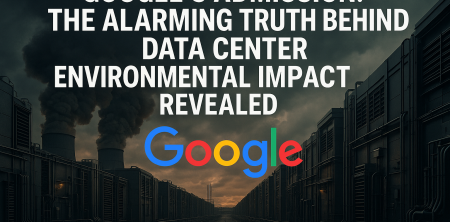
The digital age has brought about astonishing advancements in technology, allowing us to connect, communicate, and share information faster than ever. Yet, beneath the surface of our instantaneous digital interactions lies a harsh reality that many are unaware of: the substantial environmental toll of data centers. A recent report by the United Nations University sheds light on the data center environmental impact, revealing staggering statistics about carbon emissions, water consumption, and electronic waste generated by these facilities. In a surprising turn of events, Google has openly acknowledged its significant role in these issues, igniting discussions on the environmental sustainability of cloud technology.
The UN University's Groundbreaking Report
The United Nations University (UNU) has provided a comprehensive analysis of the environmental impact of data centers, illustrating how these seemingly innocuous facilities contribute to global ecological challenges. According to their findings, data centers are responsible for approximately 2% of global greenhouse gas emissions—an amount comparable to that of the aviation industry. This staggering figure underscores the urgent need for scrutiny in an industry often perceived as 'clean' due to its virtual nature.
One of the most alarming revelations is the water consumption associated with data centers. The report states that these facilities consume billions of liters of water annually for cooling processes. In regions where water scarcity is already a pressing concern, such high levels of consumption can exacerbate local crises and impact communities’ access to this critical resource.
The Water-Wasting Dilemma
Water use in data centers often goes unnoticed. Most of us are accustomed to thinking about the servers and equipment that power the cloud, but the cooling systems that keep these machines operational require vast amounts of water. These facilities primarily utilize water to cool servers—an essential process that prevents overheating and ensures efficiency.
In drought-stricken areas, such as parts of California and the southwestern United States, the extensive water usage has raised red flags. Local aquifers are being depleted, and rivers are drying up, yet data centers continue to expand. The UNU report highlights a critical disconnect between the growth of the digital economy and the sustainability of local ecosystems. This raises the question: can we continue to prioritize digital infrastructure over essential water supplies?
Carbon Emissions: The Hidden Cost of Cloud Storage
Alongside the water dilemma, the carbon footprint of data centers is nothing short of alarming. As technology advances and more services migrate to the cloud, energy consumption spikes. The UNU report estimates that data centers consume about 1,000 terawatt-hours of electricity annually, which corresponds to approximately 2% of global electricity demand. A significant portion of this energy comes from fossil fuels, contributing to an overall increase in carbon emissions.
Google's admission of its substantial carbon impact adds another layer of complexity to this discussion. As one of the largest players in the tech industry, the company's infrastructure relies on data centers that consume massive amounts of energy. Despite Google’s commitment to sustainability, including initiatives to purchase renewable energy, the reality is that their operations still contribute heavily to carbon emissions.
Electronic Waste: The Inevitable Byproduct
Another critical aspect of the data center environmental impact is electronic waste, or e-waste. The rapid pace of technological advancement means that servers and equipment can become obsolete within a few years, leading to a staggering amount of waste. According to estimates, the global e-waste generated in 2019 reached 53.6 million metric tons, and data centers contribute significantly to this figure.
The UNU report underscores the urgency of addressing e-waste. Much of it ends up in landfills or, worse, is improperly disposed of, leading to soil and water contamination. Toxic substances leach into the environment, posing health risks to nearby communities and wildlife. Google’s acknowledgment of its role in this issue has sparked outrage, particularly among environmental organizations urging for stricter regulations and more responsible waste management practices.
Public Reaction: Outrage and Awareness
The revelations from the UNU report and Google's admission have ignited a firestorm of reactions across social media and news platforms. Environmentalists and tech critics have expressed their outrage, highlighting the hypocrisy of tech giants advocating for sustainability while contributing to significant environmental degradation.
This moment has spurred a necessary conversation around the environmental costs of digital services. Many consumers are beginning to question the assumption that cloud technology is inherently 'clean.' This shift in public perception is crucial as it encourages consumers to reconsider their digital habits and the companies they support.
Shifting the Narrative: Towards Sustainable Practices
In light of these findings, the tech industry faces mounting pressure to reevaluate its practices. Companies like Google, Amazon, and Microsoft must adopt more sustainable approaches to mitigate their environmental impact. Transitioning to renewable energy sources for data centers is a critical step in reducing carbon emissions. Many tech giants are already investing in solar and wind energy, but the question remains: is it enough? (See: United Nations University report.)
Moreover, improving water management strategies within data centers is essential. Technologies that recycle water or utilize alternative cooling methods can significantly reduce the water footprint of these facilities. For instance, some data centers are now employing innovative cooling techniques, such as using outside air or advanced heat exchangers, to minimize water usage.
Consumer Responsibility: Making Informed Choices
As consumers, it’s essential to recognize our role in the data center environmental impact. Each time we stream a video, store files in the cloud, or use social media, we contribute to the demand for data centers. Understanding the hidden costs of our digital habits can empower us to make more informed choices.
Opting for companies that prioritize sustainability and responsible practices is a step in the right direction. Supporting initiatives aimed at reducing e-waste, promoting energy efficiency, and conserving water can amplify the pressure on tech giants to act responsibly. Ultimately, our collective choices can drive change within the industry.
Policy and Regulation: A Necessary Framework
Addressing the data center environmental impact will require a concerted effort from policymakers, industry leaders, and consumers alike. Governments must implement regulations that hold companies accountable for their environmental footprint. Stricter guidelines on e-waste management, water usage, and carbon emissions can create a framework for sustainable practices.
In addition, incentivizing the transition to renewable energy and sustainable technologies can encourage companies to innovate. Policies that support research and development in more efficient data center designs can help reduce the overall environmental impact of the industry.
Global Implications: A Call for Action
The findings from the United Nations University report serve as a wake-up call for the global community. As the demand for digital services continues to rise, the environmental impact of data centers cannot be ignored. This is not just an issue for tech companies; it’s a challenge that affects us all.
Climate change, water scarcity, and e-waste management are pressing global issues that require collaborative action. By addressing the environmental consequences of data centers, we can work towards a more sustainable future for both technology and the planet.
Conclusion: A Path Forward
As we grapple with the realities of the data center environmental impact, the responsibility lies with all of us—companies, consumers, and governments. The path forward requires transparency, accountability, and a commitment to sustainable practices. Google’s admission is a pivotal moment that opens the door to vital discussions about the true cost of our digital lives. By demanding better from ourselves and the companies we support, we can help shape a more sustainable future where technology and the environment coexist harmoniously.
Understanding Data Center Operations
To fully grasp the data center environmental impact, it's essential to understand how these facilities operate. Data centers house servers and networking equipment that store and process vast amounts of data. These systems require not only substantial electricity to function but also elaborate cooling systems to prevent overheating.
A standard data center operates using a combination of energy-intensive components: servers, storage devices, networking hardware, and backup systems. In addition, the infrastructure supporting these elements, including cooling units and uninterruptible power supplies (UPS), further contributes to energy consumption. As technology advances, the need for larger data centers has increased, with companies often opting for mega-data centers to handle surging data demands. However, this escalation leads to increased energy use and a correspondingly larger environmental footprint.
Comparative Analysis: Data Center Types
Data centers can be classified into several categories, each with varying environmental impacts. Traditional data centers, often characterized by power-hungry servers and outdated infrastructure, typically have a larger environmental footprint than modern, green data centers.
- Traditional Data Centers: These facilities typically rely heavily on fossil fuels and have outdated cooling mechanisms, leading to high energy consumption and greenhouse gas emissions.
- Green Data Centers: Designed with energy efficiency in mind, these centers utilize renewable energy sources, efficient cooling technologies, and sustainable building materials to minimize their environmental impact.
- Edge Data Centers: Located closer to end-users, edge data centers reduce latency and cut down on energy consumption during data transmission. While still requiring energy, they often operate more efficiently than traditional counterparts.
Each type of data center has its pros and cons, but the trend is moving towards greener practices across the board. As sustainability gains importance, even traditional data centers are beginning to adopt measures to lessen their environmental impact.
Statistics: The Scale of the Problem
The scope of the data center environmental impact can be illuminated by some startling statistics: (See: World Health Organization on environmental health.)
- Data centers alone are expected to consume 20% of the world’s electricity by 2025.
- Approximately 30% of energy consumed in data centers is wasted due to inefficiencies in cooling and power usage.
- In 2020, data centers produced over 0.4 gigatons of CO2 emissions, a figure that continues to rise as demand surges.
- The lifecycle of data center equipment contributes to a significant amount of e-waste; projections estimate that in 2021 alone, 57.4 million metric tons of e-waste will be generated globally, with a considerable fraction arising from data centers.
Technological Innovations for Sustainability
Fortunately, technological advancements present opportunities for data centers to operate more sustainably. Innovations in hardware and software can drastically reduce energy consumption. For instance, virtualized servers allow multiple applications to run on a single physical server, optimizing resource use and reducing the need for additional hardware.
Artificial intelligence (AI) and machine learning can also be employed to enhance the efficiency of cooling systems, predicting the optimal operating conditions for data centers and allowing for dynamic adjustments that conserve energy. Companies like Google are already implementing AI technologies to manage their data center cooling systems, resulting in significant energy savings.
Furthermore, emerging technologies such as serverless computing can change the way data processing is handled, potentially reducing the need for large server farms and the associated environmental impact.
FAQ: Addressing Common Concerns About Data Center Environmental Impact
What is the biggest environmental concern regarding data centers?
The greatest concern is the substantial carbon emissions stemming from energy consumption, primarily sourced from fossil fuels. Additionally, water usage and electronic waste are significant issues that contribute to the overall environmental footprint.
How can data centers reduce their carbon footprint?
Data centers can reduce their carbon footprint by transitioning to renewable energy sources, implementing energy-efficient technologies, optimizing cooling systems, and adopting best practices in e-waste management.
What role do consumers play in mitigating this impact?
Consumers can support companies that prioritize sustainability, advocate for transparency in corporate practices, and make informed decisions about their digital consumption. By choosing eco-friendly services, consumers can influence tech companies to adopt greener operations.
What are some examples of green data centers?
Examples of companies operating green data centers include Google, which has pledged to run its data centers on 100% renewable energy, and Microsoft, which is committed to becoming carbon negative by 2030. These companies showcase how investment in sustainable technologies can help mitigate environmental impacts.
Are regulations on data centers effective?
Regulations vary by region, but there is an increasing push for stricter guidelines that require data centers to report their energy use and emissions. While some regulations have had positive effects, enforcement and compliance can be challenging, which calls for ongoing scrutiny and improvement in policy frameworks.
What future trends should we watch for in data center sustainability?
Future trends include increased investments in renewable energy, advancements in cooling technology, the rise of edge computing, and greater use of AI for operational efficiency. As sustainability becomes a priority, we can expect to see more innovative solutions aimed at reducing the environmental impact of data centers.
Alternative Cooling Technologies
The traditional cooling methods used in data centers consume vast amounts of energy and water. However, innovative cooling technologies are emerging as viable alternatives. For example, immersion cooling is gaining traction, where servers are submerged in non-conductive liquids. This method significantly reduces the need for air conditioning and can lower energy expenses by up to 50%.
Another promising solution is liquid cooling, which involves circulating water or other coolants through cooling plates in contact with the server components. This approach provides better heat dissipation than air-based systems and is particularly effective for high-density computing environments. (See: CDC on environmental hazards.)
Case Studies in Sustainability
Examining successful implementations of sustainable practices in data centers provides valuable insights into effective strategies. For instance, the Facebook data center in Luleå, Sweden, relies on the cold climate to cool its operations naturally, using outside air instead of traditional cooling systems. This approach not only minimizes energy use but also significantly lowers operational costs.
Similarly, Microsoft’s Project Natick explores underwater data centers, leveraging the natural cooling properties of ocean water. Preliminary results indicate that these submerged facilities can operate more efficiently and with lower environmental impact, showcasing a unique solution to the challenges of data center sustainability.
The Role of Renewable Energy in Data Centers
Transitioning to renewable energy sources is crucial for reducing the carbon footprint of data centers. Companies are investing heavily in solar, wind, and hydroelectric power to meet their energy needs sustainably. For instance, Google has signed numerous power purchase agreements (PPAs) to source renewable energy for its data centers, aiming to operate on 24/7 carbon-free energy by 2030.
Amazon Web Services is also leading the charge, with a commitment to reach 100% renewable energy usage by 2025. Such initiatives not only mitigate the environmental impact of data centers but also set a precedent for the industry as a whole.
Impact of Remote Work on Data Centers
The rise of remote work, especially accelerated by the COVID-19 pandemic, has increased demand for cloud services and, consequently, data centers. As more businesses and individuals rely on digital solutions, data centers are tasked with handling surging traffic and data storage needs. This shift presents both challenges and opportunities in terms of environmental impact.
On the one hand, increased demand for data center services can lead to higher energy consumption and emissions. On the other hand, it has prompted companies to explore more efficient operations and sustainable practices—essentially a silver lining in the push for innovation and accountability within the industry.
Future Directions for Sustainable Data Centers
As the digital landscape continues to evolve, data centers must adapt to meet both the demands of consumers and the imperatives of sustainability. Future directions may include increased collaboration between tech companies and environmental organizations to establish best practices for sustainable operations.
Additionally, there may be a greater emphasis on lifecycle assessments of data center equipment to understand their full environmental impact from production to disposal. By incorporating sustainability at every stage, data centers can minimize their carbon footprint and contribute to a healthier planet.
```
Trending Now
Frequently Asked Questions
What is the environmental impact of data centers?
Data centers contribute significantly to environmental issues, responsible for about 2% of global greenhouse gas emissions, comparable to the aviation industry. They also consume vast amounts of water for cooling, which can exacerbate water scarcity in affected regions.
How much water do data centers use?
Data centers consume billions of liters of water annually, primarily for cooling processes. This high level of water usage can impact local communities, especially in areas already facing water scarcity.
What did Google admit about data centers?
Google has acknowledged its substantial role in the environmental impact of data centers, sparking discussions about the sustainability of cloud technology and the need for better ecological practices within the industry.
Why are data centers considered environmentally harmful?
Despite being perceived as 'clean' due to their virtual nature, data centers have a significant carbon footprint and high water consumption, contributing to global ecological challenges such as climate change and water shortages.
What are the main environmental concerns related to data centers?
The primary environmental concerns include high carbon emissions, excessive water usage for cooling, and the generation of electronic waste. These factors collectively raise urgent questions about the sustainability of cloud computing.
Agree or disagree? Drop a comment and tell us what you think.

