```html
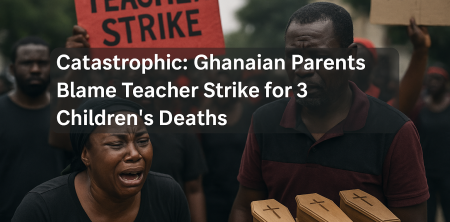
When schools close their doors, whether for holidays, unforeseen emergencies, or, as we've seen far too often, industrial action, the ripples extend far beyond the classroom. The recent, utterly devastating news from Kobilmahagu Zuo, Ghana, serves as a brutal, heartbreaking reminder of just how profound and sometimes tragic the teachers strike impact on children can be. On October 6, 2026, a community was plunged into an unimaginable nightmare with the discovery of three young lives lost inside a parked vehicle. Parents, in their raw grief and shock, are pointing directly at the ongoing teacher strike, arguing that the absence of school supervision created a perilous vacuum, leading to this horrific incident.
This isn't just a story from Ghana; it's a stark illustration of a global dilemma. The decision for teachers to strike, while often rooted in legitimate concerns about pay and working conditions, carries an immense societal burden, one that disproportionately falls on the shoulders of the most vulnerable: children. When the very institutions designed to protect and educate them are shuttered, the safety nets weaken, and the potential for tragic outcomes, as seen in Kobilmahagu Zuo, becomes horrifyingly real. It compels us to look beyond the headlines of salary disputes and contract negotiations and confront the very human cost, particularly the teachers strike impact on children, that can accompany such widespread disruptions.
The Unfolding Tragedy in Kobilmahagu Zuo: A Community's Grief
Imagine the scene: a quiet community, children who should have been in classrooms, now gone. The details emerging from Kobilmahagu Zuo paint a picture of profound sorrow and unanswered questions. Three innocent children, whose names are not yet widely released but whose absence will forever haunt their families, were found deceased in circumstances that no parent should ever have to comprehend. The police investigation is underway, and hopefully, it will bring some clarity to the specifics of how these young lives were so tragically cut short. But for the grieving parents, the link to the teacher strike is immediate and undeniable.
Their accusation isn't merely emotional; it stems from a practical reality. Schools, beyond their academic function, are vital centers of childcare and supervision. For many families, especially those where both parents work or in communities with limited alternative care options, school hours represent a structured, safe environment. When that structure collapses, children are left with unstructured time, often unsupervised, and sometimes, as this tragedy demonstrates, in situations that can turn deadly. It forces a difficult, yet essential, conversation about the comprehensive role of schools in society and the collateral damage when they are not operational. The teachers strike impact on children here is not abstract; it's brutally concrete.
Beyond the Classroom Walls: The Hidden Dangers of Unsupervised Time
It's easy to think of a school strike primarily in terms of lost learning days. While that's a significant concern, the Kobilmahagu Zuo tragedy forces us to confront a far more sinister aspect: the increased risks children face when their usual routines are disrupted and adult supervision is removed. For younger children, curiosity and a lack of understanding of danger can lead them into precarious situations. A parked car, an open construction site, a body of water – what might seem innocuous to an adult can become a fatal hazard for a child.
Consider the average school day: children are typically supervised for seven to eight hours, from arrival to dismissal. During a strike, that structured oversight vanishes. Parents, particularly in working-class communities or regions where childcare options are scarce or unaffordable, often struggle to find immediate, safe alternatives. A parent might have to leave older children to care for younger siblings, or worse, leave children entirely alone while they go to work to avoid losing their livelihood. These scenarios, while understandable from a parental survival standpoint, dramatically increase the vulnerability of children to accidents, injuries, or even exploitation. The direct and indirect teachers strike impact on children's safety cannot be overstated.
A Global Echo: Strikes Beyond Ghana's Borders
While the Kobilmahagu Zuo incident is undeniably harrowing, it's crucial to understand that teacher strikes are not unique to Ghana. They are a recurring phenomenon across the globe, each with its own local context and specific demands, yet all sharing the common thread of disrupted education and potential societal fallout. Just as negotiations are stalled with teacher unions in Ghana over demands for a new allowance, we see similar standoffs elsewhere. Take Bellefonte, Pennsylvania, for instance.
In Bellefonte, a union representing approximately 230 teachers and staff is on the brink of striking. Their dispute, much like many in the developed world, revolves around stalled contract negotiations, specifically regarding competitive salaries. While the immediate consequences in Bellefonte might manifest differently than in Ghana – perhaps more in terms of academic setbacks and parental inconvenience rather than immediate physical danger – the underlying tension is the same. Educators feel undervalued and underpaid, believing that their compensation doesn't reflect the critical importance of their work or the rising cost of living. These strikes, whether in rural Ghana or suburban America, highlight a universal struggle: how societies value and compensate those entrusted with shaping the next generation, and the inevitable teachers strike impact on children when an agreement can't be reached.
The Economic Tightrope: Teacher Compensation and Public Funds
At the heart of most teacher strikes lies the contentious issue of compensation. In Ghana, the Fair Wages and Salaries Commission has indicated that negotiations have hit a wall over demands for a new allowance, one that reportedly falls outside existing governmental frameworks. This isn't just about teachers wanting more money; it's about the broader economic landscape, national budgets, and the political will to allocate resources to education. (See: Child injury prevention resources.)
Governments often face a delicate balancing act. They must manage public funds, address competing demands from various sectors, and maintain fiscal responsibility. Teacher unions, on the other hand, argue that competitive salaries are essential for attracting and retaining qualified educators, ensuring quality instruction, and providing a decent standard of living for their members. When these two perspectives clash, as they frequently do, the result is often a strike. The economic realities of a developing nation like Ghana might make it particularly challenging to meet demands for new allowances, especially if they set precedents for other public sector workers. Yet, the cost of not meeting these demands, as Kobilmahagu Zuo tragically illustrates, can extend far beyond the financial balance sheet, deeply affecting the teachers strike impact on children.
The Erosion of Trust and Academic Setbacks: Long-Term Teachers Strike Impact on Children
Beyond the immediate safety concerns, the ongoing teachers strike impact on children manifests in significant academic and emotional ways. Every day a student misses school is a day of lost learning. For younger children, this can mean struggling with foundational literacy and numeracy skills. For older students, it can disrupt preparation for exams, delay college applications, and create significant gaps in their understanding of complex subjects. Catching up after a prolonged strike is no easy feat, and some students may never fully recover the lost ground, potentially impacting their future academic and career trajectories.
Moreover, strikes can erode trust. Students might feel abandoned or confused, particularly if they don't understand the complex reasons behind the industrial action. Parents, already stressed by the logistical challenges, may grow frustrated with both the teachers and the government. This erosion of trust can damage the vital partnership between home and school, making it harder to foster a supportive learning environment even after the strike concludes. The emotional toll on children, who thrive on routine and stability, can also be considerable, leading to anxiety, disengagement, and a negative perception of schooling itself. This subtle, yet pervasive, teachers strike impact on children is often overlooked amidst the louder arguments about pay.
Parental Burden and Community Strain: The Unseen Costs
When schools close due to a strike, the immediate burden often falls squarely on parents. For families where both parents work, finding alternative childcare can be a logistical nightmare and a significant financial strain. Many parents have to take unpaid leave, arrange for relatives or neighbors to help, or, as mentioned earlier, leave children unsupervised – often at great personal and professional cost. Small businesses might suffer as employees struggle to balance work and family responsibilities, creating a ripple effect throughout the local economy.
Beyond the individual family unit, strikes can create tension within the community. Neighbors might disagree on the legitimacy of the strike, or whether teachers are justified in their demands. There can be a sense of division between those who support the teachers and those who prioritize uninterrupted schooling. This social fragmentation, while less tangible than lost learning days, can weaken the fabric of a community, making it harder to come together and address other collective challenges. The teachers strike impact on children isn't just about the kids themselves; it's about the entire ecosystem surrounding them.
Seeking Resolutions: Finding Common Ground in Contentious Disputes
So, what can be done to mitigate the teachers strike impact on children and prevent such devastating outcomes? The path to resolution in teacher disputes is rarely straightforward, but it almost always involves open, honest, and sustained dialogue. Both sides – government bodies and teacher unions – must approach negotiations with a genuine willingness to compromise and prioritize the welfare of students above all else.
One strategy could involve establishing independent mediation bodies or arbitration panels to facilitate negotiations when direct talks stall. These neutral third parties can help bridge divides, propose creative solutions, and ensure that both sides feel heard and respected. Another approach might be to implement 'no-strike' clauses in contracts, coupled with alternative dispute resolution mechanisms, ensuring that education is not interrupted even during intense negotiations. Furthermore, governments could explore proactive measures, such as regular salary reviews pegged to inflation or national economic growth, to prevent the build-up of grievances that often lead to strikes in the first place. The goal should be to create a system where the fundamental needs of educators are met without resorting to actions that put children at risk.
The Ethical Imperative: Prioritizing Children's Welfare
The tragedy in Kobilmahagu Zuo serves as an urgent, painful reminder that discussions about teacher strikes cannot solely focus on economics or industrial relations. There is a profound ethical dimension at play, one that demands the welfare and safety of children be the paramount consideration. While teachers have every right to advocate for fair compensation and working conditions, the methods of advocacy must be weighed against the potential for severe, even fatal, consequences for the very children they are dedicated to serving.
This isn't about blaming teachers; it's about acknowledging the complex web of responsibilities that society places on its educators and its educational institutions. It's about recognizing that when those institutions are compromised, the most vulnerable among us bear the heaviest cost. Every stakeholder – government officials, union leaders, parents, and community members – has a moral obligation to seek solutions that prevent future tragedies and minimize the negative teachers strike impact on children. This means exploring every avenue for negotiation, creative problem-solving, and, if necessary, establishing contingency plans for child supervision during unavoidable disruptions. (See: Children's mental health and safety.)
Beyond Safety: The Psychological and Social Repercussions
While the physical dangers of unsupervised time are tragically clear, the teachers strike impact on children stretches deep into their psychological and social well-being. Imagine a child who relies on school for consistent meals through a lunch program. A strike doesn't just mean missing lessons; it can mean hunger, especially in low-income households. This basic need, when unmet, causes immense stress and impacts a child's ability to learn and thrive even when school resumes.
Socially, school is where children learn vital interaction skills, build friendships, and develop a sense of belonging. Prolonged absence can lead to isolation, anxiety about returning, and even a regression in social development. For children with special educational needs, the disruption is often even more acute. Their routines are critical, and specialized support services, like speech therapy or occupational therapy, vanish during a strike. This loss of crucial support can set back progress significantly and cause considerable distress for both the child and their family. The emotional landscape of a child during a strike is often turbulent, filled with confusion and uncertainty about their daily structure.
Comparative Approaches: How Different Nations Handle Teacher Disputes
The global nature of teacher strikes means different countries have developed varied approaches to manage these disputes, often with mixed results regarding the teachers strike impact on children. In some European nations, like Finland or Germany, teacher strikes are relatively rare. This is often attributed to a culture of high professional respect, competitive salaries, and robust negotiation frameworks that prioritize dialogue and consensus-building. Here, teachers are generally well-compensated and have a strong voice in educational policy, reducing the likelihood of grievances escalating to strike action.
Contrast this with countries where strikes are more frequent. In France, for example, short, localized strikes are common, often serving as a form of protest rather than prolonged industrial action. While disruptive, the impact might be less severe than a multi-week, nationwide shutdown. Then there are nations like the United States, where state laws vary widely. Some states allow teachers to strike, others prohibit it, often leading to "sickouts" or other forms of unofficial action. Each model carries its own benefits and drawbacks, but the common thread is that systems which integrate teachers into decision-making and offer fair compensation tend to experience fewer disruptive strikes, thereby minimizing the negative teachers strike impact on children.
The Role of Technology: A Double-Edged Sword During Strikes
In the 21st century, technology offers both potential solutions and new challenges during teacher strikes. On one hand, online learning platforms, virtual classrooms, and educational apps can provide some continuity of learning. During the COVID-19 pandemic, many schools quickly pivoted to remote instruction, demonstrating technology's potential to keep education going even when physical classrooms are inaccessible. Some governments and school districts might try to implement similar strategies during strikes to mitigate learning loss and reduce the teachers strike impact on children.
However, this is a double-edged sword. Access to reliable internet, devices, and digital literacy varies dramatically, especially in developing nations or low-income communities. A sudden shift to online learning can exacerbate educational inequities, leaving children without the necessary resources even further behind. Furthermore, online learning, particularly for younger children, often requires significant parental involvement, adding another layer of burden to already stressed families. While technology offers tools, it's not a complete substitute for in-person instruction and the holistic support schools provide, and its effectiveness as a strike mitigation strategy is highly dependent on equitable access and robust infrastructure.
FAQ: Understanding the Teachers Strike Impact on Children
Q1: What are the immediate risks to children during a teacher strike?
A1: The immediate risks can be severe. Without school supervision, children, especially younger ones, face increased dangers from accidents, injuries, or even exploitation due to unsupervised time. This can include anything from traffic accidents to finding themselves in hazardous environments like construction sites or open bodies of water. For many families, schools provide essential childcare, and when that vanishes, children might be left alone or with inadequate supervision while parents work.
Q2: How do teacher strikes affect children's academic progress?
A2: Teacher strikes lead to significant academic setbacks. Every day of missed school means lost learning time, which can create gaps in foundational knowledge, disrupt preparation for exams, and delay progress in key subjects. Catching up after a prolonged strike is challenging, and some students may never fully recover the lost ground, potentially impacting their future educational and career opportunities. (See: Ghana teacher strike impacts.)
Q3: Are there long-term psychological impacts on children from strikes?
A3: Yes, there can be. Children thrive on routine and stability. A strike can cause anxiety, confusion, and a sense of abandonment. It can erode their trust in the educational system and lead to disengagement from learning. For children with special needs, the disruption of routines and loss of specialized support services can be particularly distressing, potentially leading to regression in their development.
Q4: How do teacher strikes impact parents and the community?
A4: Parents often bear the brunt of strikes, struggling to find alternative childcare, sometimes having to take unpaid leave from work, or facing significant financial strain. This can lead to increased stress and frustration within families. In the wider community, strikes can cause social fragmentation, with divisions arising between those who support the teachers' demands and those who prioritize uninterrupted schooling, weakening community cohesion.
Q5: What measures can be taken to minimize the teachers strike impact on children?
A5: Minimizing the impact requires proactive measures and constructive dialogue. This includes establishing independent mediation or arbitration bodies to resolve disputes, implementing 'no-strike' clauses with alternative dispute resolution mechanisms, and governments proactively reviewing teacher salaries to prevent grievances. Additionally, developing contingency plans for child supervision and, where feasible, utilizing technology for continued learning, can help mitigate negative effects.
Q6: Is the Kobilmahagu Zuo tragedy an isolated incident in the context of teacher strikes?
A6: While the specific outcome in Kobilmahagu Zuo was uniquely tragic, the underlying risk factors are not isolated. The increased vulnerability of children due to a lack of supervision during school closures is a universal concern. Similar incidents, though perhaps less publicized or with different outcomes, can occur anywhere school's critical role in child safety is disrupted by strikes or other closures.
Moving Forward: Lessons from a Heartbreaking Incident
The deaths of three children in Kobilmahagu Zuo have cast a long, dark shadow, not just over Ghana, but over the global conversation about teacher strikes. It's a stark, horrifying illustration of the worst-case scenario when the safety nets provided by schools are abruptly removed. While the immediate focus is rightly on the police investigation and supporting the grieving families, this tragedy must also serve as a powerful catalyst for change and reflection.
It demands that we look critically at how we conduct negotiations, how we value our educators, and, most importantly, how we safeguard our children. It's a call to action for all parties involved in educational disputes to recognize the immense societal responsibility they carry and to prioritize solutions that protect the most innocent. The teachers strike impact on children is not an abstract concept; it can be a matter of life and death, and we owe it to these lost children, and to all children, to ensure that such a tragedy is never repeated.
```
Trending Now
Frequently Asked Questions
What happened to the three children in Kobilmahagu Zuo?
On October 6, 2026, three young children were tragically found dead inside a parked vehicle in Kobilmahagu Zuo, Ghana. Their parents attribute the incident to an ongoing teacher strike, which they believe created a dangerous environment due to a lack of school supervision.
How do teacher strikes affect children's safety?
Teacher strikes can lead to school closures, which remove essential supervision and support systems for children. This absence can create unsafe conditions, as seen in the Kobilmahagu Zuo incident, where the lack of oversight contributed to a tragic outcome.
Why are parents blaming the teacher strike for the children's deaths?
Parents in Kobilmahagu Zuo are blaming the teacher strike for the deaths of their children, arguing that the strike's closure of schools left children unsupervised and vulnerable, leading to the tragic incident that occurred.
What are the broader implications of teacher strikes on communities?
Teacher strikes can have far-reaching effects on communities, particularly on children. The disruption of education and supervision can lead to increased risks and tragic incidents, highlighting the societal costs of such industrial actions beyond just salary disputes.
What is the current investigation into the children's deaths?
A police investigation is currently underway regarding the circumstances surrounding the deaths of the three children in Kobilmahagu Zuo. The community is seeking answers and justice as they grapple with the aftermath of this heartbreaking event.
What's your take on this? Share your thoughts in the comments below — we read every one.

