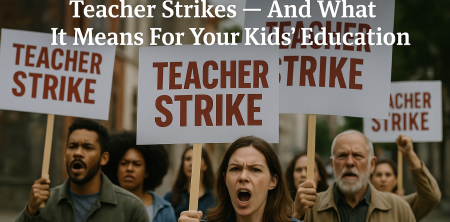
When you hear about a teacher strike, what's the first thing that comes to mind? Is it the disruption to daily life, the scramble for childcare, or perhaps the image of teachers picketing in the cold? For many, it's a contentious issue, sparking debates about student welfare versus workers' rights. But what if I told you there's compelling new evidence suggesting that these contentious actions are actually a powerful, even essential, tool for improving the very education system we all rely on? A recent, comprehensive study from the University at Albany has peeled back the layers on this complex issue, revealing some truly eye-opening insights into the long-term
This isn't just anecdotal evidence or a few isolated incidents. We're talking about a deep dive into over 770 teacher strikes that occurred across the United States between 2007 and 2023. The findings are pretty stark: these labor actions aren't just symbolic gestures. They're demonstrably effective in driving substantial improvements in teacher wages and working conditions. And when teachers earn more and work in better environments, who ultimately benefits? Our kids, that's who. This research lands right in the middle of a national teacher shortage crisis, a situation that's straining schools, burning out educators, and, frankly, threatening the quality of education for millions of students. Understanding the real impact of teacher strikes effectiveness is more crucial now than ever.
Unpacking the Data: A Closer Look at Strike Outcomes
Let's get down to the numbers, because they paint a vivid picture. The study found that, on average, teacher pay saw a significant bump of 8% within five years after a strike. Think about that for a moment. An 8% increase in salary over half a decade can make a real difference in a teacher's life, helping them manage rising living costs, pay off student loans, or simply feel more valued in a profession that often demands so much for so little. This isn't just pocket change; it's a meaningful improvement that can help retain experienced educators and attract new talent to the field.
But it's not just about the money, important as that is. The research also highlighted tangible improvements in working conditions. Specifically, schools that experienced strikes saw reductions in class sizes. This is huge! Anyone who's spent time in a classroom, whether as a student, parent, or educator, knows the profound impact of class size. Smaller classes mean teachers can give more individualized attention, manage behavior more effectively, and tailor their lessons to meet diverse student needs. It's a win-win: less stress for teachers, and a better learning environment for students.
Beyond that, there was an observed increase in spending on student support staff. This includes crucial roles like counselors, social workers, librarians, and instructional aides. These are the unsung heroes who provide essential services that go beyond core academic instruction, addressing students' emotional, social, and developmental needs. When these resources are boosted, it creates a more holistic and supportive school environment, which is especially vital in an era where students face complex challenges both inside and outside the classroom. The data clearly suggests that the
The Economic Imperative: Why Fair Wages Matter for Education
Let's be frank: teaching is not a career many enter for the lavish paychecks. It's a calling, driven by a passion for shaping young minds. However, passion alone doesn't pay the bills. When teacher salaries lag significantly behind other professions requiring similar levels of education and responsibility, it creates a systemic problem. Imagine spending four to six years, sometimes more, earning a bachelor's or master's degree, only to find yourself struggling to afford housing or even basic necessities in the community where you teach.
This isn't some abstract economic theory; it's a lived reality for countless educators. Low wages contribute directly to the national teacher shortage. Why would a bright, talented college graduate choose a career in teaching when they could earn significantly more in other sectors, often with less stress and better benefits? It's a tough sell. The study's finding that strikes lead to an 8% increase in pay within five years isn't just a number; it's a beacon of hope for financial stability, a tangible reason for dedicated individuals to stay in the profession and for new recruits to consider it seriously. This improvement in compensation directly impacts the quality and stability of the teaching workforce, which in turn directly affects student outcomes. You can't separate the two.
Addressing the Teacher Shortage Crisis: A National Emergency
We're not just talking about a few empty classrooms here and there. The United States is grappling with a severe, widespread teacher shortage. Thousands upon thousands of vacancies go unfilled each year. This isn't just a statistic; it's a crisis playing out in real time in schools across the country. Districts are struggling to find qualified educators in core subjects like math, science, and special education, but also in critical areas like foreign languages and vocational training.
What happens when there aren't enough teachers? Existing teachers are often forced to take on larger class sizes, teach subjects outside their expertise, or forgo planning periods to cover for absent colleagues. This leads to an unsustainable workload, stress, and, ultimately, burnout. High turnover rates become endemic, creating a revolving door of educators that destabilizes school communities and disrupts student learning. Imagine your child having a different substitute teacher every other week, or a math teacher who's really an English teacher trying their best. It's not ideal, is it?
The study implicitly suggests that by improving wages and working conditions, teacher strikes offer a pathway to mitigating this crisis. If teaching becomes a more attractive and sustainable profession, we can recruit and retain the talented individuals our students deserve. The
Beyond Paychecks: The Ripple Effect of Improved Working Conditions
While an 8% pay raise is nothing to sneeze at, the study's findings on improved working conditions are arguably just as, if not more, impactful. Let's delve a little deeper into what reduced class sizes and increased support staff truly mean for the daily reality of a school.
The Power of Smaller Class Sizes
Picture a classroom with 35 students versus one with 20. The difference is profound. In a smaller class, a teacher can:
- Provide more individualized feedback on assignments.
- Identify and address learning difficulties sooner.
- Build stronger relationships with each student, understanding their unique needs and strengths.
- Manage classroom behavior more effectively, leading to less disruption and more instructional time.
- Implement differentiated instruction strategies more easily, catering to various learning styles.
For students, smaller classes often translate to better academic outcomes, higher engagement, and a greater sense of belonging. It's not just about a teacher having less work; it's about creating an environment where deep learning and meaningful connections can flourish. This isn't a luxury; it's a fundamental component of effective pedagogy.
The Value of Student Support Staff
Modern schools are far more than just places for academic instruction. They are often vital community hubs, providing social, emotional, and even health support for students. Increased spending on support staff — counselors, social workers, school psychologists, nurses, and librarians — means schools are better equipped to handle the multifaceted needs of their student population. These professionals:
- Address mental health challenges and provide emotional support.
- Help students navigate personal crises and family issues.
- Connect families with community resources.
- Foster a love of reading and research (librarians).
- Ensure students' physical health and well-being.
In many communities, schools are the primary, and sometimes only, source of these critical services. When strikes lead to greater investment in these roles, it strengthens the entire fabric of the school, creating a more nurturing and resilient environment for every child. The
The Legal Minefield: Why Strikes Persist Despite Restrictions
It's important to remember that teacher strikes are not universally legal. In fact, in many states, public sector strikes, including those by educators, are explicitly prohibited by law. This creates a challenging and often precarious situation for teachers and their unions. Despite the legal risks – which can include hefty fines, loss of pay, and even job termination for individual teachers or decertification for unions – educators continue to resort to strikes. Why? Because, as this study suggests, they often work.
The willingness of teachers to engage in illegal strikes underscores the depth of their frustration and the perceived lack of alternative avenues for addressing their concerns. When collective bargaining reaches an impasse, and legislative bodies are unresponsive to calls for better funding or improved conditions, a strike can become the only perceived way to force a conversation and demand action. It’s a risky gamble, but one that, according to the data, often pays off in the long run for the educators and, by extension, the students they serve. This is a crucial element in understanding the full scope of
The Ethical Quandary: Balancing Disruption and Advocacy
Of course, teacher strikes are not without their critics, and for good reason. The immediate impact on students and families can be significant. Parents often scramble for childcare, students miss valuable instructional time, and the continuity of learning is disrupted. These are legitimate concerns that absolutely must be acknowledged.
This is where the ethical quandary truly comes into play. Is the short-term disruption caused by a strike justifiable in light of the long-term benefits of improved wages and working conditions? The University at Albany study doesn't directly answer this ethical question, but it provides powerful data to inform the debate. If a strike leads to better-paid, less-stressed teachers and smaller classes for years to come, does that outweigh a few days or weeks of missed school? It's a difficult calculation, and opinions will undoubtedly vary widely.
However, it also begs a question for policymakers: if strikes are the only mechanism by which educators can achieve reasonable improvements, what does that say about the responsiveness of our political and administrative systems? Perhaps the conversation shouldn't just be about whether strikes are 'good' or 'bad,' but why they become necessary in the first place. The
Historical Context: A Legacy of Labor Action in Education
Teacher strikes aren't a new phenomenon. The history of education in the United States is dotted with significant labor actions by educators. From the early 20th century, when teachers fought for basic professional recognition and livable wages, to the widespread strikes of the 1960s and 70s that led to the formalization of collective bargaining rights in many states, teachers have consistently organized to improve their profession. (See: CDC on youth health and education.)
Consider the 'Red for Ed' movement that swept across states like West Virginia, Oklahoma, and Arizona in 2018. These were massive, statewide actions, often in states where teacher strikes were illegal, yet they garnered significant public support and led to substantial legislative changes, including pay raises and increased education funding. These modern movements echo the historical struggles, demonstrating a continued pattern: when teachers feel unheard and undervalued, they will mobilize. The Albany study provides empirical data to back up what many educators have known intuitively for decades: collective action, even in its most disruptive form, can be incredibly effective.
Looking Ahead: What This Means for Education Policy
The findings of this study should serve as a wake-up call for policymakers, school boards, and communities alike. If we truly value quality education, we can't afford to ignore the conditions under which our teachers work. The demonstrated
Instead of viewing strikes as an adversarial act to be suppressed, perhaps we should see them as a symptom of deeper systemic issues that need addressing. Proactive measures, such as:
- Regularly reviewing teacher salaries to ensure they are competitive with other professions and local cost of living.
- Investing in professional development and mentorship programs to support new and experienced teachers.
- Prioritizing funding for smaller class sizes and essential support staff.
- Establishing transparent and effective channels for educators to voice concerns and participate in decision-making processes.
These kinds of initiatives could go a long way in preventing the conditions that often lead to strikes. If teachers feel respected, fairly compensated, and supported, they are less likely to feel the need to walk off the job. Ultimately, a strong, stable, and well-resourced teaching force benefits everyone, most importantly the students who are the future of our society.
Beyond the Classroom: The Broader Societal Impact of Teacher Strikes
It’s easy to focus on the immediate players in a teacher strike: the teachers, the students, the parents, and the school board. But the impact of these labor actions often ripples out into the wider community and even the national discourse. When teachers strike, they're not just fighting for their own wages; they're often advocating for increased public investment in education as a whole.
Think about the 'Red for Ed' movement again. Those strikes galvanized public support not just for teacher salaries, but for state education budgets that had seen years of cuts. They brought to light the underfunding of schools, the dilapidated facilities, and the lack of resources that directly affect student learning. In many cases, these movements sparked broader conversations about the value we place on public education and the need for adequate funding to support it. The media attention, community forums, and political debates that often accompany strikes serve to educate the public and put pressure on elected officials to act.
Furthermore, successful strikes can embolden other public sector workers to organize and advocate for their rights. When teachers achieve tangible gains, it sends a message that collective action can work, potentially leading to improved conditions for nurses, firefighters, and other essential public employees. This can contribute to a stronger, more equitable public workforce overall, which benefits society at large. The
The Role of Public Opinion and Media in Strike Outcomes
The success of a teacher strike isn't solely dependent on the teachers' resolve or the school board's willingness to negotiate. Public opinion and media coverage play a huge, often underestimated, role. When teachers manage to effectively communicate their rationale for striking – highlighting how their demands ultimately benefit students and the community – they can garner crucial public support.
This support can manifest in several ways: parents joining picket lines, community members donating food or supplies to striking teachers, or local businesses showing solidarity. A sympathetic public puts immense pressure on school boards and local governments to resolve the dispute. Conversely, if the public perceives the strike as purely self-serving or overly disruptive, support can wane, weakening the teachers' bargaining position. Media narratives, whether positive or negative, can significantly shape these perceptions. A strike that's framed as teachers fighting for better learning conditions for kids will likely resonate more positively than one portrayed as simply a demand for more money, even if both are true. The strategic communication during a strike is almost as important as the strike itself in demonstrating
Comparative Analysis: Teacher Strikes in an International Context
While this study focuses on the United States, it's worth noting that teacher strikes are a global phenomenon. Educators in countries like the UK, France, Canada, and Australia have also historically engaged in labor actions to advocate for better pay, smaller class sizes, and increased resources. The underlying issues often mirror those in the U.S.: concerns about underfunding, declining professional status, and unsustainable workloads. (See: AP News on the impact of teacher strikes.)
For instance, recent strikes in the UK have seen teachers demanding significant pay raises to keep pace with inflation and address recruitment and retention issues, similar to the American experience. In Canada, provincial teacher unions frequently negotiate collective agreements through strike threats or actual strikes, often resulting in improvements to working conditions and student services. This international perspective reinforces the idea that teacher strikes are a universal tool for change, often emerging when systemic issues in education reach a breaking point, regardless of national borders. The consistent pattern of
Frequently Asked Questions About Teacher Strikes
Q1: Are teacher strikes always successful in achieving their goals?
A1: While the University at Albany study shows a strong correlation between strikes and positive outcomes like increased pay and improved working conditions, success isn't guaranteed. The outcome of a strike depends on many factors, including the solidarity of the striking teachers, public support, the financial capacity of the school district, and the political will of elected officials. Some strikes may result in partial gains, while others may not achieve all their initial demands. However, the data suggests a significant likelihood of positive impact.
Q2: How long do teacher strikes typically last?
A2: The duration of teacher strikes varies widely. Some strikes are resolved in a matter of days or a week, while others can stretch for several weeks or even months. The length often depends on the urgency of the demands, the willingness of both sides to negotiate, and the pressure from the community. Shorter strikes are generally less disruptive, but longer strikes can sometimes lead to more substantial changes.
Q3: Do teacher strikes negatively impact student achievement?
A3: This is a complex question. In the short term, missed instructional days can be a concern. However, the long-term impacts found in the study, such as better-paid teachers, smaller class sizes, and increased support staff, are all factors strongly associated with improved student achievement. It suggests that while there might be short-term disruption, the sustained benefits from a successful strike can outweigh these initial drawbacks, creating a more effective learning environment over time. The study highlights that
Q4: What are the legal consequences for teachers who strike in states where it's illegal?
A4: In states where public sector strikes are prohibited, teachers who strike can face severe penalties. These can include fines for the union, loss of pay for the days on strike, disciplinary action up to and including termination of employment, and in some cases, the decertification of the union. Despite these risks, teachers in these states sometimes strike anyway, viewing it as the only viable option to force change, as seen in the 'Red for Ed' movement.
Q5: How can communities support their teachers without endorsing a strike?
A5: Even outside of strike situations, communities can advocate for their teachers by attending school board meetings, contacting elected officials to discuss education funding, volunteering in schools, joining parent-teacher organizations, and generally showing appreciation for educators. Supporting efforts to ensure competitive salaries, reasonable class sizes, and adequate resources can help prevent the conditions that often lead to strikes in the first place, thus fostering
So, the next time you hear about a teacher strike, pause for a moment. Beyond the headlines and the immediate inconvenience, consider the long-term impact that these actions, however controversial, are having on the very foundation of our education system. The data is clear: teacher strikes, despite their challenges, are a potent force for positive change in our schools, leading to better conditions for educators and, crucially, a better learning environment for our children.
Trending Now
- read the full story
- this guide on attorney general marshall joins u.s. supreme court brief in support of parents’ religious rights
- 8 Unsettling Truths About Baby Costs…
- our breakdown of urgent warning: this is how social media is quietly rewiring your child’s brain
- This $1 Million Academic Courage Prize…
Frequently Asked Questions
What are the effects of teacher strikes on education?
Teacher strikes can lead to significant improvements in teacher wages and working conditions. A study of over 770 strikes revealed that, on average, teacher pay increased by 8% within five years post-strike, which benefits the overall quality of education for students.
How do teacher strikes impact students?
While teacher strikes may disrupt daily life, they ultimately benefit students by improving teachers' pay and working conditions. Better compensated educators are more likely to stay in the profession, directly enhancing the quality of education for students.
Why are teacher strikes necessary?
Teacher strikes are often necessary to advocate for better wages and working conditions. They serve as a powerful tool to address systemic issues within the education system, particularly during times of teacher shortages, which can negatively affect student learning.
What is the recent research on teacher strikes?
Recent research from the University at Albany analyzed over 770 teacher strikes between 2007 and 2023, finding that these actions are effective in driving substantial improvements in teacher pay and conditions, ultimately benefiting students' educational experiences.
How often do teacher strikes happen in the U.S.?
Teacher strikes occur relatively frequently in the U.S., with over 770 documented between 2007 and 2023. These strikes are often a response to issues like low pay and poor working conditions, reflecting ongoing challenges within the education system.
Have you experienced this yourself? We'd love to hear your story in the comments.


0 Responses