```html
The educational landscape is complex, shaped by various theories that guide teaching practices and learning approaches. Among these, Social Learning Theory and Behaviorism stand out as crucial frameworks, each offering unique insights into how people learn. But how do they differ, and what role does cognition play in each? In this article, we’ll explore these two significant theories, unravel their intricacies, and discover their implications for modern education.
1. Defining Social Learning Theory
Social Learning Theory (SLT), pioneered by Albert Bandura in the 1960s, posits that learning occurs through observing others, imitating behaviors, and modeling actions. Unlike traditional behaviorism, which emphasizes direct reinforcement and punishment, SLT integrates cognitive processes into the learning equation. Bandura introduced the idea that individuals can learn vicariously by watching others' experiences, either through live models or media influences.
One key aspect of SLT is the concept of reciprocal determinism, which suggests that personal factors, behavior, and environment all influence one another. This theory emphasizes that cognition, motivation, and expectations play critical roles in shaping individuals' learning experiences. For instance, a student who observes a peer receiving praise for correct answers may be motivated to replicate that behavior, believing they too can achieve similar outcomes.
2. Understanding Behaviorism
Behaviorism, developed by figures like John B. Watson and B.F. Skinner, focuses solely on observable behaviors rather than internal thought processes. This theory operates on the premise that all behaviors are learned through interactions with the environment and can be modified through reinforcement (positive or negative) and punishment. Behaviorism dismisses any mental states or cognition as irrelevant to the study of learning.
In a classroom setting, behaviorist principles manifest in practices such as rewards for good performance and consequences for misbehavior. For example, a teacher might implement a point system where students earn points for homework completion, reinforcing the behavior of submitting assignments on time. However, this approach often overlooks the cognitive aspects of learning, such as understanding or critical thinking.
3. Key Differences Between Social Learning Theory and Behaviorism
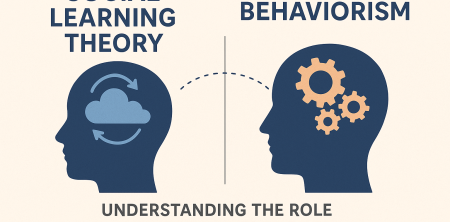
While both Social Learning Theory and Behaviorism deal with learning, their fundamental differences are crucial for understanding their applications. The most significant distinction lies in the role of cognition. SLT acknowledges internal mental processes, asserting that individuals think about and process what they observe before deciding to imitate it. In contrast, Behaviorism ignores cognitive processes and focuses solely on external stimuli.
Another critical difference is the method of learning. SLT promotes learning through observation and social interaction, while Behaviorism emphasizes direct reinforcement through rewards and punishments. This means that in SLT, the context and social dynamics play a vital role in learning, whereas Behaviorism is more mechanistic and less about social engagement.
4. The Role of Cognition in Learning
Cognition is at the heart of Social Learning Theory, influencing how individuals absorb and apply knowledge. Bandura argued that cognitive processes like attention, memory, and motivation are essential for learning to occur. For example, if a student is not paying attention during a demonstration, they may miss critical elements necessary for successful imitation.
Furthermore, cognitive evaluations, such as self-efficacy, play a significant role in determining whether a learner will attempt to replicate observed behaviors. If a student believes they are capable of performing a task (high self-efficacy), they are likely to engage in that behavior after observing someone else do it. In contrast, Behaviorism's neglect of these cognitive aspects can lead to a misunderstanding of why certain behaviors are reinforced or extinguished, as it cannot account for the learner's thought processes.
5. Practical Applications in Education
Understanding the nuances of Social Learning Theory and Behaviorism can significantly enhance teaching strategies. For instance, educators can harness the power of SLT by incorporating collaborative learning environments where students can observe and imitate their peers. Activities such as group projects or peer tutoring allow for social modeling, enabling learners to acquire new skills through observation and practice.
On the other hand, behaviorist techniques, such as positive reinforcement, can still play a vital role in classrooms. For example, implementing a token economy system can motivate students to engage and complete tasks. However, educators should be mindful of incorporating strategies that address cognitive development, such as encouraging metacognitive skills that help students reflect on their learning processes.
6. Current Relevance of Social Learning Theory
In today's digital age, Social Learning Theory holds particular relevance, especially with the rise of social media and online learning platforms. Students now have unprecedented access to diverse models of behavior and information, allowing them to learn from a broader range of sources than ever before. Platforms like YouTube and educational websites provide opportunities for observational learning that transcends traditional classroom settings. (See: Social Learning Theory overview.)
Moreover, the concept of community learning environments, where learners engage in discussions and share knowledge, aligns well with SLT. As students engage with their peers in online forums, they not only learn content but also develop social skills and critical thinking abilities. This evolution in learning dynamics underscores the importance of understanding social contexts in shaping educational experiences.
7. Challenges in Applying Both Theories
Despite their usefulness, both Social Learning Theory and Behaviorism come with challenges in practical application. For instance, while SLT emphasizes the importance of role models, not all students have access to positive influences in their environments. This lack of role models can hinder the observational learning process, leaving some learners at a disadvantage.
Similarly, behaviorist approaches can sometimes lead to superficial learning, where students comply with expected behaviors without developing a deeper understanding of the material. Over-reliance on rewards may also result in a lack of intrinsic motivation, as students may only engage in tasks for the sake of external rewards rather than genuine interest or curiosity.
8. The Role of Culture in Learning
Cultural context significantly influences both Social Learning Theory and Behaviorism. SLT acknowledges that cultural norms and values shape the behaviors that individuals observe and choose to imitate. For example, a student raised in a culture that values collectivism may be more inclined to engage in cooperative learning rather than individual achievement, which informs their learning behaviors.
In contrast, behaviorism may not adequately account for cultural factors that influence learning. Behavioral interventions designed without considering cultural contexts may be less effective. Tailoring behaviorist strategies to align with cultural values can enhance their effectiveness, making it essential for educators to be culturally responsive in their teaching practices.
9. Future Directions in Educational Theory
As education continues to evolve, the integration of Social Learning Theory and Behaviorism offers valuable insights for developing effective teaching strategies. Future research should focus on how to combine these theories, leveraging the strengths of each while addressing their limitations. For instance, educators might explore how social media can be used as a tool for modeling behavior while also implementing behaviorist techniques that promote intrinsic motivation.
Moreover, as technology advances, understanding how virtual environments impact observational learning will become increasingly important. Exploring the balance between online and in-person learning experiences can provide educators with the knowledge needed to create effective learning environments that address the diverse needs of all students.
10. Conclusion: A Comprehensive Approach to Learning
In summary, both Social Learning Theory and Behaviorism offer valuable perspectives on the learning process, with each highlighting different aspects of cognition and behavior. While Behaviorism provides a clear framework for understanding how reinforcement influences learning, Social Learning Theory introduces the critical role of observation and cognition in shaping behaviors.
By integrating insights from both theories, educators can design more effective learning experiences that cater to the diverse needs of students. Recognizing the importance of social interactions, cognitive processes, and cultural contexts will lead to a more holistic understanding of learning in today’s complex educational environments. It’s this nuanced approach that will ultimately drive educational success in the future.
11. The Impact of Social Learning Theory on Modern Pedagogies
Social Learning Theory has profound implications for modern pedagogies, influencing various teaching styles and practices. Constructivist approaches, which emphasize student-centered learning, often draw from SLT principles. In constructivism, learners are encouraged to build their own understanding through experiences, interactions, and collaboration with others. This aligns with Bandura's idea that social contexts significantly impact learning outcomes.
For example, project-based learning (PBL) encourages students to work in groups, observe their peers, and engage in self-reflection. In such settings, students can learn from one another, share diverse perspectives, and develop critical thinking skills—all central tenets of Social Learning Theory. Research has shown that PBL not only enhances knowledge retention but also fosters communication and teamwork skills, preparing students for real-world challenges.
12. The Role of Technology in Social Learning
Technology has revolutionized the application of Social Learning Theory in educational contexts. With the rise of e-learning platforms, webinars, and interactive tools, students can engage with educational content and peers in unprecedented ways. Online discussion forums, collaborative documents, and video-sharing platforms facilitate observational learning outside traditional classroom boundaries.
For instance, platforms like Khan Academy and Coursera allow learners to watch instructional videos and engage in discussions with peers, mimicking the observational learning process Bandura described. Educators can utilize such platforms to create blended learning environments that combine face-to-face instruction with online resources, maximizing the social learning potential available through technology. (See: Social and emotional learning importance.)
13. Examples of Social Learning in Practice
Real-world examples of Social Learning Theory in practice illustrate its effectiveness across various contexts. One notable example is the use of peer mentoring programs in schools. In these programs, older students serve as role models for younger peers, demonstrating behaviors and academic strategies that promote success. Research indicates that mentees often show improved academic performance and self-esteem, reflecting the impact of observational learning.
Another example is the implementation of social learning in corporate training. Companies increasingly adopt collaborative training sessions where employees can observe and learn from each other's experiences. For instance, a new employee might shadow a seasoned colleague to learn the ropes of their job, benefiting from real-time feedback and modeling. This approach not only aids in skill acquisition but also fosters a culture of shared learning within the organization.
14. Statistics on Social Learning Success
Statistics highlight the effectiveness of Social Learning Theory in educational settings. A study conducted by the National Training Laboratories found that the retention rates for different learning methods vary significantly. According to their findings, learners retain approximately:
- 5% of what they learn from lectures
- 10% from reading
- 20% from audiovisual materials
- 30% from demonstrations
- 50% from group discussions
- 75% from practicing by doing
- 90% from teaching others or using the learned material immediately
The figures underscore the potential of social interactions and observational learning in maximizing educational outcomes. This data can help educators design curricula that prioritize collaborative learning and peer engagement, aligning with the principles of Social Learning Theory.
15. Frequently Asked Questions (FAQ)
What is Social Learning Theory?
Social Learning Theory is a psychological framework that explains how individuals learn through observing others, imitating behaviors, and modeling actions. It emphasizes the role of cognitive processes, motivation, and social contexts in shaping learning experiences.
Who developed Social Learning Theory?
Social Learning Theory was developed by Albert Bandura in the 1960s. His research focused on the processes of observational learning and the impact of social influences on behavior.
How does Social Learning Theory differ from Behaviorism?
Social Learning Theory differs from Behaviorism in that it incorporates cognitive processes, recognizing that individuals think about and process their observations before deciding to imitate behavior. Behaviorism, on the other hand, focuses solely on observable behaviors and external reinforcement without considering internal thought processes.
What are some applications of Social Learning Theory in education?
Applications of Social Learning Theory in education include collaborative learning environments, peer tutoring, and project-based learning. These approaches encourage students to learn from one another, fostering social interactions and observational learning.
How can technology enhance Social Learning Theory?
Technology enhances Social Learning Theory by providing platforms for collaborative learning and observational experiences. Online forums, video-sharing sites, and e-learning platforms allow students to access diverse models of behavior and engage with peers in real-time, facilitating the learning process.
What challenges does Social Learning Theory face?
Challenges include the availability of positive role models, cultural differences in learning, and the potential for superficial learning if not coupled with deeper cognitive engagement. Additionally, not all students may benefit equally from observational learning, especially in environments lacking supportive social structures.
16. Strategies to Enhance Social Learning in the Classroom
To effectively implement Social Learning Theory in educational settings, teachers can adopt several strategies that foster social interactions and observational learning. Here are a few practical ideas:
- Peer Teaching: Encourage students to teach each other, which not only reinforces their understanding but also allows them to observe different approaches to problem-solving.
- Group Discussions: Facilitate discussions where students share their thoughts and experiences related to the topic. This can lead to deeper insights and understanding as they learn from one another.
- Role-Playing Activities: Use role-play scenarios to allow students to act out situations relevant to the subject matter, providing them with a chance to learn through experience and observation.
- Collaborative Projects: Assign group projects that require students to work together, encouraging them to learn from their peers' strengths and perspectives.
17. Examples of Social Learning in Popular Culture
Social Learning Theory is not limited to educational settings; its principles can also be observed in popular culture. For example, social media platforms like TikTok encourage users to create and share content based on trends. Users often imitate others' dance moves, challenges, or cooking techniques, showcasing observational learning in action. This phenomenon illustrates how SLT can transcend traditional learning environments and impact everyday life.
Television shows and movies also provide powerful models for behavior. Characters often serve as role models, influencing viewers' actions and beliefs. For instance, children who watch shows that promote prosocial behaviors may be more likely to engage in sharing and cooperation, reflecting the observation and imitation processes central to Social Learning Theory.
18. The Importance of Mentorship in Social Learning
Mentorship plays a crucial role in Social Learning Theory, as mentors serve as significant role models for mentees. The relationship between mentors and mentees can facilitate personal and professional growth, allowing for knowledge transfer and skill development. Research suggests that mentorship can lead to increased career satisfaction and advancement opportunities, particularly in academic and corporate settings.
Effective mentorship involves not only providing guidance but also modeling appropriate behaviors and attitudes. For example, when mentors demonstrate effective communication and problem-solving skills, mentees are likely to adopt these strategies in their interactions. This dynamic illustrates the powerful role of social learning through meaningful relationships.
19. The Connection Between Social Learning and Emotional Intelligence
Social Learning Theory is closely tied to the development of emotional intelligence (EI), which refers to the ability to recognize, understand, and manage one's own emotions and the emotions of others. Observational learning plays a significant role in shaping EI, as individuals learn how to navigate social situations by watching how others respond emotionally.
For example, children who observe empathetic behavior in adults are more likely to develop similar empathetic responses. Schools that incorporate social-emotional learning (SEL) programs often leverage principles from Social Learning Theory to foster students' emotional intelligence through modeling and peer interactions. By emphasizing the importance of social-emotional skills, educators can create more supportive and inclusive learning environments.
20. Conclusion: Embracing Social Learning Theory for Holistic Development
Social Learning Theory offers profound insights into the learning process, emphasizing the importance of social interactions, modeling, and cognitive engagement. As educators and learners navigate the complexities of modern educational environments, integrating SLT principles can enhance learning outcomes and promote deeper understanding.
By recognizing the intersections of social learning, technology, mentorship, and emotional intelligence, we can create enriching educational experiences that support holistic development. As we move forward, embracing the principles of Social Learning Theory will be essential for fostering adaptable, skilled, and socially aware learners ready to meet the challenges of the future.
```
Trending Now
- “Attachment Parenting vs. Attachment Theory: Understanding…
- “Adapting Socratic Seminars for Elementary Students:…
- this guide on “why neuroscientists say learning styles theory lacks scientific evidence”
- our breakdown of “the bobo doll experiment explained: what it teaches about aggression and modeling”
Frequently Asked Questions
What is the main difference between Social Learning Theory and Behaviorism?
The main difference lies in their focus: Social Learning Theory emphasizes learning through observation and cognitive processes, while Behaviorism concentrates on observable behaviors shaped by reinforcement and punishment. SLT acknowledges the role of mental states, whereas Behaviorism dismisses cognition as irrelevant.
How does Social Learning Theory incorporate cognition in learning?
Social Learning Theory incorporates cognition by suggesting that individuals learn vicariously through observing others. Cognitive processes such as motivation and expectations influence how and why people imitate behaviors, making learning a more complex interaction between personal factors, behavior, and environment.
What are the key principles of Behaviorism?
Key principles of Behaviorism include the belief that all behaviors are learned through interactions with the environment, and that behaviors can be modified through reinforcement (positive or negative) and punishment. It focuses strictly on observable actions, ignoring internal mental states.
Who developed Social Learning Theory?
Social Learning Theory was developed by Albert Bandura in the 1960s. Bandura emphasized the importance of observational learning and the role of cognitive processes in shaping individuals' learning experiences.
What role does motivation play in Social Learning Theory?
Motivation plays a critical role in Social Learning Theory, as it influences whether an individual will imitate observed behaviors. For example, seeing a peer rewarded for a behavior can motivate someone to replicate that behavior, believing they can achieve similar success.
What did we miss? Let us know in the comments and join the conversation.

