```html
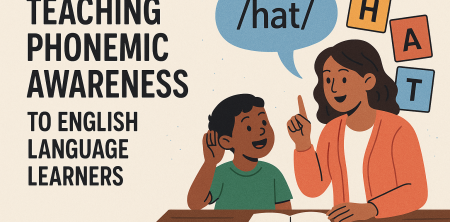
Phonemic awareness is a crucial skill for literacy development, especially for English Language Learners (ELLs). Understanding the sounds that make up words is essential for reading and writing fluency. As educators, it’s our responsibility to equip ELLs with the necessary tools to navigate the complexities of the English language. This article delves into the significance of phonemic awareness for English language learners, effective teaching strategies, challenges faced, and practical insights that can transform your classroom approach.
Understanding Phonemic Awareness
Before diving into teaching strategies, let's clarify what phonemic awareness entails. Phonemic awareness is the ability to recognize, manipulate, and work with the individual sounds in spoken words. This skill includes activities such as:
- Identifying sounds in words
- Blending sounds to form words
- Segmenting words into their constituent sounds
- Manipulating sounds, such as substituting or deleting them
For instance, when a student hears the word "cat" and can identify that it consists of the sounds /k/, /æ/, and /t/, they demonstrate phonemic awareness. This skill is foundational for learning to read, as it directly correlates with the ability to decode written text, making it especially vital for ELLs.
The Importance of Phonemic Awareness for ELLs
Why is phonemic awareness critical for English language learners? Research consistently shows that strong phonemic awareness skills lead to improved reading outcomes. According to the National Reading Panel (2000), phonemic awareness is one of the five essential components of effective reading instruction. For ELLs, acquiring these skills can be particularly challenging due to various linguistic and cultural factors.
Many ELLs come from language backgrounds that operate on different phonetic principles than English. For example, languages such as Spanish have a more straightforward correspondence between sounds and letters, while English has numerous exceptions and irregularities. This disparity can lead to confusion and hinder their reading development. Therefore, targeted phonemic awareness instruction can help bridge the gap between their native language and English.
Challenges ELLs Face in Developing Phonemic Awareness
English language learners encounter unique challenges when developing phonemic awareness. Some of these challenges include:
- Linguistic Differences: ELLs may struggle with sounds that do not exist in their native languages. For instance, the English /θ/ sound as in "think" is absent in many languages.
- Transfer Issues: The phonetic rules of a student’s first language can interfere with their ability to decode English sounds. For example, a Spanish speaker might pronounce "sheep" as "ship" due to the distinctions in vowel sounds.
- Limited Exposure: ELLs may not have had as much exposure to phonics instruction or English vocabulary, making it harder to make connections between sounds and letters.
- Confidence and Anxiety: Many ELLs feel self-conscious about their pronunciation and may avoid participating in phonemic awareness activities, which can stall their progress.
Recognizing these obstacles is the first step toward creating a supportive learning environment that fosters phonemic awareness.
Effective Strategies for Teaching Phonemic Awareness to ELLs
When planning lessons focused on phonemic awareness for English language learners, it's essential to implement effective, research-backed strategies. Here are some approaches that can make a significant difference:
1. Use Multisensory Approaches
Multisensory instruction engages multiple senses and can enhance learning for ELLs. For example, combining auditory, visual, and kinesthetic activities helps reinforce phonemic awareness concepts. Consider using:
- Sound Cards: Create flashcards with pictures that represent different sounds. Students can say the sound while simultaneously pointing to the card.
- Movement Activities: Incorporate physical movement, like clapping or jumping, to represent syllables or sounds. This engages students and helps them remember the sounds.
- Interactive Games: Use games that require students to manipulate sounds, such as “Sound Bingo” or “Phoneme Hopscotch.”
2. Explicit Instruction
Explicit instruction involves clearly teaching the connections between sounds and letters. For ELLs, it’s vital to break down phonemic awareness skills into manageable parts. Consider the following:
- Modeling: Demonstrate how to isolate, blend, and segment sounds. Use clear language and provide plenty of examples.
- Guided Practice: Engage students in guided practice where they can work alongside you. Use techniques like think-alouds to model your thought process.
- Feedback: Provide immediate feedback to help students identify and correct their mistakes. Positive reinforcement encourages them to keep trying.
3. Incorporate Cultural Context
Integrating students' cultural backgrounds can make phonemic awareness activities more relatable and engaging. For example: (See: Phonemic awareness resources from CDC.)
- Use Familiar Words: Start with words from the students' native languages that have similar sounds. This builds confidence and makes new learning less intimidating.
- Connect to Cultural Stories: Use traditional stories or nursery rhymes from students' cultures to introduce phonemic concepts.
- Encourage Students to Share: Allow students to bring words or sounds from their languages to share with the class. This promotes inclusivity and celebrates diversity.
4. Build Vocabulary
Phonemic awareness and vocabulary development go hand in hand. The more words students know, the easier it is for them to recognize sounds. Focus on building vocabulary through:
- Contextual Learning: Teach new vocabulary in context, using visuals and real-life scenarios to create connections.
- Repetition: Reinforce vocabulary through repetition and practice in different contexts, such as writing and speaking.
- Word Mapping: Create word maps that help students visualize relationships between sounds, meanings, and usage.
Assessing Phonemic Awareness in ELLs
Assessing phonemic awareness in English language learners is crucial for understanding their progress and tailoring instruction. Use a variety of assessment methods:
- Observational Assessments: Observe students during phonemic awareness activities to gauge their understanding and application of skills.
- Informal Assessments: Conduct informal assessments like one-on-one sound recognition tasks or word segmentation exercises.
- Standardized Assessments: While standardized tests can be beneficial, be cautious as they may not accurately reflect an ELL's abilities, especially if language barriers exist.
Continuous assessment allows educators to adjust their teaching strategies based on student needs.
Current Relevance of Phonemic Awareness Instruction
In today’s multicultural classrooms, the need for effective phonemic awareness instruction for English language learners is more pressing than ever. Schools are becoming increasingly diverse, and educators must be equipped to meet the needs of all students. Recent studies indicate a strong correlation between phonemic awareness and overall academic success. A report from the National Literacy Panel (2006) emphasizes that targeted phonemic awareness instruction significantly improves reading outcomes for ELLs.
Moreover, as literacy continues to evolve in an age dominated by technology, the foundational skills established through phonemic awareness remain essential. Students adept in phonemic skills will likely be better prepared to tackle digital literacy challenges as they advance through their education.
Engaging Families in Phonemic Awareness
Involving families in the phonemic awareness journey can amplify the impact of classroom instruction. When families understand the importance of phonemic awareness, they can support their children at home. Here are some strategies to engage families:
- Workshops: Organize workshops for parents where they can learn about phonemic awareness and how to practice it at home. Provide resources, such as games and activities, that they can easily implement.
- Home Learning Kits: Create home learning kits that include phonemic awareness activities and materials. These kits can be sent home to encourage practice outside the classroom.
- Regular Communication: Keep families informed about what their children are learning. Share tips on how they can reinforce phonemic awareness at home.
By fostering a home-school connection, you can create a support system that enhances the phonemic awareness skills of ELLs.
Phonemic Awareness and Technology
Technology can be a powerful ally in teaching phonemic awareness. There are various tools and applications designed to support ELLs in developing their phonemic skills. Consider these options:
- Educational Apps: Many apps focus on phonemic awareness through interactive games and activities. These engaging platforms can motivate students and provide additional practice.
- Online Resources: Websites offering phonics and phonemic awareness resources can be useful. Educators can find lesson plans, worksheets, and videos that align with their teaching strategies.
- Multimedia Content: Incorporating songs, videos, and animations that focus on sounds can provide auditory and visual cues that reinforce learning.
When integrating technology, it’s essential to ensure that it complements traditional teaching methods, creating a blended learning environment that caters to various learning styles.
Measuring Success: What Does Improvement Look Like?
Tracking the progress of ELLs in phonemic awareness is essential for understanding the effectiveness of your instruction. Here are some indicators of improvement:
- Increased Sound Recognition: Students will become more adept at recognizing and identifying sounds in isolation and within words.
- Enhanced Blending and Segmenting: Improvement in the ability to blend sounds together smoothly into words or segment words into their individual sounds is a clear sign of progress.
- Greater Confidence: As students improve their phonemic skills, their confidence in speaking and reading aloud should also increase, leading to more participation in class activities.
- Better Reading Outcomes: Ultimately, the goal is to see improvements in reading fluency and comprehension as phonemic awareness skills develop.
Regularly revisiting these indicators can help you refine instruction and celebrate student successes, no matter how small.
Frequently Asked Questions about Phonemic Awareness for English Language Learners
1. What age should phonemic awareness instruction begin for ELLs?
Phonemic awareness instruction can begin as early as preschool and continue into early elementary grades. However, it's never too late. Older ELLs can benefit significantly from targeted phonemic awareness activities tailored to their proficiency level. (See: NIH on teaching phonemic awareness.)
2. How can I tell if my ELL students need more phonemic awareness support?
Look for signs such as difficulty with sound recognition, trouble blending sounds into words, or challenges in segmenting words. If students are struggling with reading fluency or making frequent errors in pronunciation, they may need additional support in phonemic awareness.
3. Are there specific phonemic awareness activities that work best for ELLs?
Activities that incorporate movement, visual aids, and familiar cultural contexts tend to be particularly effective. Games that involve sound manipulation, such as rhyming and sound matching, can also engage ELLs and make learning enjoyable.
4. How can I assess phonemic awareness in ELLs?
Use a combination of informal assessments, such as one-on-one sound recognition tasks, observational assessments during activities, and standardized tests, if appropriate. The key is to look for ongoing growth in their phonemic skills and adjust instruction accordingly.
5. What resources are available for teaching phonemic awareness to ELLs?
Numerous resources are available, including educational websites with free lesson plans, phonics programs specifically designed for ELLs, and apps that focus on phonemic awareness. Professional development workshops can also provide valuable insights and tools.
Expanding Phonemic Awareness Beyond the Classroom
While classroom instruction plays a significant role in developing phonemic awareness among ELLs, there are ways to expand learning beyond the school environment. Encouraging practice at home is essential for reinforcing what students learn during lessons. Below are some strategies that can help:
1. Encourage Reading Aloud at Home
Reading aloud is a wonderful way for families to engage in phonemic awareness activities. Parents can read stories to their children, emphasizing sounds and intonation. They can ask questions about the sounds of words and encourage children to guess rhymes or sounds in the text. This practice not only improves phonemic skills but also fosters a love of reading.
2. Utilize Family Literacy Programs
Find local family literacy programs that focus on phonemic awareness and reading. These programs often offer workshops and resources to help parents support their children's literacy development at home. Such initiatives can be invaluable in bridging the gap between home and school learning.
3. Create a Phonemic Awareness Challenge
To make practicing phonemic awareness fun, consider creating a challenge where students and their families work together to identify sounds in their environment. They might keep a record of different sounds they hear during their daily routines, like the sounds of animals, vehicles, or nature. This activity can spark discussions about phonemic concepts while also fostering family bonding.
Real-World Application of Phonemic Awareness Skills
As ELLs develop phonemic awareness, they begin to apply these skills in real-world contexts. Understanding sounds and their relationships to letters enables them to tackle various literacy tasks. Here are a few examples of how phonemic awareness plays a crucial role in daily life:
1. Navigating Public Signage
Phonemic awareness helps students decode signs in their community. Recognizing sounds associated with letters enables them to read street names, directions, and informational signs, which is essential for their safety and independence.
2. Engaging in Conversations
As students become more confident in their phonemic skills, they participate in conversations more easily. They can express their thoughts clearly, ask questions, and interact with peers. This enhances their social integration and builds their confidence in using English.
3. Understanding Media Content
In today’s media-rich world, phonemic awareness allows students to enjoy and engage with television shows, movies, and online content. They can follow plots, understand dialogues, and even sing along to songs, further reinforcing their language skills.
Building a Supportive Classroom Environment
A positive learning environment is vital for teaching phonemic awareness to ELLs. Here’s how you can create a supportive atmosphere:
1. Foster Peer Collaboration
Encourage students to work together on phonemic activities. Pairing ELLs with more proficient English speakers helps them learn from their peers and instills a sense of community in the classroom. This collaboration allows for shared ideas and experiences, making learning more enjoyable.
2. Celebrate Progress
Recognizing achievements, no matter how small, can motivate ELLs to continue improving their phonemic awareness skills. Use a reward system to celebrate milestones, whether it's mastering a particular sound or showing progress in blending words.
3. Maintain an Open Dialogue
Encourage students to express their feelings about learning challenges. By fostering an open dialogue, you create a safe space where students feel comfortable discussing their struggles and successes, which can help them feel more connected to their learning journey.
Conclusion: Empowering ELLs Through Phonemic Awareness
Teaching phonemic awareness to English language learners is not just about sounds and letters; it's about empowering students to unlock the full potential of language. By implementing effective strategies, acknowledging challenges, and embracing the cultural diversity within your classroom, you can help ELLs develop the phonemic awareness necessary for academic success. As teachers, we have an incredible opportunity to create an inclusive learning environment that fosters confidence and competence in our students.
Through dedicated instruction and an understanding of each student’s unique background, we can significantly impact their literacy journey, setting them on a path to success not just in reading, but in all areas of their education.
```
Trending Now
- Unlocking Social Skills: How Social Pragmatics Role Play Transforms Middle School Learning
- Why Students with ADHD Struggle with Pragmatic Language Skills: 7 Key Insights
- our breakdown of 7 pragmatics challenges english language learners face that every teacher must understand
- our breakdown of 9 essential strategies to boost pragmatic language development in preschool
- Unlocking Language: The Essential Differences Between…
Frequently Asked Questions
What is phonemic awareness?
Phonemic awareness is the ability to recognize, manipulate, and work with the individual sounds in spoken words. It involves activities like identifying, blending, segmenting, and manipulating sounds, which are essential for developing reading and writing skills, especially for English Language Learners (ELLs).
Why is phonemic awareness important for English Language Learners?
Phonemic awareness is crucial for English Language Learners as it directly impacts their reading outcomes. Strong phonemic skills help ELLs decode written text, making it easier for them to learn and navigate the complexities of the English language, which can be challenging due to different phonetic principles in their native languages.
How can teachers improve phonemic awareness in ELLs?
Teachers can improve phonemic awareness in ELLs through targeted activities such as sound identification, blending, segmenting, and sound manipulation exercises. Implementing engaging and culturally relevant lessons can also help ELLs grasp these crucial skills more effectively.
What challenges do ELLs face in developing phonemic awareness?
ELLs often face challenges in developing phonemic awareness due to differences in phonetic principles between their native languages and English. These linguistic and cultural factors can hinder their ability to recognize and manipulate English sounds, making effective instruction vital.
What are effective strategies for teaching phonemic awareness?
Effective strategies for teaching phonemic awareness include using interactive games, songs, and rhymes that emphasize sounds. Additionally, providing explicit instruction and practice in sound manipulation can help ELLs develop these essential skills in a supportive classroom environment.
Have you experienced this yourself? We'd love to hear your story in the comments.

