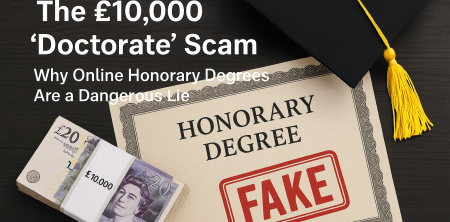
The Troubling Rise of Pay-to-Play Honorary Doctorates
As an educator who's spent years in K-12 classrooms, university departments, and now consulting on educational reform, I've seen my share of concerning trends. But a recent investigation by Times Higher Education has brought something truly alarming to light: the proliferation of online businesses selling honorary doctorates. Yes, you read that right — selling them. For fees that can climb as high as £10,000, these companies promise to 'enhance the reputation' of individuals by securing what should be one of academia's most prestigious accolades. This isn't just a minor ethical lapse; it's a direct assault on the integrity of higher education and the very notion of what an honorary doctorate represents. It's a 'pay-to-play' model that devalues genuine achievement and exploits the desire for recognition, and frankly, it makes my blood boil.
Traditionally, honorary doctorates are bestowed upon individuals who have made truly exceptional contributions to their field, to society, or to the university itself. We're talking about Nobel laureates, groundbreaking scientists, renowned artists, or philanthropists whose impact is undeniable. These aren't degrees you earn through coursework or dissertation defense; they are honors, symbols of respect and admiration from an academic institution. But now, with a few clicks and a hefty payment, anyone can apparently become 'Dr. So-and-So,' potentially misleading employers, clients, and the public. This commercialization is a dangerous path, blurring the lines between legitimate academic achievement and purchased prestige, and it undermines the hard work of countless students and scholars who dedicate years to earning their degrees through rigorous study.
What's even more disturbing is the sheer brazenness of these operations. They don't just exist in some dark corner of the internet; they openly market these fake credentials, often with slick websites and testimonials. The target audience, one can assume, is anyone looking for a quick reputational boost without the effort. But the consequences extend far beyond individual vanity; they impact public trust in education and the value of legitimate degrees. When the public starts questioning the authenticity of any degree, we all lose.
The Sacred Trust: What Authentic Honorary Doctorates Mean
Let's be clear about what an authentic honorary doctorate entails. It's not just a fancy title; it's a profound statement from a university. When an institution confers an honorary degree – be it a Doctor of Letters (D.Litt.), Doctor of Laws (LL.D.), or Doctor of Humane Letters (L.H.D.) – it's recognizing extraordinary contributions that align with the university's values and mission. It's an affirmation of a life's work, a testament to significant professional achievements, humanitarian efforts, or groundbreaking intellectual contributions that have positively impacted the world.
Think about the luminaries who genuinely receive these honors. Often, they are individuals who have spent decades perfecting their craft, advocating for change, or pushing the boundaries of human knowledge. Their names are usually synonymous with excellence and integrity. Universities undertake a thorough vetting process, often involving faculty committees and board approvals, to ensure that the recipient truly embodies the ideals the degree represents. It's a public ceremony, a moment of pride for both the recipient and the awarding institution, and it signals to the world that this person's achievements are worthy of the highest academic recognition.
This careful process is what gives the honorary doctorate its weight and prestige. It's a non-academic degree, yes, but its value lies in the rigorous selection and the esteemed reputation of the awarding body. It's a symbol of societal impact, not a commodity to be bought and sold. The very idea of reducing such an honor to a commercial transaction fundamentally misunderstands and disrespects its purpose. It's like trying to buy a Medal of Honor; it cheapens the valor it's meant to represent.
The Shocking Discovery: Unknowing 'Recipients' and Reputational Damage
Perhaps one of the most insidious aspects of this whole scheme is the revelation that some individuals have been 'shocked' to find their profiles listed as recipients of these phantom honorary doctorates without their knowledge or consent. Imagine waking up one day to find your name associated with a degree you never sought, from an institution you've never heard of, all because some online entity decided to add you to their roster. This isn't just an inconvenience; it's a serious reputational risk.
For individuals, this can lead to awkward explanations, accusations of dishonesty, and the difficult task of disassociating themselves from something they had no part in. For the legitimate universities whose names might be vaguely referenced or whose prestige is being mimicked, it can lead to brand dilution and a loss of trust. And for the online businesses themselves, it's an ethically bankrupt practice that borders on identity manipulation, using unwitting individuals to lend an air of legitimacy to their dubious offerings. This kind of deceptive practice highlights the deep ethical quagmire we're falling into when education becomes a mere transaction.
This 'discovery' element also suggests a broader network of deception. Are these companies just manufacturing lists of impressive-sounding names to make their services seem more credible? Are they actively trying to trick people into believing these are legitimate awards? Whatever their methods, the outcome is the same: confusion, potential harm to individuals' reputations, and a further erosion of confidence in academic credentials. It's a messy situation that demands immediate attention from regulatory bodies and educational watchdogs.
The Commercialization of Education: A Dangerous Trend
The sale of honorary doctorates is just one symptom of a much larger, more troubling trend: the relentless commercialization of education. We've seen it in various forms, from diploma mills selling fake degrees to accreditation scams, but this particular manifestation feels particularly egregious because it targets the very pinnacle of academic recognition. It transforms a symbol of profound respect into a mere product, stripping it of its inherent value and meaning.
In a world where educational institutions are increasingly pressured to operate like businesses, the line between providing valuable services and generating revenue can become dangerously blurred. While I believe in innovation and accessibility in education, particularly through technology, we must never lose sight of education's core mission: to enlighten, to empower, and to uphold intellectual integrity. When profit motives overshadow academic rigor and ethical conduct, the entire system suffers. This 'pay-to-play' model isn't about education; it's about exploitation. (See: New York Times article on honorary degrees.)
This trend also feeds into a broader societal issue where shortcuts are often prioritized over genuine effort. We live in an instant gratification culture, and the idea of buying a prestigious title without years of hard work can be tempting for some. But true education, true achievement, is rarely instant. It requires dedication, perseverance, and a deep commitment to learning and contribution. When we allow these shortcuts to proliferate, we inadvertently send a message that authenticity doesn't matter as much as appearance, which is a truly dangerous precedent for our society.
Academic Integrity Under Siege: Why It Matters to All of Us
At the heart of this controversy lies a fundamental attack on academic integrity. This isn't just an abstract concept; it's the bedrock upon which all credible education rests. Academic integrity ensures that degrees are earned through legitimate effort, that research is conducted ethically, and that intellectual honesty is upheld. When you start to commodify something as significant as an honorary doctorate, you chip away at that foundation, creating cracks that can compromise the entire structure. For more context, see the troubling group fueling school closures.
For students who spend years studying, sacrificing, and often incurring significant debt to earn their degrees, the sight of someone purchasing an equivalent-sounding title can be incredibly demoralizing. It cheapens their hard-won achievements and makes them question the value of their own credentials. Moreover, in professional settings, the presence of individuals with these purchased 'doctorates' can create an uneven playing field, potentially allowing unqualified individuals to gain advantages based on false pretenses. Think about the implications in fields like healthcare, engineering, or even education itself, where credentials are meant to signify a certain level of expertise and trust. This is why academic integrity isn't just a concern for universities; it's a societal concern.
We rely on the authenticity of credentials to make informed decisions – whether we're hiring someone, seeking expert advice, or simply trusting information. If the system becomes polluted with fake or misleading qualifications, that trust erodes, leading to a climate of skepticism and suspicion. Protecting academic integrity, therefore, is not just about upholding institutional standards; it's about safeguarding the public good.
The Blurred Lines: Distinguishing Between Legitimacy and Deception
One of the challenges in this landscape is how cleverly some of these online operations can mimic legitimate academic processes. They might use official-sounding names, create impressive-looking certificates, and even claim affiliations that are tenuous at best. For an unsuspecting individual, especially someone unfamiliar with the nuances of academic accreditation and degree conferral, it can be difficult to discern a genuine honorary doctorate from a purchased one.
The distinction often lies in the details: Is the awarding institution a recognized, accredited university with a physical campus and a verifiable history? Is the 'nomination' process transparent and based on merit, or is it a simple application form with a payment gateway? Are the fees for processing and ceremony, or for the 'degree' itself? These are critical questions that potential recipients, and indeed anyone evaluating someone's credentials, should be asking. Unfortunately, the allure of a prestigious title can sometimes overshadow due diligence.
It's crucial for the public to be educated about these scams. We need to be able to spot the red flags: institutions that appear out of nowhere, promises of guaranteed doctorates for a fee, or a lack of transparent information about the awarding body's accreditation or academic standing. In an increasingly digital world, where information (and misinformation) spreads rapidly, critical evaluation of online claims is more important than ever. As educators, it's our responsibility to help people navigate these murky waters.
The Impact on the Job Market: Scrutiny and Skepticism
In today's competitive job market, degrees and skills are under unprecedented scrutiny. Employers are looking for verifiable qualifications, genuine experience, and a proven track record of achievement. The emergence of these fake honorary doctorates only adds another layer of complexity and skepticism to an already challenging environment. If an employer encounters a candidate with an honorary doctorate, their first thought might now be, 'Is this real, or did they buy it online?'
This heightened skepticism can inadvertently harm legitimate recipients of honorary degrees, forcing them to justify an honor that was bestowed upon them for genuine contributions. It also puts the onus on employers and HR departments to conduct even more rigorous background checks, a process that is already resource-intensive. The danger here is that the entire system of credentialing becomes devalued, making it harder for everyone to prove their worth.
My advice to anyone considering adding an honorary doctorate to their CV, or to employers evaluating one, is to investigate thoroughly. Verify the awarding institution, understand the criteria for the award, and look for a transparent process. If it seems too good to be true – an instant doctorate for a fee – it almost certainly is. The long-term damage to one's reputation from being associated with a fake degree far outweighs any short-term perceived gain.
Fighting Back: What Can Be Done to Protect Honorary Doctorates?
So, what can we do to combat this troubling trend and protect the integrity of honorary doctorates? The fight needs to be multi-faceted, involving universities, regulatory bodies, and public awareness campaigns.
Firstly, legitimate universities must continue to uphold the highest standards for awarding honorary doctorates. Transparency in their selection processes, clear public statements about the meaning of these honors, and proactive efforts to distinguish themselves from fraudulent operations are crucial. They might also consider a more unified approach to publicizing genuine honorary degree recipients, creating a clear, authoritative record.
Secondly, government regulators and accreditation bodies need to step up enforcement against these online diploma mills and honorary doctorate vendors. This means investigating and shutting down fraudulent websites, imposing penalties on those who operate them, and potentially even considering legal action against individuals who knowingly misrepresent purchased titles as legitimate academic achievements. This is a complex legal area, especially across international borders, but it's a necessary fight.
Thirdly, public awareness is key. Educational organizations, journalists, and consumer protection groups need to inform the public about these scams. People need to understand the difference between a genuine honorary award and a purchased title, and they need to be wary of any offer that promises a prestigious degree without the corresponding achievement or vetting process. Education is our most powerful weapon against deception.
Finally, social media platforms and professional networking sites have a role to play. They should have clear policies against the misrepresentation of credentials and be responsive to reports of fake degrees on their platforms. If someone lists an honorary doctorate that is clearly from a fraudulent source, these platforms should have mechanisms to address it, thereby preventing the spread of misinformation. For more context, see the disturbing truth about book bans in schools.
The Enduring Value of True Recognition
Ultimately, the controversy surrounding these online honorary doctorates serves as a stark reminder of the enduring value of true recognition. Real honors, whether they are academic degrees, professional awards, or civic commendations, derive their meaning from the genuine achievement they represent and the integrity of the institutions that bestow them. They are not commodities; they are testaments to dedication, brilliance, and positive impact.
For those who genuinely strive for excellence and contribute meaningfully to their communities and fields, the recognition that comes from their peers and from reputable institutions is priceless. It's a validation of their hard work, their innovation, and their commitment. This is the recognition that truly enhances a reputation, not a certificate bought online for thousands of pounds. As educators, our mission is to foster an environment where genuine achievement is celebrated, and where the pursuit of knowledge and contribution is valued above all else. We simply cannot allow the integrity of such a noble pursuit to be undermined by those who seek to profit from deception. Let's champion authentic education and fight to preserve the true meaning of honor.
The Global Landscape of Diploma Mills and Fake Credentials
It's important to understand that the issue of fake honorary doctorates isn't an isolated problem; it's part of a much wider, global phenomenon involving diploma mills and credential fraud. These operations exploit loopholes in international regulations and often target individuals across borders, making enforcement incredibly challenging. The internet has amplified their reach, allowing them to present a veneer of legitimacy that can fool even sophisticated users. We're talking about an industry that generates millions, if not billions, of dollars annually, preying on people's aspirations for professional advancement and social status.
Different regions face unique challenges. In some developing countries, the demand for credentials can be particularly high due to economic pressures, making individuals more susceptible to these scams. In other areas, lax regulatory environments allow these operations to flourish with minimal oversight. The common thread is always the same: a promise of prestige without the prerequisite work. This global dimension means that any effective counter-strategy can't just be local; it needs international cooperation, shared intelligence, and a concerted effort from educational bodies worldwide to protect the integrity of academic qualifications.
Think about the domino effect. If a doctor, engineer, or teacher holds a fraudulently obtained degree, the implications for public safety and trust are enormous. This isn't just about personal vanity; it's about the foundational competence of professionals we rely on every day. The sheer scale and cross-border nature of these scams make them a formidable adversary, requiring a coordinated defense from all stakeholders in education and public safety.
The Psychological Allure: Why People Seek Fake Doctorates
Why do people fall for these schemes? It's not always pure malice or an intent to deceive. There's a strong psychological component at play. The title "Dr." carries immense social capital and perceived authority. For many, it represents a culmination of hard work, intellectual rigor, and a commitment to expertise. In various cultures and professional fields, it opens doors, commands respect, and can lead to higher salaries or advanced career opportunities. The desire for this recognition is deeply human.
For individuals who may feel undervalued in their careers, or who aspire to a higher social standing, the temptation to fast-track to such a prestigious title can be overwhelming, especially when presented as an "honor" rather than a fraudulent purchase. The marketing from these fake doctorate providers often taps into these desires, using language that speaks to ambition, legacy, and distinction. They create an illusion of exclusivity and achievement, making it seem like a legitimate shortcut to the top. It's a classic case of supply meeting demand, where the demand is for status and the supply is a fabricated path to it.
This psychological appeal also highlights a broader societal pressure to constantly achieve and signal success. In a world where personal branding and credentials are increasingly important, the perceived value of a doctorate can outweigh the ethical considerations for some. As educators, understanding this underlying motivation is crucial, not to excuse the behavior, but to better inform our efforts to promote genuine pathways to achievement and to educate the public about the true meaning of academic honor.
Expert Perspectives: Insights from Academia and Law Enforcement
When you talk to academics about these fake doctorates, you hear a collective groan. It's an insult to their profession and the years of dedication it takes to earn a genuine degree. Many professors and university administrators view it as a direct attack on the credibility of their institutions. They often advocate for stronger legal frameworks and more aggressive prosecution of the individuals and organizations behind these scams. From their perspective, every fake degree cheapens the hard work of real scholars.
Law enforcement, on the other hand, approaches this from a different angle. They see it as a form of fraud and consumer deception. The challenge for them is often jurisdictional, especially when these operations are based overseas, making it difficult to prosecute. However, when these scams are linked to larger criminal enterprises or involve significant financial fraud, law enforcement agencies do get involved. They emphasize the importance of reporting these incidents and providing evidence, as this helps build cases against the perpetrators. The consensus is clear: this isn't just an academic problem; it's a criminal one with real victims.
Combining these perspectives is key. Academia can provide the expert definitions of what constitutes legitimate degrees and honors, while law enforcement can offer the tools and legal authority to shut down fraudulent operations. This collaboration is essential for a comprehensive approach to combating the fake credential industry. Without both sides working together, these scammers will continue to exploit the system.
FAQ: Understanding Honorary Doctorates and Fake Credentials
Q: What exactly is an honorary doctorate?
An honorary doctorate is an academic degree awarded by a university to an individual as a recognition of their exceptional contributions to a field, society, or the university itself. Unlike earned degrees, it doesn't require coursework or a dissertation. It's purely an honor, a symbolic gesture of respect and admiration, often carrying titles like Doctor of Letters (D.Litt.) or Doctor of Laws (LL.D.).
Q: How can I tell if an honorary doctorate is legitimate?
You can usually tell by checking the awarding institution. Is it a recognized, accredited university with a verifiable history and physical campus? Legitimate institutions will also have a transparent process for awarding these degrees, often involving faculty committees and board approval. The recipient's achievements should be publicly documented and significant. If the 'doctorate' is offered for a fee, guarantees a title, or comes from an obscure online entity, it's a huge red flag.
Q: Can I use an honorary doctorate to apply for academic positions or professional licenses?
No, you absolutely cannot. An honorary doctorate is not an earned academic degree. It does not qualify you for positions requiring a doctoral degree, nor can it be used to obtain professional licenses that mandate specific academic qualifications. Misrepresenting an honorary degree as an earned one is unethical and can have serious legal and professional consequences.
Q: What's the difference between a diploma mill and a fake honorary doctorate vendor?
A diploma mill sells fake academic degrees (like BAs, MAs, or PhDs) that are meant to appear as if they were earned through traditional study, often with minimal or no coursework. Fake honorary doctorate vendors specifically sell the title "Dr." through an "honorary" award, which is distinct from an earned degree. Both are fraudulent, but they target different types of credentials.
Q: What should I do if I suspect someone has a fake honorary doctorate?
If you encounter someone misrepresenting a purchased honorary doctorate as an earned degree, especially in a professional context, it's important to report it to the relevant authorities. This might include their employer, professional licensing boards, or consumer protection agencies. For general public awareness, you can also share information about these scams with educational watchdog groups or journalists.
Q: Can I get into trouble for accepting or displaying a fake honorary doctorate?
Yes, you can. While simply receiving a fake honorary doctorate might not always lead to legal action, knowingly using it to gain employment, professional advantages, or misrepresenting it as an earned degree can be considered fraud. This can result in job loss, legal penalties, reputational damage, and the revocation of any benefits gained through the deception. It's always best to steer clear of these offers.
Trending Now
Frequently Asked Questions
What is a pay-to-play honorary doctorate?
A pay-to-play honorary doctorate is a degree that individuals can purchase for a fee, often reaching up to £10,000. Unlike traditional honorary doctorates, which are awarded for significant contributions to society or academia, these purchased degrees are a commercialization of academic prestige, undermining the integrity of genuine achievements.
Are online honorary degrees legitimate?
Most online honorary degrees offered for a fee are not legitimate. They are often marketed by companies that exploit the desire for recognition, providing credentials that lack the academic rigor and integrity associated with genuine honorary degrees awarded by reputable institutions.
Why are honorary doctorates important?
Honorary doctorates are important as they recognize exceptional contributions to society, academia, or a specific field. They symbolize respect and admiration from institutions, awarded to individuals like Nobel laureates or renowned philanthropists, distinguishing them from degrees earned through traditional academic paths.
What are the dangers of buying an honorary doctorate?
Buying an honorary doctorate can mislead employers and the public, creating a false sense of credibility. It devalues the hard work of genuine scholars and threatens the integrity of higher education, blurring the lines between legitimate achievements and purchased prestige.
How can I identify a legitimate honorary doctorate?
To identify a legitimate honorary doctorate, check if it is awarded by a recognized and reputable academic institution. Genuine honorary degrees are typically based on significant contributions to society or academia, rather than being available for purchase through online platforms.
What did we miss? Let us know in the comments and join the conversation.

