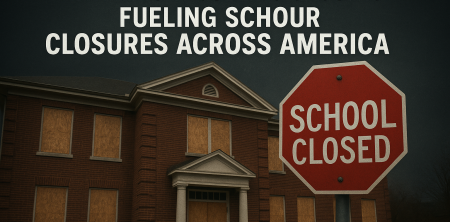
When news broke in Portland that up to 14 public schools could face closure, the reaction from parents, educators, and community members was immediate and visceral. No one wants to see their neighborhood school shuttered, the heart of a community ripped out. But beyond the understandable sorrow and anger, a different kind of question began to surface, fueled by social media and local activism: Is there a hidden hand at play? Specifically, many are pointing fingers at a national education reform organization called Chiefs for Change.
Portland Public Schools Superintendent Kimberlee Armstrong, who unveiled the controversial closure plans, is a member of Chiefs for Change. This fact, once a quiet detail, has exploded onto the public stage, becoming a central talking point in the heated debate. The proposed closures, Armstrong argues, are a necessary response to declining enrollment and the inefficiencies of maintaining too many underutilized buildings. But for many, the link to Chiefs for Change raises deeper concerns about a potential political agenda to reshape public education and, some fear, divert precious resources away from traditional public schools.
The situation in Portland isn't isolated. Down the road, Salem-Keizer Public Schools, led by Superintendent Andrea Castañeda—also a Chiefs for Change member—is expected to announce its own list of potential closures soon. This regional convergence of similar policy decisions, spearheaded by leaders affiliated with the same national organization, has only amplified the speculation and emotional intensity surrounding Chiefs for Change. What exactly is this organization, and why has it become such a lightning rod in the contentious conversation about the future of our public schools?
The Genesis of Chiefs for Change: From Bush to Bipartisan?
To understand the current controversy, we need to trace Chiefs for Change back to its roots. The organization wasn't born in a vacuum; it emerged from a specific moment in education reform history. It was founded in 2010 by none other than Jeb Bush, the former Republican governor of Florida and a prominent advocate for education reform. Bush's vision for education was clear: a system driven by accountability, choice, and a strong emphasis on data-driven decision-making. This often translated into policies supporting charter schools, performance-based pay for teachers, and rigorous standardized testing.
When Chiefs for Change first launched, it was very much aligned with these Republican-led reform efforts. Its early membership largely consisted of state education commissioners and district superintendents who shared this reformist zeal. The initial focus was on fostering a network of leaders who could champion these policies, learn from each other's experiences, and collectively push for what they saw as necessary systemic changes. At its core, the idea was to bring together "chiefs" – the top educational administrators – who were willing to challenge the status quo and implement reforms that often faced resistance from entrenched educational bureaucracies and teachers' unions.
Over time, Chiefs for Change has attempted to broaden its appeal, describing itself as a bipartisan organization committed to equity. They argue that their focus is on ensuring every child, regardless of background, has access to a high-quality education. While this shift in rhetoric is notable, the organization's foundational principles and the policy prescriptions it often champions still carry echoes of its origins. "School choice," for instance, a cornerstone of early Republican reform efforts, remains a significant part of the conversation around their policy recommendations, even if the language is now framed more broadly around "student-centered systems" and "innovative models." This evolution, or perhaps strategic rebranding, is precisely what makes Chiefs for Change so intriguing and, for many critics, so concerning.
The Equity Paradox: How Chiefs for Change Defines Its Mission
Chiefs for Change states its commitment to equity as a core tenet. They articulate a vision where educational outcomes are not predetermined by zip code, race, or socioeconomic status. This is a goal that virtually everyone in education can agree on. The disagreement, however, lies in the methods proposed to achieve it. For Chiefs for Change, equity often involves disrupting traditional systems that they believe have failed certain student populations.
Their approach to equity frequently emphasizes strategies like expanding access to high-performing schools (which can include charter schools), implementing rigorous academic standards, using data to identify and address achievement gaps, and empowering school leaders with greater autonomy. They often advocate for reforms that challenge the one-size-fits-all model of public education, arguing that diverse students require diverse solutions. This perspective, while sounding noble on paper, often translates into policies that can be deeply divisive. For example, advocating for charter schools, even in the name of equity, is often seen by critics as a way to siphon resources from traditional public schools, particularly those serving the most vulnerable students. (See: U.S. Department of Education.)
The paradox lies here: while the organization frames its work around equity, the practical application of its philosophies can sometimes lead to outcomes that critics argue exacerbate existing inequities. School closures, for instance, are often justified by a need to consolidate resources and improve educational quality for remaining students. However, these closures disproportionately affect marginalized communities, where neighborhood schools often serve as vital community hubs, offering more than just academic instruction. They provide stability, social services, and a sense of belonging. When a school closes, especially in a low-income neighborhood, the loss can be profound, disrupting lives and weakening community ties, potentially undermining the very equity goals the organization claims to champion.
Superintendents on the Front Lines: Armstrong and Castañeda
The names Kimberlee Armstrong and Andrea Castañeda have become central to the current controversy in Oregon. Both superintendents, leading significant urban districts in Portland and Salem-Keizer, are members of Chiefs for Change. Their public roles in proposing or anticipating school closures have brought the national organization into sharp local focus, transforming a somewhat abstract reform group into a very real and immediate concern for thousands of families.
Superintendent Armstrong, in Portland Public Schools, initiated the discussion by announcing plans to close up to 14 schools. Her justification is rooted in pragmatic concerns: declining enrollment means fewer students to fill classrooms, leading to inefficient use of resources and stretched budgets. From an administrative standpoint, consolidating schools can free up funds that could theoretically be reinvested into remaining schools, offering enhanced programs or smaller class sizes. However, for the communities affected, these are not mere numbers or line items on a budget. These are the schools where children learn, where parents volunteer, and where generations have built memories.
Similarly, Superintendent Castañeda in Salem-Keizer Public Schools is expected to release her district's own list of potential closures. While the details are yet to emerge, the expectation is that her rationale will mirror Armstrong's, citing similar challenges of enrollment and efficiency. The coordinated timing and similar justifications coming from two superintendents affiliated with Chiefs for Change naturally raise questions. Is this a coincidence, or is there a shared playbook at work? For critics, the answer seems obvious: these superintendents are implementing a broader agenda championed by the organization, an agenda that prioritizes efficiency and a certain type of reform over the preservation of neighborhood schools.
The Social Media Storm: Fueling the Fire of Public Outcry
In an age dominated by instant communication, it's no surprise that social media has become the primary battleground for this educational debate. When the link between Portland Superintendent Kimberlee Armstrong and Chiefs for Change was first highlighted, it wasn't a local newspaper exposé that broke the news widely. It was a social media post, shared and amplified by concerned parents and community activists, that truly ignited the public's attention.
One particular post, gaining over 2,000 likes and hundreds of shares, went viral, spreading like wildfire through local networks. This wasn't just about sharing information; it was about galvanizing a community. The post didn't just state a fact; it framed it within a narrative of potential external influence and questioned the true motivations behind the school closure proposals. It tapped into a deep well of distrust that many citizens feel towards large, national organizations and perceived political agendas infiltrating local decision-making.
The power of these online discussions lies in their ability to bypass traditional media gatekeepers and reach people directly. Parents, often feeling unheard by school boards and district administrations, found a collective voice online. They shared personal stories, expressed their fears, and organized protests. The emotional resonance of these posts was undeniable, transforming what might have been a bureaucratic discussion about budgets and buildings into a passionate defense of community identity and local control. This viral spread ensured that Chiefs for Change, an organization previously unknown to many in Oregon, suddenly became a household name, albeit often in a negative light, at the center of a very public and very emotional debate.
Declining Enrollment and Funding: The Official Justification
Let's be clear: the official justifications for school closures, as articulated by superintendents like Kimberlee Armstrong, are not fabricated. Declining enrollment is a very real challenge facing many urban and suburban school districts across the country. Demographic shifts, lower birth rates, and outward migration from certain areas all contribute to fewer students filling classrooms. When a district has many schools operating significantly under capacity, it creates a financial strain. Maintaining and heating half-empty buildings, staffing them, and providing services for fewer students per building can indeed be inefficient and costly.
School districts typically receive funding based on student headcount. Fewer students mean less state and sometimes federal funding. This direct correlation between enrollment and revenue puts immense pressure on administrators to find ways to balance budgets. From their perspective, consolidating schools can be a necessary, albeit painful, strategy to optimize resources. By closing underutilized schools, districts can theoretically reduce operational costs, potentially allowing them to invest more deeply in the remaining schools – perhaps offering more specialized programs, better technology, or increased support staff. This is the argument Armstrong and others put forth: that these decisions, while difficult, are ultimately about ensuring the long-term financial health and academic viability of the entire district. (See: New York Times education section.)
However, the question remains: are these purely pragmatic decisions, or are they influenced by a particular philosophy of school management and resource allocation, perhaps one championed by organizations like Chiefs for Change? Critics argue that while enrollment declines are real, the response to them is not monolithic. There are other strategies to consider, such as creative repurposing of spaces, aggressive recruitment, or advocating for different state funding models. The choice to close schools, they contend, often reflects a specific reform agenda rather than being the only possible solution to a complex problem.
The Broader Implications: A National Trend?
The situation in Portland and Salem-Keizer is not an isolated incident. Across the United States, school districts are grappling with similar challenges of declining enrollment, aging infrastructure, and budget constraints. And in many of these districts, superintendents and education leaders are members of national organizations that advocate for specific reform agendas.
This raises a crucial question: are we witnessing a broader national trend, where organizations like Chiefs for Change are influencing local decisions on a systemic level? When superintendents from different states, all affiliated with the same group, implement similar policies – be it school closures, charter school expansion, or specific curriculum adoptions – it suggests a powerful network effect. These organizations provide a platform for leaders to share best practices, develop policy recommendations, and, crucially, offer a sense of solidarity and support in the often-contentious world of education administration.
For proponents of these organizations, this is a positive development. They argue that it allows for the dissemination of effective strategies and helps leaders navigate complex challenges with the backing of a national peer group. But for critics, it points to a concerning centralization of influence, where local control might be subtly eroded by national narratives and policy frameworks. It suggests that what appears to be an independent local decision might, in fact, be part of a larger, coordinated movement, potentially driven by ideological commitments that may or may not align with the unique needs and values of individual communities.
The Political Agenda: Shifting Public School Funding?
At the heart of much of the opposition to Chiefs for Change and the proposed school closures is the accusation of a political agenda to shift public school funding. This isn't just about closing buildings; it's about a perceived long-term strategy to reshape the landscape of public education, potentially benefiting alternative educational models over traditional public schools.
Historically, organizations aligned with the "school choice" movement, including those influenced by Jeb Bush's reform philosophy, have advocated for policies that allow public funds to follow students to a variety of educational settings, including charter schools and, in some cases, private schools through vouchers or tax credits. While Chiefs for Change now uses broader language around "student-centered systems," the underlying principle of fostering options outside the traditional public school system remains a powerful current in their discourse.
The concern among critics is that by closing traditional public schools, especially those in under-resourced areas, districts create a vacuum. This vacuum, they fear, could then be filled by charter schools, which are publicly funded but privately managed, or by other alternative models. This isn't to say that all charter schools are inherently bad, but the concern is about the strategic weakening of the traditional public school system through closures, making it more vulnerable to this kind of market-driven approach to education. Parents and activists worry that the ultimate goal isn't just efficiency, but a fundamental restructuring of how public education is funded and delivered, potentially privatizing aspects of it and reducing the overall investment in comprehensive neighborhood schools.
Beyond the Headlines: What's Really at Stake for Communities?
Beyond the policy debates and political accusations, what's truly at stake when a school faces closure is the very fabric of a community. A neighborhood school is often more than just a place of learning. It's a community center, a polling place, a meeting spot, a safe haven, and a source of local identity. For many families, particularly in working-class neighborhoods or communities of color, the local school is a vital anchor, providing stability and a sense of belonging. (See: BBC News education coverage.)
When a school closes, the impact ripples far beyond the students who are displaced. Property values in the surrounding area can decline. Local businesses that relied on foot traffic from school events or parent pickups can suffer. Community cohesion can erode as families are forced to send their children to different, often more distant, schools, weakening the informal networks that sustain neighborhoods. Access to extracurricular activities, after-school programs, and even school-based health services can be disrupted.
Furthermore, school closures often disproportionately affect marginalized communities. These are the neighborhoods that frequently have older school buildings, declining populations due to economic shifts, and fewer resources to fight powerful district administrations. The emotional toll on children, who lose their familiar environment and friends, and on parents, who face new logistical challenges and a diminished sense of community, is immense. This is why the debate around Chiefs for Change and school closures isn't just academic; it's deeply personal, touching on fundamental questions of justice, community resilience, and the very soul of public education.
Moving Forward: Accountability and Local Voices
The controversy surrounding Chiefs for Change and the proposed school closures in Oregon highlights a critical tension in modern education: the balance between national reform movements and local community needs. On one side, you have arguments for efficiency, innovation, and systemic change, often championed by national organizations and administrators tasked with managing complex systems. On the other, you have the passionate defense of neighborhood schools, local control, and the deep-seated value that communities place on their educational institutions.
Moving forward, it's clear that districts like Portland and Salem-Keizer will need to navigate these choppy waters with extreme care. Transparency will be paramount. Simply citing declining enrollment and efficiency won't be enough to quell the widespread skepticism and anger. District leaders will need to engage in genuine, open dialogue with affected communities, providing clear data, explaining their rationale in detail, and demonstrating how any proposed changes will truly benefit students and not just serve a broader, potentially ideological agenda.
More importantly, the role of national organizations like Chiefs for Change will continue to be scrutinized. While they offer valuable networks and resources, their influence must be balanced with robust local accountability. Ultimately, decisions about a community's schools should reflect the unique values and priorities of that community, not just the policy prescriptions of a national group, no matter how well-intentioned. The outcry in Oregon serves as a powerful reminder that when it comes to education, local voices demand to be heard, and communities will fight fiercely for what they believe is best for their children.
Trending Now
Frequently Asked Questions
What is Chiefs for Change and its role in school closures?
Chiefs for Change is a national education reform organization that advocates for policies affecting public schools. Recently, it has come under scrutiny as members, like Portland's Superintendent Kimberlee Armstrong, have proposed school closures, raising concerns about a potential political agenda aimed at reshaping public education.
Why are schools in Portland facing closure?
Portland Public Schools are considering closures due to declining enrollment and the costs associated with maintaining underutilized buildings. However, the involvement of Chiefs for Change members in these decisions has sparked debate and concern among parents and educators about the motives behind these closures.
How is Chiefs for Change influencing education policy?
Chiefs for Change influences education policy by providing a platform for superintendents and education leaders to advocate for reforms. Its members, like those in Portland and Salem-Keizer, are making controversial decisions regarding school closures, leading to speculation about the organization’s broader agenda in public education.
What are the concerns about Chiefs for Change?
Concerns about Chiefs for Change revolve around its perceived agenda to divert resources from traditional public schools and promote privatization. The organization’s involvement in school closure decisions has led many to fear that it prioritizes reform over community needs and educational equity.
What is the public reaction to school closures linked to Chiefs for Change?
The public reaction to proposed school closures linked to Chiefs for Change has been overwhelmingly negative, with parents and community members expressing sorrow and anger. Many are questioning the motives behind the closures, fearing the loss of neighborhood schools and the potential impact on local communities.
What's your take on this? Share your thoughts in the comments below — we read every one.


0 Responses