```html
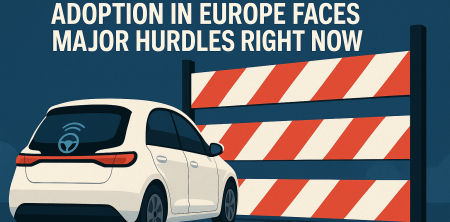
Autonomous vehicles are heralded as the future of transportation, promising enhanced road safety, greater efficiency, and improved accessibility. Yet, despite their potential benefits, the autonomous vehicles adoption in Europe remains sluggish. A recent study highlights the myriad barriers that continue to impede the progress of these self-driving technologies. This article will delve into those barriers and explore how they directly affect consumer trust, regulatory frameworks, and the overall pace of rollout.
The Current Landscape of Autonomous Vehicles in Europe
Europe stands at a critical juncture in the journey toward autonomous driving. With the aim of achieving greater road safety, efficiency, and accessibility, many governments have been proactive in investing in research and development. However, the reality is that self-driving cars are still not a common sight on European roads. Why is that? The answer lies in a complex interplay of technological, societal, and regulatory factors.
1. Technological Challenges
One of the primary barriers to autonomous vehicles adoption in Europe is the technology itself. While advancements in artificial intelligence and machine learning have made significant strides, self-driving cars are still grappling with various challenges.
- Sensor Limitations: Current sensor technologies, while sophisticated, can struggle in adverse weather conditions such as heavy rain or fog. These limitations raise concerns about reliability and safety.
- Complex Urban Environments: European cities often feature narrow streets, historic architecture, and heavy pedestrian traffic. Navigating these complexities presents a significant challenge for autonomous systems.
- Cybersecurity Risks: With increased connectivity comes the risk of hacking and cyberattacks. The potential for malicious actors to take control of a vehicle adds another layer of concern for consumers.
Addressing these technological hurdles is not just a matter of innovation; it also requires significant investment and time, both of which are often in short supply.
2. Consumer Trust Issues
Consumer trust is an essential component of autonomous vehicles adoption in Europe. Many potential users are understandably cautious about relinquishing control to a machine. Public perception of self-driving cars has been shaped by a combination of media coverage, personal experiences, and, crucially, high-profile accidents involving autonomous vehicles.
Surveys show that many consumers remain skeptical about the safety and reliability of these vehicles. A lack of comprehensive education about how autonomous systems work only exacerbates these fears. As a result, manufacturers face the daunting task of not just selling cars, but also selling an entirely new concept of mobility.
3. Regulatory Frameworks: A Mixed Bag
The regulatory landscape for autonomous vehicles in Europe is both fragmented and evolving. Different countries have varying laws and guidelines, leading to confusion and inconsistency. Some of the key issues include:
- Inconsistent Regulations: Each EU member state is allowed to create its own rules for autonomous driving, leading to a patchwork of regulations that complicate cross-border usage.
- Liability Concerns: The question of liability in the event of an accident involving an autonomous vehicle remains unresolved. Who is responsible when a self-driving car gets into an accident? The manufacturer, software developer, or the passenger?
- Insurance Challenges: Existing insurance models are not well-equipped to handle the complexities introduced by autonomous vehicles. New frameworks must be established to address potential risks.
Until a more cohesive regulatory framework is established, the rollout of autonomous vehicles in Europe will continue to face significant barriers.
4. Economic Factors
The economics of deploying autonomous vehicles also play a crucial role in their adoption. While the potential for cost savings is enticing, there are substantial upfront costs associated with the technology. This includes research and development, infrastructure updates, and the installation of necessary safety features.
Moreover, the automotive industry itself is undergoing significant changes. With rising costs for raw materials and increasing competition, many companies may hesitate to invest heavily in autonomous technology. This economic uncertainty can further delay adoption.
5. Infrastructure Readiness
For autonomous vehicles to thrive, the existing infrastructure must be capable of supporting them. Unfortunately, many European cities are not equipped with the necessary smart infrastructure, such as reliable GPS systems, communication networks, and optimized road networks.
Some of the key infrastructure challenges include: (See: road traffic injuries statistics.)
- Road Quality: Poorly maintained roads can hinder the performance of autonomous vehicles. Without a solid infrastructure foundation, the risk of accidents increases.
- Communication Systems: Effective communication between vehicles and infrastructure is essential for autonomous driving. Many areas still lack the necessary 5G networks that could facilitate this.
- Charging Stations: For electric autonomous vehicles, the availability of charging stations is crucial. A lack of charging infrastructure could deter potential users.
Significant investment is needed to bring infrastructure up to par, but this often requires political will and public support.
6. Public Policy and Political Will
Public policy can either facilitate or hinder the adoption of autonomous vehicles. Effective policies can encourage innovation, provide funding for research, and create a supportive environment for testing these vehicles. However, when policies are inconsistent or overly cautious, they can stifle progress.
In Europe, there is a growing awareness of the need for cohesive policies that can promote autonomous vehicles adoption. Countries such as Germany and the Netherlands have begun to draft national roadmaps that outline their visions for autonomous mobility. Yet, the implementation of these plans varies widely.
7. Cultural Attitudes Towards Technology
Cultural attitudes toward technology also play a significant role in shaping the future of autonomous vehicles in Europe. In general, European consumers tend to be more skeptical about new technology compared to their counterparts in places like Silicon Valley or parts of Asia.
This skepticism is often rooted in concerns about privacy, safety, and the potential for job loss. For instance, many fear that widespread adoption of autonomous vehicles could lead to significant job losses in sectors such as transport and logistics. Addressing these cultural concerns is crucial for gaining public support.
8. The Role of the Automotive Industry
The automotive industry's response to the challenges of autonomous vehicle adoption has been varied. While some companies have made significant investments in technology and infrastructure, others have taken a more cautious approach, focusing primarily on hybrid and electric vehicles.
However, the pressure is mounting for the industry to adapt. Consumer preferences are shifting, and the demand for cleaner, safer, and more efficient vehicles is growing. Manufacturers must balance this demand with the realities of autonomous technology.
9. Future Prospects: What Lies Ahead?
Despite the numerous barriers to autonomous vehicles adoption in Europe, there is still hope for the future. As technology continues to evolve and regulations are refined, the pathway for self-driving cars could become clearer. Education and public awareness campaigns will be essential in building consumer trust.
Furthermore, collaboration between governments, industries, and academia could help address the technological and infrastructural challenges we face today. The potential benefits of autonomous vehicles are too significant to ignore, making the need for progress urgent.
10. Case Studies of Autonomous Vehicle Trials in Europe
Several notable trials of autonomous vehicles across Europe provide insight into the potential future of self-driving technology. For example, in 2021, the city of Helsinki implemented a pilot project for autonomous buses that successfully transported passengers along a predefined route, showcasing both the technology's potential and its practicality for public transport systems.
Similarly, in France, the city of Lyon has been testing autonomous shuttles to improve connectivity in urban areas. These trials have yielded valuable data, helping to refine the technology and address public concerns. These projects highlight the importance of real-world testing to build confidence among users, as they can witness the vehicles in action and see firsthand their capabilities.
11. Expert Perspectives on Autonomous Vehicles
Industry experts have varying opinions about the trajectory of autonomous vehicles in Europe. According to Dr. Anna K. Schmidt, an automotive technology researcher, “The evolution of autonomous vehicle technology will depend heavily on the regulatory environment and public acceptance. If governments can create clear guidelines, it will accelerate adoption.”
Conversely, automotive analyst Peter Lang believes that “the pace of technological advancement in AI and machine learning will outstrip the regulations, leading to a gap between capability and legality, which could stifle innovation.” These differing perspectives underscore the complexity of the challenges facing autonomous vehicle adoption. (See: automated vehicles safety guidelines.)
12. The Environmental Impact of Autonomous Vehicles
One of the frequently touted benefits of autonomous vehicles is their potential to reduce emissions. Studies indicate that autonomous cars could optimize routes and improve overall traffic flow, leading to less congestion and ultimately lower carbon footprints. A report from the European Commission posits that widespread adoption of autonomous electric vehicles could reduce urban transport emissions by as much as 40% by 2030.
However, the environmental impact will depend significantly on the energy sources feeding these vehicles. A shift toward green energy will be crucial in realizing these emissions reductions. If autonomous vehicles are charged using fossil fuels, the potential environmental benefits could be diminished.
13. Frequently Asked Questions (FAQ)
What are the main benefits of autonomous vehicles?
Autonomous vehicles promise several benefits, including enhanced safety due to reduced human error, increased mobility for those unable to drive, reduced traffic congestion, and lower emissions when integrated with electric vehicle technology.
What are the primary barriers to autonomous vehicles adoption in Europe?
The barriers include technological challenges, consumer trust issues, inconsistent regulatory frameworks, economic factors, infrastructure readiness, and cultural attitudes toward technology.
How do autonomous vehicles impact jobs?
The introduction of autonomous vehicles could lead to job displacement in certain sectors, particularly in transportation and logistics. However, it may also create new jobs in technology, maintenance, and oversight of these systems.
Are there successful autonomous vehicle programs in Europe?
Yes, various cities across Europe have implemented successful pilot programs. Notable examples include autonomous buses in Helsinki and shuttles in Lyon, both of which have provided valuable insights into the feasibility of self-driving technology.
Is there any public support for autonomous vehicles?
Public support varies across Europe, with many individuals expressing concerns over safety and privacy. Education and successful pilot programs are essential in building trust and increasing acceptance of autonomous technologies.
14. The Role of Collaboration in Accelerating Adoption
Collaboration among various stakeholders—governments, automotive manufacturers, technology companies, and research institutions—is essential for overcoming the challenges of autonomous vehicle adoption. Joint initiatives can facilitate knowledge sharing, improve technology standards, and help create a more coherent regulatory framework.
For instance, partnerships between tech companies and automotive manufacturers can lead to better integration of AI systems into vehicles, ensuring that safety and functionality are prioritized. Additionally, cooperation with local governments can ensure that infrastructure is adequately prepared to support autonomous vehicles, addressing the issue of readiness effectively.
15. The Importance of Public Engagement
Public engagement is a crucial factor in the successful adoption of autonomous vehicles. Engaging communities through educational programs, open discussions, and public demonstrations can demystify the technology and alleviate fears surrounding its use. Interactive workshops and simulation experiences allow people to see how autonomous vehicles operate in a controlled environment, leading to better understanding and trust.
Moreover, local governments and companies should work together to gather public feedback about autonomous vehicle projects. This could help refine the technology and address specific concerns raised by communities. Studies show that when citizens feel involved in the process, they are more likely to support new initiatives.
16. Economic Incentives for Adoption
To accelerate the adoption of autonomous vehicles, economic incentives could play a pivotal role. Governments might consider subsidies or tax incentives for consumers and businesses that invest in autonomous technologies or electric vehicles. Financial assistance could also be directed towards infrastructure improvements, ensuring that cities are prepared for the integration of autonomous vehicles. (See: study on autonomous vehicle adoption.)
Additionally, companies could benefit from grants aimed at research and development of autonomous technologies. These incentives can help reduce the financial burden of initial investments and encourage innovation within the sector.
17. The Future of Urban Mobility with Autonomous Vehicles
The future of urban mobility is likely to be transformed by the integration of autonomous vehicles. Concepts such as shared autonomous services could emerge, where fleets of self-driving cars and shuttles operate in a coordinated manner, providing on-demand transportation for urban populations. This could lead to a significant reduction in personal vehicle ownership, lowering traffic congestion and parking demands.
Cities that embrace this change may see improved air quality, enhanced public transport options, and more vibrant urban spaces, free from the constraints of traditional car-centric planning. The challenge will be to ensure that these services are inclusive and accessible to all segments of the population.
18. International Comparisons: Learning from Global Leaders
Looking beyond Europe, countries like the United States and China are making significant strides in autonomous vehicle technology. In the U.S., cities such as San Francisco and Phoenix are testing fully autonomous ride-hailing services, showcasing different regulatory approaches and public acceptance levels. In China, companies like Baidu are developing comprehensive autonomous driving ecosystems supported by government initiatives that encourage rapid testing and deployment.
By studying these international examples, European policymakers and businesses can identify best practices and adapt them to fit their unique contexts. Collaborative projects with international partners could also bring valuable insights and facilitate the sharing of technologies and strategies.
19. The Road Ahead: Innovations on the Horizon
As the landscape of autonomous vehicles continues to evolve, several innovations are on the horizon that could enhance the adoption rate. Developments in vehicle-to-everything (V2X) communication are expected to improve the interaction between autonomous vehicles and their environment, enabling safer navigation and more efficient traffic management.
Additionally, advancements in AI algorithms, particularly in areas like machine learning and real-time data processing, could significantly enhance the decision-making capabilities of autonomous systems. As these technologies mature, the gap between current capabilities and public expectations may narrow, paving the way for broader acceptance and integration of autonomous vehicles.
20. Conclusion: The Path Forward
The journey toward the widespread adoption of autonomous vehicles in Europe is fraught with challenges, but innovative solutions and collaborative efforts could pave the way for progress. Emphasizing education, investment in infrastructure, and cohesive policy-making will help bridge the gaps currently hindering growth. With a focused approach, the vision of autonomous vehicles transforming European roads from a dream into reality may not be far off.
```
Trending Now
Frequently Asked Questions
What are the main barriers to autonomous vehicle adoption in Europe?
The main barriers to autonomous vehicle adoption in Europe include technological challenges, such as sensor limitations in adverse weather, the complexity of urban environments, and cybersecurity risks. These factors contribute to consumer distrust and slow regulatory progress, hindering the rollout of self-driving technologies.
How does technology affect the adoption of self-driving cars in Europe?
Technology significantly affects the adoption of self-driving cars in Europe through issues like sensor limitations in bad weather, challenges posed by complex urban infrastructure, and cybersecurity threats. These technological hurdles impact safety perceptions and consumer trust, slowing the overall adoption process.
What role do regulatory frameworks play in autonomous vehicle deployment?
Regulatory frameworks play a crucial role in the deployment of autonomous vehicles by establishing safety standards and guidelines. In Europe, the lack of cohesive regulations and the slow pace of legislative changes contribute to the sluggish adoption of self-driving technologies.
Why are there consumer trust issues with autonomous vehicles?
Consumer trust issues with autonomous vehicles stem from concerns about safety, reliability, and cybersecurity. Technological challenges, such as sensor performance and the potential for hacking, create apprehension among consumers regarding the safety of self-driving cars.
What advancements are needed for autonomous vehicles to become common in Europe?
For autonomous vehicles to become common in Europe, advancements are needed in sensor technology to improve performance in adverse conditions, better navigation systems for complex urban environments, and robust cybersecurity measures to protect against hacking. Additionally, cohesive regulatory frameworks are essential to build consumer trust.
What's your take on this? Share your thoughts in the comments below — we read every one.

