```html
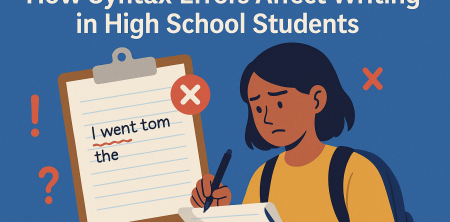
Writing is a fundamental skill that shapes how students express their thoughts, arguments, and creativity. Yet, for many high school students, syntax errors in writing can obscure their intended messages, leading to misunderstandings and reduced effectiveness. As educators strive to refine students’ writing abilities, it’s crucial to understand not only what syntax errors are but also their broader effects on student performance and learning outcomes.
Understanding Syntax Errors in Writing
At its core, syntax refers to the arrangement of words and phrases to create well-formed sentences. Syntax errors occur when this arrangement is incorrect, leading to confusion or ambiguity. Such errors can range from simple grammatical mistakes to more complex issues involving sentence structure.
Examples of syntax errors include:
- Misplaced modifiers: "She almost drove her kids to school every day." (implying she rarely did).
- Run-on sentences: "I love pizza it is my favorite food." (which should be separated into two distinct sentences).
- Fragmented sentences: "Because I love writing." (leaving the thought incomplete).
These errors hinder the clarity of writing and can frustrate both writers and readers alike.
The Importance of Syntax in Effective Communication
Effective communication is the backbone of academic success and interpersonal relationships. Proper syntax plays a pivotal role in how well a student conveys their ideas. When syntax is flawed, the writing may fail to communicate its intended message, leading to a loss of credibility and reader engagement.
In high school, students are often tasked with writing essays, reports, and creative pieces. Inaccurate syntax can lead to misinterpretations of their arguments and perspectives. For instance, a well-reasoned argument can lose its impact if presented with poor syntax. This is particularly true in a classroom setting, where teachers evaluate students based on their ability to articulate thoughts clearly and coherently.
The Psychological Impact of Syntax Errors on Students
Syntax errors can deeply affect a student's confidence and self-esteem. When students consistently struggle with syntax, they may feel discouraged from expressing themselves through writing. This feeling can result in a lack of motivation to complete assignments, which ultimately affects their overall academic performance.
Furthermore, the fear of making syntax errors may lead students to avoid complex sentence structures in favor of simpler ones, stifling their creative expression. Instead of exploring nuanced arguments or intricate ideas, students might settle for superficial writing, missing out on the opportunity to engage deeply with their topics.
Common Causes of Syntax Errors in High School Writing
Understanding the sources of syntax errors can help educators and students address these issues more effectively. Some common causes include:
- Lack of foundational knowledge: Many students enter high school without a strong grasp of grammar and syntax principles, which can lead to compounded errors over time.
- Language transfer: For bilingual students, the rules of their native language can conflict with English syntax, leading to errors that stem from their first language.
- Limited practice: Insufficient exposure to varied writing styles and genres may inhibit students from understanding how syntax functions in different contexts.
Identifying these causes can help educators develop targeted interventions to improve syntax in student writing.
The Role of Feedback in Improving Syntax
Feedback is an essential tool for helping students recognize and correct syntax errors. When teachers provide constructive criticism, they should focus on specific issues rather than general comments. For instance, instead of simply stating that a paper has many errors, a teacher could point out specific sentences that could be improved with different syntax. (See: The role of syntax in writing.)
Peer reviews can also be beneficial. When students critique each other's work, they may notice syntax errors in a way that they wouldn't when reviewing their own writing. This collaborative approach not only builds a community of support but also increases students' awareness of their writing mistakes.
Tools and Resources for Improving Syntax
In today’s digital age, various tools can assist students in identifying and correcting syntax errors. Here are some of the most effective:
- Grammar checkers: Applications like Grammarly or Hemingway Editor can help students spot syntax issues as they write.
- Writing centers: Many schools have writing centers or online resources that provide personalized feedback and assistance.
- Workshops: Schools can offer workshops focused on grammar and syntax, allowing students to practice and reinforce their skills.
Leveraging these resources can empower students to take ownership of their writing and improve their syntax skills.
Strategies for Educators to Address Syntax Errors
Teachers play a pivotal role in helping students navigate syntax issues. Here are some effective strategies that educators can implement:
- Explicit instruction: Teach students specific grammar and syntax rules through engaging lessons and activities.
- Modeling: Demonstrate proper syntax in writing samples and provide clear examples of common errors to avoid.
- Encouraging revision: Foster a culture of revision where students are encouraged to revisit and improve their writing, focusing on syntax during the editing process.
By integrating these strategies into their teaching practices, educators can significantly reduce syntax errors in students' writing.
Real-World Implications of Syntax Errors
The stakes surrounding syntax errors extend beyond the high school classroom. As students transition to college and the workforce, the ability to write effectively becomes even more critical. Employers consistently cite communication skills, including written ones, as vital attributes for success.
Consider the implications: a poorly written job application due to syntax errors could lead to missed opportunities for internships or jobs. In academia, a disorganized thesis or research paper may prevent students from effectively conveying their findings and securing positive evaluations from professors.
Encouraging a Growth Mindset Toward Writing
To combat the negative impact of syntax errors, it’s essential for students to adopt a growth mindset regarding their writing skills. They should view mistakes as opportunities for learning and growth rather than as indicators of failure.
This approach emphasizes that writing is a process, and even experienced writers make errors. By encouraging students to embrace their imperfections, educators can foster resilience and a willingness to improve. Celebrating small victories in syntax improvement can motivate students to continue enhancing their writing abilities.
The Future of Writing Instruction: Addressing Syntax Errors Proactively
As the landscape of education evolves, addressing syntax errors in writing will remain a crucial focus. With the rise of digital communication and online learning environments, students must adapt their writing skills to various formats. This shift underscores the need for ongoing instruction and practice in syntax.
Schools should consider integrating technology and innovative teaching methods to address syntax issues effectively. By providing students with the resources and support they need, educators can help them develop strong writing skills that will serve them well in their academic and professional lives.
Exploring Syntax Errors with Real-World Examples
To further illustrate the impact of syntax errors, let's look at a few real-world examples and situations where syntax has played a critical role. For instance, consider the difference in meaning when a syntax error alters a legal document. A misplaced comma in a contract can change the obligations of the parties involved. In 1971, a case in New York involved a comma that led to a significant financial dispute. The judge ruled based on the interpretation of the document, which hinged on a syntax error. (See: Understanding syntax in communication.)
In academic settings, syntax errors in research papers can result in misunderstandings of the research findings. For example, a poorly structured sentence in a scientific article may lead peers to draw incorrect conclusions about the data presented, undermining the credibility of the entire study.
Additionally, consider advertising campaigns where syntax plays a crucial role. A company might suffer from a poorly constructed tagline that confuses potential customers. For instance, a slogan like "Let's eat Grandma" versus "Let's eat, Grandma" drastically changes the intention and could lead to either a humorous or disastrous misunderstanding.
Statistics on Syntax Errors in Writing
While specific statistics on syntax errors in writing can be hard to come by, several studies have indicated a correlation between writing proficiency and academic performance. According to a report by the National Assessment of Educational Progress (NAEP), only 27% of high school seniors are proficient in writing, highlighting a significant gap in writing skills that often includes issues with syntax.
Moreover, a survey conducted by the Pew Research Center found that 73% of English teachers noted that their students struggle with sentence structure, further emphasizing the prevalence of syntax errors in academic writing. These statistics underscore the urgent need for focused interventions in writing education to tackle syntax issues effectively.
Expert Perspectives on Addressing Syntax Errors
Educators and linguists alike emphasize the importance of addressing syntax errors in writing. Dr. Linda Smith, a professor of English at a prominent university, suggests that educators should incorporate more interactive activities to help students understand syntax. "Writing is not just about grammar; it's about clarity and expression. When students learn through peer edits and collaborative writing, they become more aware of their syntax," she explains.
Additionally, Dr. James Lee, a cognitive psychologist specializing in education, shares insights on the psychological effects of syntax errors. He notes, "When students repeatedly face syntax errors, it can lead to a mindset where they associate writing with failure. By introducing a supportive environment that values mistakes as learning opportunities, we can change their relationship with writing." This perspective reinforces the need for a holistic approach to teaching writing that encompasses both skills and emotional support.
Comparative Analysis: Syntax Errors Across Languages
For bilingual students, the challenges of syntax errors can be magnified by the differences between their native language and English. For example, in languages like Spanish, the sentence structure often places adjectives after nouns, which can cause confusion when students attempt to write in English. This issue can lead to syntax errors that stem from direct translation rather than an understanding of English syntax rules.
Furthermore, students learning languages with flexible syntax, such as Latin, may struggle with the rigid structure required in English. Teachers can help by providing comparative lessons that highlight these differences and offer tailored syntax practice that respects the students' linguistic backgrounds.
Frequently Asked Questions About Syntax Errors in Writing
What is a syntax error?
A syntax error is a mistake in the arrangement of words or phrases in a sentence that leads to confusion or a lack of clarity. It can involve grammatical mistakes or improper sentence structure.
How can I identify syntax errors in my writing?
You can identify syntax errors by reading your writing aloud, as this can help you catch awkward phrases or sentence fragments. Additionally, using grammar checkers or seeking feedback from peers can also aid in spotting these mistakes. (See: Harvard's approach to writing education.)
Are syntax errors the same as grammatical errors?
While all syntax errors are grammatical mistakes, not all grammatical errors are syntax errors. Syntax errors specifically refer to issues with sentence structure, while grammatical errors can include problems with verb tense, punctuation, or word choice.
Why are syntax errors important to address?
Addressing syntax errors is crucial because they can obscure the intended meaning of your writing, lead to misunderstandings, and diminish the overall effectiveness of your communication. Clear syntax is essential for conveying ideas accurately and persuasively.
Can syntax errors affect my grades in school?
Yes, syntax errors can negatively impact your grades, especially in writing-intensive subjects. Teachers often assess clarity and coherence in writing, and syntax plays a significant role in achieving those qualities.
How can I improve my syntax skills?
You can improve your syntax skills by practicing writing regularly, studying sentence structures, and seeking feedback on your writing. Reading widely and analyzing the syntax used by skilled writers can also enhance your understanding and application of effective syntax.
Additional Resources for Understanding Syntax
If you're looking to further your understanding of syntax and writing, consider exploring these resources:
- Books: "Style: Lessons in Clarity and Grace" by Joseph M. Williams and Joseph Bizup provides invaluable insights into writing with clarity and effective syntax.
- Online Courses: Websites like Coursera and edX offer writing courses that include focused modules on syntax and grammar.
- Writing Blogs: Blogs like "The Write Practice" and "Grammar Girl" offer practical advice on syntax and writing techniques.
Collaborative Writing Exercises to Improve Syntax
Engaging students in collaborative writing exercises can be an effective way to improve their understanding of syntax. Group projects encourage students to discuss and revise each other’s work, fostering a deeper understanding of how syntax affects clarity. For example, students could work in pairs to create a short story, with one student writing a paragraph and the other providing feedback on the syntax used. This kind of interaction helps students learn from each other and see different approaches to sentence structure.
How Syntax Errors Can Influence Professional Opportunities
In addition to academic implications, syntax errors can have a long-lasting impact on career opportunities. Many employers review cover letters and resumes not only for the content but also for the professionalism of the writing. A single syntax error can lead to an unfavorable impression, suggesting a lack of attention to detail. In competitive fields, where every application counts, presenting polished writing can be the difference between landing an interview and getting overlooked.
In summary, syntax errors in writing are more than mere grammatical mistakes; they have real implications for high school students’ academic success and self-esteem. By understanding the causes, effects, and solutions related to syntax errors, both students and educators can work together to enhance writing skills and foster clearer communication, ultimately preparing students for a successful future.
```
Trending Now
Frequently Asked Questions
What are syntax errors in writing?
Syntax errors in writing occur when the arrangement of words and phrases is incorrect, leading to confusion or ambiguity. They can include issues like misplaced modifiers, run-on sentences, and fragmented sentences, which hinder clarity and effective communication.
How do syntax errors affect student writing?
Syntax errors can obscure a student's intended message, resulting in misunderstandings and reduced effectiveness in their writing. This can impact their academic performance and the credibility of their arguments in essays and reports.
Why is proper syntax important in communication?
Proper syntax is crucial for effective communication as it helps convey ideas clearly and accurately. Flawed syntax can lead to misinterpretations, diminishing the impact of the message and potentially disengaging the reader.
What are some common examples of syntax errors?
Common examples of syntax errors include misplaced modifiers, like 'She almost drove her kids to school every day,' run-on sentences, such as 'I love pizza it is my favorite food,' and fragmented sentences, like 'Because I love writing.'
How can students improve their syntax in writing?
Students can improve their syntax by practicing sentence structure, seeking feedback on their writing, and revising drafts to correct errors. Reading well-written material can also help them understand proper syntax and enhance their writing skills.
What's your take on this? Share your thoughts in the comments below — we read every one.

