```html
When you think of childhood development, various skills come to mind—language, social interaction, and emotional growth. However, one often overlooked area is hand-eye coordination development. This crucial skill not only supports basic activities like writing and drawing but also lays the groundwork for more complex tasks like sports and STEM-related activities. From preschool through middle school, children undergo significant changes in their motor skills, particularly in how they coordinate their hand movements with visual input.
The Fundamentals of Hand-Eye Coordination
Hand-eye coordination refers to the ability to synchronize visual information with motor actions. This skill is vital for executing tasks that require precision and timing—whether it's catching a ball, typing on a keyboard, or even threading a needle. While this skill might seem innate, it actually develops through practice and experience, particularly during early childhood.
Researchers have identified two primary components of hand-eye coordination: visual tracking and fine motor skills. Visual tracking allows a child to follow moving objects, while fine motor skills involve the use of smaller muscle groups for detailed tasks. Both elements are essential for the overall development of hand-eye coordination.
Preschool Years: The Groundwork
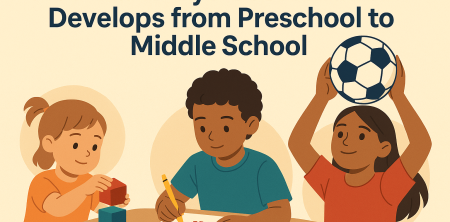
During the preschool years, typically ages three to five, children are at a stage where they are naturally curious and eager to explore their surroundings. This exploration is crucial for their hand-eye coordination development. Activities such as building blocks, coloring, and playing with small toys engage both visual and motor skills. For instance, when a child stacks blocks, they not only engage their hands but also learn to gauge the position and balance of the blocks using their eyesight.
Furthermore, preschool activities often incorporate games that emphasize movement. Throwing and catching balls, for example, help children improve their timing and hand-eye coordination. These activities are not just fun; they are essentially practice for the skills they will need later in life. According to the American Academy of Pediatrics, engaging children in active play is vital for their physical and cognitive development, further reinforcing the importance of these early years.
The Role of Play in Development
Play is not merely a leisure activity for preschoolers; it’s a critical element in hand-eye coordination development. Engaging in various types of play helps children refine their motor skills and visual acuity. For instance, arts and crafts activities like cutting with scissors or using glue enhance fine motor skills while providing opportunities for visual coordination.
Moreover, structured play, such as obstacle courses or games that involve hitting targets, challenge children to adapt their movements based on visual feedback. These experiences are invaluable. They teach children to not only react quickly but also to plan their actions based on what they see. This cognitive aspect of play helps solidify their motor skills and visual perception, both of which are essential for later stages of development.
Transitioning to Early Elementary School
As children transition from preschool to early elementary school, their hand-eye coordination development becomes increasingly sophisticated. They begin to engage in tasks that require greater precision, such as writing and using scissors. These activities demand a refined sense of control and timing that builds on the foundation laid in preschool.
In early elementary school, typically ages six to eight, children start learning to read and write, which further enhances their hand-eye coordination. For instance, writing involves not only the movement of the hand but also visual tracking to ensure letters are formed correctly on the page. Children learn to focus their vision while creating precise movements, which strengthens their coordination skills.
Research indicates that children who have better hand-eye coordination are often more successful in academic settings. A study published in the journal Perceptual and Motor Skills found a strong correlation between hand-eye coordination and academic performance. This underscores the importance of nurturing these skills during early schooling.
Incorporating Technology in Development
In today’s digital age, technology plays a significant role in enhancing hand-eye coordination development. Educational applications and video games designed for children often incorporate activities that demand quick reflexes and visual acuity. For instance, games that require users to catch falling objects or avoid obstacles can significantly improve hand-eye coordination.
However, it's essential to strike a balance. While technology can be a valuable tool, excessive screen time without physical activity can hinder overall motor skill development. The American Academy of Pediatrics recommends limiting screen time for children aged six and older to promote physical activity and social interaction. (See: Child development milestones by CDC.)
Middle School: Refining Skills
As children enter middle school, typically ages eleven to fourteen, they undergo further refinement in their hand-eye coordination development. This period often coincides with a surge in physical activity, particularly through organized sports. Participation in sports not only enhances coordination but also teaches teamwork and discipline.
During these years, fine motor skills continue to evolve. Students might engage in more complex activities such as playing musical instruments or learning a new craft. These tasks require precise hand movements that are directly linked to visual feedback, further honing their coordination skills.
It's also worth noting that the cognitive demands increase in middle school. Children are often tasked with combining their physical skills with strategic thinking. For example, in sports, they must anticipate an opponent's move while executing their own—this dual focus strengthens both their physical and cognitive coordination.
Challenges and Barriers
While many children thrive in developing their hand-eye coordination, not every child progresses at the same rate. Some may face challenges due to developmental disorders such as Dyspraxia or ADHD, which can impact motor skills and coordination. Understanding these barriers is crucial for parents and educators to provide the necessary support.
Children with coordination difficulties often benefit from tailored interventions. Occupational therapy can provide exercises and activities designed to improve fine motor skills and overall coordination. Simple, engaging activities like playing catch or assembling puzzles can be beneficial, but they need to be integrated into a supportive environment that encourages progression.
Parental Involvement: Boosting Development
The role of parents in promoting hand-eye coordination development cannot be overstated. Engaging children in activities that foster these skills is vital. Simple practices like playing catch, drawing, or crafting can have lasting benefits. Parents should encourage their children to participate in outdoor activities, which not only promote physical health but also enhance motor skills.
Moreover, it’s important for parents to be aware of their child's individual needs. If a child seems to struggle with certain tasks, it’s beneficial to consult with educators or specialists who can offer tailored strategies for improvement. Encouragement and patience are key; children develop at their own pace, and celebrating small successes can motivate them to keep trying.
The Future of Hand-Eye Coordination Development
As we look to the future, it's clear that the landscape of hand-eye coordination development is ever-evolving. Advances in technology and an increasing understanding of child development are likely to shape how we approach teaching these skills. Innovative methods, such as virtual reality (VR) training modules, could provide immersive environments for children to practice their coordination skills in engaging ways.
Additionally, as awareness of the importance of mental health grows, integrating mindfulness and focus-enhancing techniques into physical activities could provide children with the tools to improve their coordination while also nurturing their overall well-being.
Ultimately, fostering hand-eye coordination from preschool through middle school lays the groundwork for a lifetime of skills. By emphasizing the value of practice, play, and parental support, we can help children develop the coordination needed to succeed not just in academics and sports, but in various aspects of life.
Importance of Early Intervention
Recognizing the signs of delayed hand-eye coordination development early can be crucial for effective intervention. Early intervention can allow children to catch up and acquire skills that might otherwise lag behind. One common indicator can be difficulty in catching or throwing a ball, struggling with basic writing tasks, or trouble with puzzles and other manipulative toys. If these signs are present, it’s advisable to assess the child in a supportive environment and seek professional guidance.
Research shows that early interventions can significantly impact a child's developmental trajectory. For example, a study in the Journal of Occupational Therapy highlights that children who received targeted activities to boost their fine motor skills showed improvements not only in physical tasks but also in their confidence and willingness to engage in more complex activities.
Activities to Enhance Hand-Eye Coordination
There are countless activities that can help enhance hand-eye coordination development in a fun and engaging way. Here are some effective examples:
- Ball Games: Playing catch, soccer, or basketball can help children develop timing and precision.
- Art Projects: Drawing, painting, or sculpting encourages fine motor skills and coordination.
- Puzzles: Completing puzzles helps with spatial awareness and fine motor control.
- Board Games: Games like "Jenga" or "Operation" require careful movements and strategy, reinforcing hand-eye coordination.
- Dance or Movement Classes: Activities that require rhythm and coordination, such as dance or martial arts, can significantly boost motor skills.
Integrating these activities into a child's routine can make skill development enjoyable while also fostering a love for physical activity and creativity. (See: Child development facts from WHO.)
Expert Perspectives on Hand-Eye Coordination Development
Experts emphasize that hand-eye coordination is not just about physical skill; it's about brain development and cognitive growth. Dr. Sarah Johnson, a child development specialist, notes that, "When children engage in tasks that require coordination, they are also developing critical thinking skills. They learn to make quick decisions based on visual cues, which is vital for their overall cognitive function." This perspective underscores the importance of fostering these skills through varied activities.
Moreover, pediatric occupational therapists often highlight the importance of play in developing these skills. "Children learn best through play," says Dr. Michael Thompson, an occupational therapist. "It is through these playful interactions that they refine their fine motor skills and hand-eye coordination, setting them up for success in more structured environments later." Such insights reinforce the need for parents and educators to prioritize play in early childhood settings.
Hand-Eye Coordination Across Different Activities
Hand-eye coordination is not solely confined to sports or arts; it spans various activities that children engage in daily. For example, cooking can be an excellent way to enhance these skills. Measuring ingredients, stirring mixtures, and pouring liquids all require coordination and precision.
Gardening, too, is an underappreciated activity that can significantly contribute to hand-eye coordination. Digging, planting, and watering involve a range of motor skills and visual-spatial awareness. These activities not only promote physical skills but also instill a sense of responsibility and connection with nature.
Even everyday tasks like tying shoelaces or buttoning shirts are opportunities for children to practice and improve their hand-eye coordination. These simple yet essential skills can have profound effects on a child’s confidence and independence.
FAQ Section
What is hand-eye coordination?
Hand-eye coordination is the ability to coordinate hand movements with what the eyes see. It's crucial for performing tasks that require accuracy and timing.
At what age does hand-eye coordination development start?
Hand-eye coordination development begins in infancy and continues to improve throughout childhood, particularly during preschool years when children are actively exploring their environments.
How can I tell if my child has poor hand-eye coordination?
Signs of poor hand-eye coordination can include difficulty catching or throwing a ball, challenges with writing or drawing, and struggles with puzzles or manipulating small objects.
What activities can help improve my child's hand-eye coordination?
Activities such as playing catch, doing arts and crafts, completing puzzles, and engaging in dance or sports can all help enhance hand-eye coordination.
Why is hand-eye coordination important for academic success?
Hand-eye coordination is linked to many academic tasks, including writing, reading, and using technology. Children with better coordination often demonstrate improved focus and performance in school.
Can technology help with hand-eye coordination development?
Yes, certain educational games and applications can enhance hand-eye coordination. However, it's crucial to balance screen time with physical activities to promote overall motor skill development.
What should I do if I think my child has coordination difficulties?
If you suspect your child has coordination difficulties, consult with a pediatrician or occupational therapist for assessment and tailored intervention strategies.
Understanding the Impact of Nutrition on Development
Nutrition plays a pivotal role in overall physical and cognitive development, including hand-eye coordination development. A balanced diet rich in essential nutrients supports brain function, muscle development, and energy levels. Omega-3 fatty acids, for example, are known to enhance cognitive function. Foods like fish, walnuts, and flaxseeds are excellent sources of omega-3s and can help support the neurological aspects of coordination.
Moreover, deficiencies in vitamins and minerals such as vitamin D, calcium, and iron can negatively impact motor skills. Parents should ensure that children are consuming a variety of fruits, vegetables, whole grains, and proteins to provide a well-rounded diet that supports healthy development.
Hydration is equally important. Dehydration can lead to fatigue, reduced concentration, and decreased physical performance, affecting children's ability to engage in activities that enhance their coordination skills. Encouraging kids to drink water throughout the day, especially during active play, can help them stay alert and focused.
Adapting Activities for Different Ages
It's important to tailor activities according to the age and skill level of the child to effectively promote hand-eye coordination development. For younger children, start with simple activities like stacking blocks, playing with soft balls, or engaging in finger painting that allows them to explore basic hand movements. As skills develop, introduce more complex tasks such as threading beads or using scissors for crafts.
For older children, consider activities that require multitasking and strategic planning, such as team sports or video games that emphasize coordination and timing. These activities not only improve hand-eye coordination but also enhance social skills and cognitive function as they learn to work with others and think critically in real-time.
Adapting activities to suit individual interests can further encourage participation and enthusiasm. For example, if a child enjoys music, learning an instrument can significantly bolster their coordination skills while keeping them engaged and motivated.
Long-Term Benefits of Strong Hand-Eye Coordination
Developing strong hand-eye coordination during childhood can have long-lasting effects that extend into adulthood. Individuals with well-developed coordination skills often find it easier to engage in physical activities, whether it's sports, exercise, or daily tasks. This foundational skill can contribute to a more active lifestyle, which is vital for overall health and well-being.
Furthermore, skilled hand-eye coordination is crucial in various professions, particularly those that require precision and attention to detail. Surgeons, pilots, and even artists rely heavily on their ability to coordinate visual input with precise hand movements. By investing in children's hand-eye coordination development early on, we can set them up for success in a wide array of fields and interests.
Lastly, strong hand-eye coordination can contribute to improved self-esteem and confidence. Children who master physical tasks often feel a sense of accomplishment, fostering a positive attitude towards challenges and new experiences throughout their lives.
```
Trending Now
Frequently Asked Questions
How does hand-eye coordination develop in children?
Hand-eye coordination develops through practice and experience, particularly during early childhood. Children learn to synchronize visual information with motor actions through activities like playing with blocks, drawing, and engaging in sports, which enhance both visual tracking and fine motor skills.
What activities improve hand-eye coordination in preschoolers?
Activities such as building with blocks, coloring, throwing and catching balls, and playing with small toys significantly improve hand-eye coordination in preschoolers. These activities engage both visual and motor skills, allowing children to explore their surroundings and develop crucial coordination abilities.
At what age does hand-eye coordination start to develop?
Hand-eye coordination begins to develop during the preschool years, typically from ages three to five. Children at this stage are naturally curious and engage in various activities that promote the synchronization of visual input with motor actions, laying the groundwork for more complex tasks.
What are the key components of hand-eye coordination?
The key components of hand-eye coordination include visual tracking and fine motor skills. Visual tracking allows children to follow moving objects, while fine motor skills involve the use of smaller muscle groups for detailed tasks, both of which are essential for developing overall coordination.
Why is hand-eye coordination important for children?
Hand-eye coordination is crucial for executing precise tasks such as writing, drawing, and participating in sports. It lays the groundwork for more complex activities, including STEM-related tasks, and is essential for children's overall motor skill development and academic success.
Have you experienced this yourself? We'd love to hear your story in the comments.

