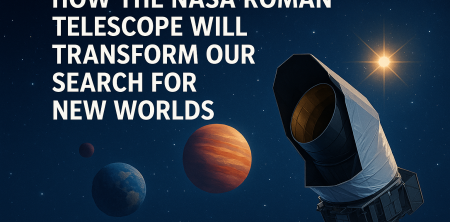
```html
The cosmos has always captivated humanity, and with the advent of the NASA Roman Telescope, we stand on the brink of a new era in our exploration of the universe. This groundbreaking mission aims to scan approximately 100 million stars, searching for new worlds and potentially revolutionizing our understanding of life beyond Earth. With so much at stake, it’s no wonder that this ambitious project has piqued the interest of both scientists and the general public alike.
The Importance of the NASA Roman Telescope
The NASA Roman Space Telescope, named after the influential astronomer Nancy Grace Roman, is set to launch in the mid-2020s. It represents a significant leap in our astronomical capabilities, building on the legacy of the Hubble Space Telescope and the upcoming James Webb Space Telescope. Unlike its predecessors, the Roman Telescope is designed to conduct wide-field surveys, meaning it can capture vast swathes of the night sky at once. This capability allows it to observe millions of stars in a single snapshot, enhancing our chances of discovering new exoplanets.
What Makes the Mission Unique?
The sheer scale of this mission is staggering. The Roman Telescope will survey areas of the sky that have remained largely unexplored. By targeting 100 million stars, the mission aims to uncover new worlds that orbit these distant suns. This not only raises the likelihood of finding Earth-like planets but also opens the door to the exciting possibility of advanced alien civilizations existing in our galaxy.
Equipped with a wide-field camera and advanced imaging technology, the telescope will take detailed photographs of its chosen celestial targets. The data collected will be invaluable for astronomers, allowing them to study the composition, atmospheres, and potential habitability of these newly discovered planets.
The Science Behind the Search
So, how does the NASA Roman Telescope plan to find these planets? One of its main methods will be the gravitational microlensing technique. This method involves observing the light from a distant star that gets temporarily boosted when another object, like a planet or a star, passes between it and the telescope. This phenomenon can reveal the presence of exoplanets that might otherwise go unnoticed.
Additionally, the Roman Telescope will utilize transit photometry, another powerful method for discovering new worlds. In this technique, astronomers look for tiny dips in brightness when a planet crosses in front of its host star. By monitoring the brightness of millions of stars, the Roman mission will significantly increase the number of exoplanet candidates that scientists can study.
The Broader Impact of Discoveries
The potential findings from the NASA Roman Telescope are not just scientifically intriguing; they also carry profound implications for humanity. Discovering exoplanets, especially those within the habitable zone of their stars, can reshape our understanding of life in the universe. Have we been alone all this time? Or are we just one of countless civilizations scattered across the cosmos?
Furthermore, the telescope's discoveries could push humanity's boundaries, inspiring future generations to pursue careers in science and technology. Imagine the spark of curiosity ignited by the knowledge that we are part of a much larger universe, filled with untold possibilities.
Addressing the FOMO Factor
In a digital age where information spreads quickly, the idea that we might be on the cusp of monumental discoveries can be exhilarating. With the NASA Roman Telescope gearing up for its mission, there's a palpable sense of excitement and urgency among science enthusiasts and the general public. People don’t want to miss out on the revelations that could emerge from this ambitious project.
Social media platforms are already buzzing with discussions about potential findings. The FOMO (Fear of Missing Out) factor is real: everyone wants to be a part of the conversation surrounding what the telescope might uncover, from new Earth-like planets to entirely new celestial phenomena. The impending discoveries hold the promise of reshaping our place in the universe, fueling public eagerness to engage with astronomy.
Public Engagement and Outreach
NASA recognizes that public interest in space exploration is essential for the success of its missions. As such, the agency is committed to engaging the public through various outreach programs surrounding the Roman Telescope. By keeping the public informed through updates, educational materials, and interactive content, NASA aims to foster a deeper connection between everyday people and the scientific community.
These efforts will not only enhance public understanding of space science but also encourage a sense of ownership over the discoveries made by the Roman Telescope. Citizen science projects may allow individuals to participate in data analysis, transforming them from passive observers into active contributors to humanity's understanding of the cosmos. (See: NASA Roman Space Telescope Overview.)
Collaboration with International Institutions
The NASA Roman Telescope is also a symbol of international collaboration in the field of astronomy. Scientific research has no borders, and this mission underscores the importance of global partnerships. By working alongside institutions and researchers from various countries, NASA is fostering a collaborative spirit that promotes shared knowledge and resources.
This teamwork enhances the potential for groundbreaking discoveries. Different countries bring unique perspectives and expertise, which can lead to innovative solutions for challenges in space exploration. The Roman Telescope’s findings will be shared with the global scientific community, ensuring that the knowledge gained benefits not just a single nation, but humanity as a whole.
The Future of Space Exploration
The launch of the NASA Roman Telescope signifies the beginning of a new chapter in our exploration of the cosmos. Its mission is not just about discovering new planets; it’s about broadening our understanding of the universe and our place within it. Future telescopes and missions will likely build upon the findings of the Roman, paving the way for more ambitious projects that could take us even further into uncharted territories.
As technology advances and our understanding of the universe deepens, we can expect to see more sophisticated telescopes and observational tools emerge. Each mission adds a piece to the puzzle of cosmic understanding, propelling us closer to answering some of the biggest questions in science.
Anticipating the Discoveries
What can we expect once the NASA Roman Telescope begins its mission? While it’s impossible to predict specific discoveries, the potential is exciting. If the telescope manages to identify numerous exoplanets in the habitable zone, scientists may find new candidates for further study, including the search for biosignatures — chemical indicators of life.
Additionally, astronomers may uncover previously unknown star systems, possibly even those that challenge our existing theories about planet formation and evolution. Each discovery can lead to more questions, fueling a continuous cycle of inquiry that characterizes scientific exploration.
Understanding Exoplanet Types
When it comes to exoplanets, not all worlds are created equal. The Roman Telescope will help astronomers categorize exoplanets into different types, such as gas giants, rocky planets, and super-Earths. Gas giants, like Jupiter, are abundant in our solar system and can be challenging to study due to their lack of a solid surface. On the other hand, rocky planets, particularly those in the habitable zone, are of great interest because they may have the right conditions for life.
Super-Earths, which are larger than Earth but smaller than Neptune, are particularly intriguing. They could maintain atmospheres conducive to life, and their proximity to their host stars may allow for warmer temperatures. The Roman Telescope's wide-field capabilities will enable astronomers to find a diverse array of planetary types, broadening our understanding of planetary formation and evolution.
Technological Innovations
The NASA Roman Telescope will employ cutting-edge technology that sets it apart from its predecessors. The wide-field instrument, featuring a 2.4-meter mirror, will allow for unprecedented surveys of the universe. This innovative design will enable the telescope to cover large areas of the sky in a fraction of the time it would take other telescopes, leading to faster and more efficient astronomical research.
Not only will this technology facilitate the discovery of new exoplanets, but it will also improve our understanding of dark energy and dark matter, two of the biggest mysteries in modern astrophysics. By studying the distribution of galaxies and cosmic structures across vast distances, the Roman Telescope aims to elucidate the nature of these enigmatic components of the universe.
The Role of AI in Data Analysis
With the vast amount of data expected to be collected by the NASA Roman Telescope, artificial intelligence (AI) will play a crucial role in analyzing this information. Modern astronomical surveys generate petabytes of data, making it essential to have efficient methods for sifting through it.
AI algorithms can enhance our ability to identify exoplanets, detect transient phenomena, and even predict future astronomical events. By employing machine learning techniques, scientists can train models to recognize patterns in data, which could lead to faster discoveries and a more comprehensive understanding of the universe.
Challenges Facing the Mission
While the prospects for the NASA Roman Telescope are bright, the mission also faces several challenges. One significant hurdle is the sheer scale of its data collection. Managing and interpreting the vast amounts of information produced by the telescope will require innovative data management systems and collaborative efforts among scientists worldwide. (See: Scientific Insights on Exoplanets.)
Additionally, the mission must contend with technical challenges, including maintaining the precision of its instruments in the harsh environment of space. Even minor issues with instrument calibration or data transmission could impact the quality of the findings and the mission's overall success.
FAQs About the NASA Roman Telescope
What is the launch date for the NASA Roman Telescope?
The NASA Roman Telescope is scheduled for launch in the mid-2020s, although the exact date has not been finalized.
How will the Roman Telescope differ from the Hubble and James Webb Telescopes?
While Hubble focuses on detailed observations of specific celestial objects and Webb aims to capture infrared light, the Roman Telescope will conduct wide-field surveys, allowing it to cover large areas of the sky at once, facilitating the discovery of numerous exoplanets.
What kind of discoveries can we expect from the Roman Telescope?
We can anticipate discoveries of new exoplanets, insights into dark energy and dark matter, and a better understanding of galaxy formation and evolution. The telescope's capabilities may also lead to the identification of new celestial phenomena.
Will the public have access to the data collected by the Roman Telescope?
Yes, NASA plans to make the data collected by the Roman Telescope publicly accessible. This commitment to open data allows scientists and enthusiasts around the world to engage with the findings and contribute to ongoing research.
How can the public get involved in the mission?
NASA encourages public engagement through citizen science projects, educational resources, and outreach programs. These initiatives allow individuals to participate in data analysis and stay informed about the latest discoveries.
What are the goals of the NASA Roman Telescope mission?
The primary goals include discovering new exoplanets, studying the structure and evolution of the universe, and exploring the properties of dark energy and dark matter. The telescope aims to significantly increase our understanding of these phenomena and their implications for cosmic evolution.
How will the telescope help in understanding dark energy?
The Roman Telescope will conduct wide-field surveys that can map the distribution of galaxies and cosmic structures over time. By analyzing how these structures evolve, scientists hope to gain insights into the properties of dark energy and how it influences the expansion of the universe.
How will the findings of the Roman Telescope impact future space missions?
The discoveries made by the Roman Telescope will inform and guide the design of future missions, including potential crewed missions to other planets and advanced telescopes that may follow. The insights gained will help refine our understanding of the cosmos and inform strategies for exploring it further.
Unpacking the Importance of Exoplanet Studies
Understanding exoplanets is crucial for a variety of reasons. Firstly, it expands our knowledge of how planetary systems form and evolve. Each new discovery helps refine our models of planet formation, which can also provide insights into our own solar system’s history.
Moreover, studying exoplanets, particularly those in the habitable zone, allows scientists to assess the potential for life beyond Earth. The search for biosignatures, or indicators of life such as methane or oxygen in an exoplanet's atmosphere, could radically alter our understanding of life's existence in the universe.
Statistics indicate that there are likely billions of planets orbiting stars in the Milky Way, and with tools like the Roman Telescope, we are poised to discover more than ever before. The mission's potential to uncover new worlds suggests that the universe could be teeming with diverse forms of life, fundamentally changing our view of humanity's place in the cosmos.
The Cultural and Philosophical Implications
The discoveries made by the NASA Roman Telescope will not only advance science but also stir philosophical discussions about our existence. What does it mean if we find planets with conditions similar to Earth? How would that reshape religious beliefs and cultural narratives about creation and existence?
As we discover new exoplanets and potentially habitable worlds, we may also need to reconsider our ethical responsibilities toward these planets and their ecosystems. The possibility of life elsewhere raises compelling questions about conservation and our role as stewards of our own planet.
Furthermore, the excitement around these discoveries could lead to a renewed interest in STEM fields, inspiring a new generation of scientists, engineers, and thinkers. Increased public engagement with astronomy and space science may encourage more young people to pursue careers in these vital areas, contributing to advancements in technology and our understanding of the universe.
The Anticipation of Collaborative Research
As the NASA Roman Telescope prepares for its mission, researchers worldwide are gearing up for collaboration. Universities and institutions are already developing plans for joint research projects that can utilize data from the telescope effectively. This collaborative approach not only spreads the workload but can also enhance the quality of the research as diverse perspectives and specializations come into play.
Events such as workshops and collaborative conferences are being organized to foster discussions about the expected findings and their implications. This community-driven approach can lead to innovative research methods and technologies that further our understanding of the universe.
Moreover, interdisciplinary collaboration is also on the rise. Astronomers, chemists, biologists, and ethicists may come together to tackle the complex questions that arise as we study new worlds. The insights gained from different fields can provide a more comprehensive understanding of what it means to find life beyond Earth.
Conclusion: The Countless Possibilities Ahead
The NASA Roman Telescope is more than just a scientific instrument; it embodies humanity’s unyielding quest to explore the cosmos. The quest for knowledge drives us to seek answers to fundamental questions about existence, and the discoveries that emerge from this mission could alter our perspective on life itself. As we stand on the threshold of this exciting venture, it’s clear that the potential for groundbreaking discoveries awaits us among the stars.
So, keep your eyes on the skies and prepare for the exciting journey ahead. The universe is vast, and thanks to the NASA Roman Telescope, we’re about to learn a lot more about it.
```
Trending Now
- Unlock Your Potential: Exciting Copywriting Opportunities…
- this guide on unlocking learning potential: effective adhd teaching strategies through scaffolding techniques
- the complete explanation
- this guide on the surprising impact of adhd on emotional regulation in children: what parents need to know
Frequently Asked Questions
What is the purpose of the NASA Roman Telescope?
The NASA Roman Telescope aims to transform our search for new worlds by scanning approximately 100 million stars. It will conduct wide-field surveys to enhance the discovery of exoplanets and potentially revolutionize our understanding of life beyond Earth.
How does the NASA Roman Telescope differ from Hubble?
Unlike the Hubble Space Telescope, which focuses on specific targets, the NASA Roman Telescope is designed for wide-field surveys. This allows it to capture vast areas of the night sky in a single snapshot, significantly increasing the chances of discovering new exoplanets.
When is the NASA Roman Telescope expected to launch?
The NASA Roman Space Telescope is set to launch in the mid-2020s. This mission represents a significant advancement in astronomical capabilities, following the legacy of both the Hubble and the upcoming James Webb Space Telescopes.
What technology does the NASA Roman Telescope use?
The Roman Telescope is equipped with a wide-field camera and advanced imaging technology. This allows it to take detailed photographs of celestial targets, providing invaluable data for studying the composition and potential habitability of newly discovered planets.
Why is the NASA Roman Telescope important for finding exoplanets?
The Roman Telescope's mission is crucial for uncovering new exoplanets as it will survey largely unexplored areas of the sky. By targeting 100 million stars, it raises the likelihood of discovering Earth-like planets and the possibility of advanced alien civilizations.
What did we miss? Let us know in the comments and join the conversation.

