```html
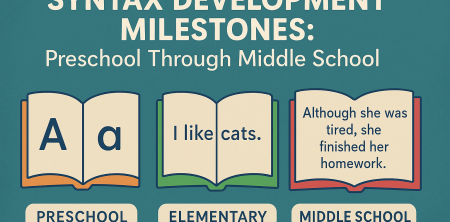
When it comes to language acquisition, one of the most fascinating aspects is how children develop syntax—the set of rules that govern the structure of sentences. Understanding syntax development milestones is crucial for parents, educators, and speech-language pathologists alike. From preschool through middle school, children experience significant changes in their ability to form and understand increasingly complex sentences. Let's explore this journey in detail.
The Basics of Syntax Development
Syntax refers to the arrangement of words and phrases to create well-formed sentences in a language. It encompasses everything from the simple subject-verb-object constructions of early childhood to the elaborate clauses and varied sentence structures that emerge as children grow. Understanding how children progress through these stages helps identify typical language development patterns and potential areas for intervention.
Early syntax development begins in infancy, long before children utter their first words. Through listening and interacting with caregivers, infants pick up on the rhythm and patterns of their native language, laying the groundwork for future language skills. As they transition into toddlerhood, their comprehension and use of syntax start to take shape.
Preschool Syntax Development Milestones
By the time children enter preschool, they are making significant strides in their syntax development. Here are some key milestones to look for:
- Two-Word Combinations: Around 18 to 24 months, children typically begin to combine two words to form simple sentences. These constructions often reflect their immediate needs or interests, such as "more juice" or "big truck."
- Expansion of Vocabulary: As their vocabulary grows, children start to experiment with different sentence structures. By age three, they can typically use three- to four-word sentences, introducing more complexity.
- Use of Pronouns: Children begin incorporating pronouns like "I," "me," "you," and "he/she" into their speech. This marks a critical point in their ability to express ownership and relationships.
- Questions and Negation: By age four, children often start forming questions and using negation in their speech, indicating their growing understanding of syntax and the desire to engage more deeply in conversation.
Elementary School Syntax Development
As children transition into elementary school, their syntax development milestones become more pronounced and varied. This period is marked by significant growth in both understanding and producing complex sentences. Here’s what to expect:
First to Third Grade
During the early elementary years, children refine the skills they developed in preschool and begin to:
- Understand Complex Sentences: By age six, most children can comprehend and use sentences with one or more clauses. For example, they may say, "I want to play outside because it's sunny."
- Use of Conjunctions: Children start employing conjunctions like "and," "but," and "because" to connect ideas, marking a shift towards more sophisticated language use.
- Storytelling Skills: As they learn to narrate stories, children demonstrate their understanding of sentence structure by organizing events logically and coherently.
Fourth to Sixth Grade
As children grow older, they continue to advance their syntax skills in significant ways:
- Increased Sentence Length and Complexity: By the time they reach fourth grade, children often produce longer sentences that include multiple clauses and more varied vocabulary. For example, they might say, "Although it was raining, we decided to go to the park because we wanted to play on the swings."
- Passive Voice and Conditional Statements: Students begin to utilize passive voice (e.g., "The book was read by the teacher") and conditional statements (e.g., "If it rains, we will stay inside"), showcasing further sophistication in their language.
- Understanding Figurative Language: A growing familiarity with metaphors, similes, and idioms adds depth to their expressive language skills, enabling them to convey complex ideas more effectively.
The Role of Educational Strategies
To foster syntax development milestones effectively, educators play a crucial role in supporting children's language growth. Here are some evidence-based strategies: (See: Language Development in Early Childhood.)
- Interactive Reading: Engaging children in reading activities encourages the development of syntax. Teachers can model complex sentence structures and prompt discussions that allow children to practice their language skills.
- Language-rich Environments: Creating environments filled with rich vocabulary and diverse sentence structures helps children absorb and replicate language patterns. This can include labels, word walls, and varied reading materials.
- Encouraging Storytelling: When children tell stories, they practice organizing their thoughts and using varied syntax. Teachers can provide prompts or themes to inspire creativity and enhance narrative skills.
Challenges in Syntax Development
While most children reach syntax development milestones within a typical range, some may encounter challenges. Identifying these issues early is vital for effective intervention:
- Delayed Language Development: Children who struggle to combine words or form sentences may experience delays. This could impact their social interactions and academic performance.
- Learning Disabilities: Conditions such as dyslexia or specific language impairment can hinder syntax development, making it challenging for children to grasp complex language structures.
- Environmental Factors: Children from low-income backgrounds or those with limited access to language-rich experiences may face difficulties in developing their syntax skills.
Supporting Children with Syntax Challenges
For children who exhibit delays or difficulties in syntax development, targeted interventions can make a significant difference. Here are some strategies for parents and educators:
- Speech-Language Therapy: Professional support can help children develop their syntax skills through individualized programs tailored to their specific needs.
- Modeling Language: Parents and teachers should model correct syntax in everyday conversations, providing children with examples to mimic.
- Engaging Activities: Games that focus on sentence building, storytelling, and role-playing can make learning fun and encourage practice in a low-pressure environment.
Current Relevance and Research Trends
With the rise of technology and changing educational practices, the landscape of syntax development research is evolving. Recent studies focus on:
- The Impact of Digital Tools: Research is exploring how digital storytelling and interactive applications can enhance language acquisition and syntax understanding.
- Cross-Linguistic Studies: Understanding syntax development in bilingual children provides invaluable insights into how language exposure influences syntax skills.
- Neuroscience of Language: Advances in brain imaging reveal how different areas of the brain contribute to language processing, aiding in identifying strategies for children with language difficulties.
Deeper Analysis of Syntax Development
Examining syntax development requires a look into various factors that can influence a child's progress. These factors can be broadly categorized into cognitive, social, and environmental influences:
Cognitive Influences
Cognitive development plays a pivotal role in how children learn syntax. As children's cognitive abilities expand, so does their capacity to understand complex structures. For example, children develop better executive functions, such as working memory and cognitive flexibility, which help them hold and manipulate multiple pieces of information concurrently as they construct sentences. This cognitive growth is often observed during the preschool years, which is a crucial time for language development.
Social Influences
Social interactions are essential for promoting syntax development. Children learn language in context, and the conversations they have with peers and adults stimulate their syntactic skills. For instance, engaging in pretend play can provide opportunities for children to experiment with different sentence forms and vocabulary in a supportive and imaginative environment. Studies show that children who engage in rich dialogues with caregivers are better at forming complex sentences than those with less interaction.
Environmental Influences
The environment in which a child grows up can significantly affect their exposure to language. Children who are surrounded by a variety of linguistic inputs—such as reading diverse books, participating in storytelling, and hearing complex language structures—are likely to acquire syntax more effectively. Conversely, a lack of language-rich experiences can impede a child's ability to reach typical syntax development milestones.
Statistics on Syntax Development
Quantitative data provides a clearer picture of how children progress in syntax development:
- According to research, about 90% of children can produce two-word combinations by the age of 24 months.
- Studies show that children with rich verbal interactions can acquire vocabulary at a rate of about 1,000 words by age three, enabling them to form more complex sentences.
- By age five, approximately 80% of children can use five to six-word sentences and demonstrate a basic understanding of syntax.
- Infants exposed to bilingual environments can exhibit syntax skills comparable to their monolingual peers, highlighting the adaptability of syntax learning across languages.
Expert Perspectives on Syntax Development
Experts in linguistics and child development emphasize the importance of understanding syntax development milestones. Dr. Linda Smith, a renowned linguist, states, “Syntax is not merely a set of rules; it’s a reflection of a child’s cognitive growth and their ability to communicate thoughts effectively.”
Similarly, Dr. Michael Tomasello, a leading researcher in language acquisition, notes that “Children learn the structure of their language through interaction and use. The milestones serve as both a roadmap and a means to identify when a child may need additional support.” These perspectives underscore the importance of nurturing a child’s language environment to foster healthy syntax development. (See: Developmental Milestones from CDC.)
Frequently Asked Questions (FAQ)
What are the first signs of syntax development in infants?
Infants begin to show signs of syntax development even before they can speak. This includes their ability to recognize the rhythm and patterns in their native language, responding to intonations and tones in speech, and eventually producing babbling that mimics the sounds they hear.
How can I support my child’s syntax development at home?
You can support syntax development by engaging your child in regular conversations, reading together, and encouraging them to express their thoughts and feelings. Asking open-ended questions and providing rich verbal experiences will also enhance their language skills.
At what age should I be concerned about my child's syntax development?
If your child is not combining words by 24 months, or if they seem to struggle to form sentences by age four, it may be beneficial to consult a speech-language pathologist. Early intervention can be key in addressing any potential delays.
Are there any activities that can help improve syntax skills?
Yes! Activities such as storytelling, role-playing, and sentence-building games can be particularly beneficial. Encourage your child to tell stories about their day or create imaginative scenarios where they need to formulate sentences based on their ideas.
How do bilingual children develop syntax differently?
Bilingual children may develop syntax in unique ways due to their exposure to two languages. Research suggests that they can differentiate between the grammatical structures of both languages, often displaying flexibility in how they use syntax. This can lead to a rich language experience but may also present challenges in acquiring mastery of complex structures in both languages.
Advanced Syntax Skills and Their Importance
As children continue their journey through language development, the mastery of syntax becomes even more critical. Advanced syntax skills allow children to express more nuanced thoughts and ideas, engage in persuasive communication, and succeed in their academic pursuits.
Complex Sentence Structures
By the time children reach middle school, they should be able to produce and understand complex sentence structures that include subordinate clauses, varying sentence lengths, and different modalities. For instance, a child might say, "Even though I was tired, I completed my homework because I wanted to play video games afterward." This complexity demonstrates a mature understanding of how clauses interact.
Academic Achievement
Research has shown a strong correlation between syntax development and academic achievement. Children who can articulate their thoughts clearly and effectively are more likely to excel in writing and verbal tasks. A study published in the journal Child Development found that students with strong syntax skills perform better on standardized tests and have higher grades in school. This emphasizes the need for early and continued support for developing these skills.
Social Communication
Advanced syntax skills are not only important academically but also in social contexts. Children who can effectively communicate their ideas and emotions can build stronger relationships with peers. For example, they may be more adept at negotiating, resolving conflicts, or simply engaging in more meaningful conversations, which are crucial for developing social skills and emotional intelligence.
Future Directions in Syntax Development Research
As our understanding of syntax development evolves, several future research directions are gaining attention:
- Technology and Language Development: With the increasing use of tablets and educational software among young children, researchers are investigating how these tools influence syntax learning and language acquisition.
- Individual Differences: There is growing interest in understanding how individual differences, such as personality traits and learning styles, affect syntax development. This could lead to more tailored educational approaches.
- Longitudinal Studies: More longitudinal research is needed to track syntax development over time, providing insights into how early language experiences affect later outcomes.
The Importance of Family Engagement
Families play a critical role in supporting their children's syntax development. Engaging in meaningful conversations, reading together, and providing enriching language experiences at home can significantly boost a child's language skills.
Strategies for Families
Families can implement several strategies to promote syntax development:
- Reading Together: Daily reading routines expose children to varied vocabulary and sentence structures. Discussing the story enhances comprehension and encourages them to ask questions.
- Encouraging Play: Playtime is not just for fun; it’s an opportunity to practice language. Encourage children to narrate their play or create stories based on their activities.
- Modeling Language: Use complex sentences and varied vocabulary in your conversations with children. This modeling helps them learn through imitation.
Conclusion
Understanding syntax development milestones from preschool through middle school is essential for supporting children's language growth. By recognizing the typical stages of development, employing effective educational strategies, and addressing challenges, we can create a more conducive environment for the flourishing of language skills. Ultimately, fostering strong syntax abilities lays the foundation for clear communication, academic success, and meaningful social interactions.
```
Trending Now
Frequently Asked Questions
What are the milestones of syntax development in preschoolers?
Preschoolers typically reach several key syntax development milestones, including the use of two-word combinations around 18 to 24 months, forming three- to four-word sentences by age three, and beginning to incorporate pronouns. These milestones indicate a growing understanding of sentence structure and vocabulary.
How does syntax development progress from preschool to middle school?
Syntax development progresses significantly from preschool to middle school. Initially, children use simple two-word combinations and gradually advance to more complex sentences with multiple clauses and varied structures, enhancing their communication skills as they grow.
What is the importance of understanding syntax development in children?
Understanding syntax development is crucial for parents, educators, and speech-language pathologists as it helps identify typical language patterns and potential areas for intervention, ensuring children receive the support they need to enhance their language skills.
When do children start using complex sentences?
Children typically begin using complex sentences by the time they reach middle school. This development involves combining clauses and using varied sentence structures, which reflects their increased cognitive and linguistic abilities.
How can parents support their child's syntax development?
Parents can support their child's syntax development by engaging in conversations, reading together, and encouraging the use of new vocabulary. Providing a rich linguistic environment helps children experiment with sentence structures and enhances their language skills.
Agree or disagree? Drop a comment and tell us what you think.

