```html
In recent years, the educational landscape has seen a significant shift towards more interactive and engaging learning methodologies. One of the most compelling approaches is kinesthetic learning, which emphasizes physical activity and movement as integral components of the learning process. This article delves into how kinesthetic learning is reshaping elementary classrooms, focusing on the integration of movement and brain breaks to enhance student engagement and retention.
Understanding Kinesthetic Learning
Kinesthetic learning, often referred to as tactile learning, is a style of learning that involves physical activities as a means of acquiring knowledge. Unlike traditional learning methods that rely heavily on verbal and visual instruction, kinesthetic learners thrive when they engage in hands-on experiences. According to educational theorist Howard Gardner, this approach is one of the multiple intelligences that exist within learners, highlighting that not all students absorb information in the same way.
For many elementary-aged children, movement is not just a preference but a necessity. Young learners often find it challenging to sit still for extended periods. Thus, integrating movement into the classroom can help meet their developmental needs while simultaneously enhancing their educational experience. By creating an environment that accommodates these needs, educators can positively impact student performance and overall classroom dynamics.
The Benefits of Kinesthetic Learning in the Classroom
The benefits of incorporating kinesthetic learning into the elementary classroom setting are vast. Research indicates that engaging students physically can lead to improved comprehension, retention, and motivation. Here are a few key advantages:
- Enhanced Engagement: Active participation in learning processes breaks the monotony of traditional teaching methods, keeping students motivated and interested.
- Improved Retention: Studies suggest that movement can enhance memory retention. When students physically engage with the material, they are more likely to remember it long-term.
- Better Focus: Brief movement breaks help release pent-up energy, allowing students to return to academic tasks with heightened focus and concentration.
- Physical Health Benefits: Movement fosters not only cognitive development but also physical well-being, which is crucial for young learners as they grow.
Incorporating Brain Breaks
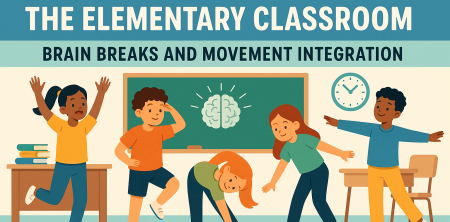
One of the most effective strategies for integrating kinesthetic learning in the elementary classroom is the use of brain breaks. These short, intentional breaks from learning activities give students a chance to move, reset their minds, and prepare for the next task.
Brain breaks can range from a few seconds to a few minutes and can include various forms of movement such as stretching, jumping, dancing, or even mindful breathing exercises. The goal is to get students up and moving, which helps recharge their cognitive batteries and facilitates better engagement when they return to their studies.
For instance, a teacher might incorporate a quick five-minute dance session between lessons, where students can shake off any stress and refocus their energy. In doing so, educators can create a classroom environment that values movement as an essential part of the learning process.
Creative Movement Integration Techniques
Beyond brain breaks, there are numerous ways to integrate movement into various subjects in the classroom effectively. Here are some strategies that educators can adopt:
- Movement-Based Learning Stations: Setting up different stations around the classroom that focus on specific subjects allows students to move from one activity to another, engaging both their minds and bodies.
- Role-Playing and Drama: Incorporating drama and role-play into lessons allows students to physically embody concepts, thus deepening their understanding.
- Hands-On Science Experiments: Conducting science experiments that require physical involvement can make complex concepts accessible and enjoyable for young learners.
- Outdoor Learning: Taking learning outside, whether for a nature walk or a math scavenger hunt, can provide kinesthetic learners with fresh stimuli while enhancing their connection to the material.
Creating a Movement-Friendly Classroom Environment
Transforming a standard classroom into a movement-friendly learning environment requires thoughtful planning and creativity. Here are some tips for educators looking to foster a kinesthetic learning atmosphere: (See: Physical Activity Guidelines for Children.)
- Flexible Furniture: Consider investing in desks and chairs that allow for movement, such as wobble stools or standing desks. This encourages students to shift positions as needed.
- Open Space: Ensure there is adequate space for students to move freely. Clutter-free zones can help facilitate movement without distractions.
- Incorporate Visual Cues: Use posters, charts, and interactive displays that invite student participation and movement, reinforcing the material in a dynamic way.
- Promote Collaboration: Encourage group activities that require students to work together physically, fostering teamwork while promoting kinesthetic learning.
Challenges and Considerations
While the integration of kinesthetic learning offers numerous benefits, it is not without its challenges. Educators may encounter resistance from traditionalists who emphasize rote memorization and standardized testing. Additionally, classroom management can become more complex with increased movement, requiring teachers to develop new strategies to maintain order.
Furthermore, not all students will respond positively to a kinesthetic learning approach. It's crucial for teachers to assess the individual needs of their students, balancing kinesthetic activities with other learning styles to create an inclusive environment.
Current Research and Trends in Kinesthetic Learning
The relevance of kinesthetic learning in today’s educational landscape is underscored by current research and trends. Studies have shown that schools focusing on active learning principles have noted significant improvements in academic performance and student satisfaction.
For example, a study published in 2021 highlighted that students who participated in active learning environments scored higher on standardized tests compared to their peers in traditional classrooms. This evidence supports the assertion that kinesthetic learning not only enhances engagement but also contributes to academic achievement.
Moreover, the rise of educational technology has opened new avenues for integrating movement into learning. Digital tools that gamify lessons can motivate students to engage in physical activities while reinforcing content knowledge. As technology continues to evolve, educators are presented with innovative ways to merge kinesthetic learning with digital resources.
Practical Insights for Educators
For educators looking to incorporate kinesthetic learning into their teaching practices, here are some practical insights:
- Start Small: Begin with short brain breaks or small movement activities. Gradually increase the frequency and duration as students become accustomed to a more active learning environment.
- Be Adaptive: Pay attention to student responses to movement activities. If a particular strategy isn’t resonating, be willing to tweak it or try something new.
- Collaborate with Colleagues: Share kinesthetic learning strategies with fellow educators. Collaborative lesson planning can yield innovative approaches that benefit all learners.
- Seek Feedback: Regularly solicit feedback from students about their experiences with movement integration. This can guide future practices and enhance engagement.
Examples of Kinesthetic Learning Activities
Implementing kinesthetic learning can be practical and fun. Here are a few examples of activities that can be used across various subjects:
- Math Relay Races: In teams, students solve math problems at different stations spread around the classroom. Once they solve a problem, they race to the next station to answer another question. This fosters teamwork while combining movement with problem-solving.
- Interactive Storytelling: While reading a story, students can act out parts of the narrative, using their bodies to represent characters or scenes. This approach brings literature to life and helps improve comprehension.
- Science Experiments with Movement: In a science class, students can conduct experiments that involve mixing substances and observing reactions while moving around a lab space. For instance, they might create a baking soda and vinegar volcano and then jump back to observe the eruption.
- History Role-Play: To learn about historical events, students can engage in role-playing exercises. For example, they could re-enact a significant event like the signing of the Declaration of Independence, giving them a personal connection to history.
Expert Perspectives on Kinesthetic Learning
Educators and psychologists have weighed in on the value of kinesthetic learning. Dr. John Ratey, a psychiatrist and author of "Spark: The Revolutionary New Science of Exercise and the Brain," emphasizes the connection between physical activity and cognitive performance. He argues that movement stimulates brain function, making kinesthetic learning a vital aspect of education.
Another notable figure, Professor David Meyer from the University of Michigan, notes that integrating movement into learning environments taps into children’s natural tendencies. He suggests that educational systems should embrace these methods to cater to diverse learning styles. According to Meyer, the brain learns better when the body is active, leading to improved educational outcomes.
Comparing Kinesthetic Learning with Other Learning Styles
Understanding how kinesthetic learning compares to other styles, like auditory and visual learning, can help educators create a more balanced approach. Here's a brief comparison:
| Learning Style | Characteristics | Preferred Activities |
|---|---|---|
| Kinesthetic | Prefers learning through physical activities and hands-on experiences | Role-playing, experiments, movement-based tasks |
| Auditory | Learns best through listening and discussions | Lectures, podcasts, group discussions |
| Visual | Prefers using images, diagrams, and written instructions | Charts, videos, graphic organizers |
By recognizing the differences in learning styles, educators can tailor their teaching strategies to meet the needs of all students, creating a more inclusive and effective classroom environment.
FAQs About Kinesthetic Learning
What is kinesthetic learning?
Kinesthetic learning is a style of learning that involves physical movement and hands-on activities to acquire knowledge. It contrasts with traditional learning methods that focus on verbal and visual instruction.
How can I tell if my child is a kinesthetic learner?
Children who are kinesthetic learners often show a preference for activities that involve movement. They may struggle to sit still for long periods and prefer activities that allow them to engage their bodies while learning.
Are there specific subjects where kinesthetic learning is more effective?
While kinesthetic learning can be applied across all subjects, it's particularly beneficial in science, physical education, and language arts, where physical activity can enhance understanding and retention of concepts.
Can kinesthetic learning be integrated into online learning environments?
Yes! Even in online settings, teachers can encourage kinesthetic learning through activities that require students to move. For instance, they can engage in at-home science experiments or physical exercises that relate to the lesson.
What are some simple kinesthetic activities for home learning?
Parents can incorporate kinesthetic learning at home by using activities like cooking to teach math through measuring ingredients, creating scavenger hunts for vocabulary words, or acting out scenes from a story to enhance comprehension.
Challenges for Kinesthetic Learners
It’s important to recognize that kinesthetic learners often face unique challenges. For instance, in a traditional classroom, they might find it difficult to stay seated and may feel restless, leading to frustration. This can manifest as disruptive behavior, which may not be a reflection of unwillingness to learn but rather a need for movement and engagement. Understanding these challenges can help educators create more supportive environments for kinesthetic learners.
Strategies for Supporting Kinesthetic Learners
To effectively support kinesthetic learners, teachers can implement specific strategies that cater to their needs:
- Integrate Technology: Use apps and programs that allow students to interact with content through movement. For example, virtual reality can create immersive environments where students can explore historical sites or scientific phenomena.
- Incorporate Games: Games that require physical activity can make learning enjoyable and effective. Incorporating educational games that involve movement can consolidate knowledge in a fun way.
- Regular Feedback: Offering regular feedback on both academic performance and behavior can help kinesthetic learners understand how their engagement impacts their learning.
- Parent Involvement: Encourage parents to engage in kinesthetic activities at home, reinforcing what’s learned in school through hands-on experiences.
The Role of Play in Kinesthetic Learning
Play is an essential part of kinesthetic learning and development. Through play, children naturally explore their environment, learn new skills, and develop social interactions. During play, students engage their bodies, which helps reinforce learning in a meaningful way. Activities like block building in math or imaginative play in language arts are great examples of how playful learning can merge with kinesthetic approaches.
Educational research supports the notion that play-based learning helps children develop critical thinking and problem-solving skills. When learners are allowed to explore concepts through play, they are more likely to internalize knowledge, making it easier to recall and apply later on.
Examples of Play-Based Kinesthetic Learning Activities
Here are some play-based kinesthetic learning activities that can be integrated into different subjects:
- Math Games with Movement: Use physical manipulatives like counting blocks to teach addition or subtraction. Set up a giant number line on the floor where students can hop to the correct answer.
- Language Arts Drama Games: Create a simple script based on a book and have students act it out. This reinforces comprehension and encourages teamwork.
- Scientific Exploration through Play: Conduct experiments that allow children to engage all their senses, like using water and sand to learn about density and displacement. This hands-on experience makes theories tangible.
- History through Reenactment: Organize a day where students dress up as historical figures and reenact crucial events in history. This immersive experience can deepen their understanding of the subject matter.
Conclusion: The Future of Kinesthetic Learning
As we move forward, the importance of kinesthetic learning in elementary education cannot be overstated. The integration of movement not only caters to the natural tendencies of young learners but also enhances cognitive development and academic performance.
Educators are increasingly recognizing that teaching is not merely about delivering information; it’s about engaging the whole child. By adopting kinesthetic learning methodologies, teachers can create vibrant and dynamic classroom environments that foster curiosity, creativity, and a love for learning.
Ultimately, the goal is to empower students to take ownership of their education through active participation. With ongoing research and an increase in innovative teaching practices, the movement towards kinesthetic learning will likely continue to gain momentum, shaping the future of education for generations to come.
```
Trending Now
Frequently Asked Questions
What is kinesthetic learning and how does it work?
Kinesthetic learning is a style that emphasizes physical activity and hands-on experiences as key components of the learning process. It allows students to engage actively, making learning more effective for those who struggle with traditional verbal or visual methods.
What are the benefits of kinesthetic learning in elementary classrooms?
Incorporating kinesthetic learning in elementary classrooms enhances engagement, improves retention, and boosts motivation. Students who are physically active during lessons tend to better comprehend and remember information, leading to a more dynamic learning environment.
How can teachers integrate brain breaks into their lessons?
Teachers can integrate brain breaks by incorporating short physical activities or movement exercises between lessons. These breaks can help reset students' focus and energy levels, making them more receptive to learning afterward.
Why is movement important for young learners?
Movement is crucial for young learners as it aligns with their developmental needs. Children often find it difficult to sit still for long periods, and integrating movement helps accommodate their natural tendencies, enhancing their overall educational experience.
What role does Howard Gardner's theory play in kinesthetic learning?
Howard Gardner's theory of multiple intelligences highlights that not all students learn the same way. Kinesthetic learning is one of these intelligences, emphasizing that hands-on experiences are essential for some learners to effectively acquire knowledge.
Agree or disagree? Drop a comment and tell us what you think.

