```html
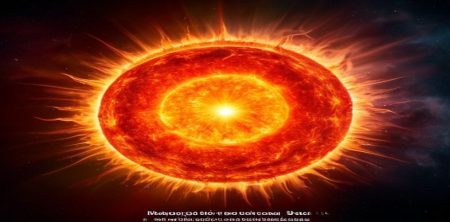
In recent days, the solar realm has presented us with a thrilling spectacle — an impressive sunspot group has rotated into view, unleashing a potent C8.7-class solar flare. This event is not just a solar anomaly; it's a reminder of how sunspot activity can significantly influence life here on Earth. With geomagnetic storms on the horizon and the thrilling prospect of auroras lighting up the night sky, this solar flare is generating excitement among astronomers and casual skywatchers alike.
1. The Arrival of the Massive Sunspot Group
As the sunspot group made its way to the southeast limb of the sun, astronomers were on high alert. This particular sunspot has been noted for its size and complexity, characteristics that often precede significant solar events. Sunspots are essentially cooler regions on the sun's surface caused by magnetic activity. They fluctuate in number and size over an approximately 11-year solar cycle, making such large formations noteworthy.
When this sunspot group emerged, solar physicists immediately began monitoring its activity. They were particularly intrigued by its potential to produce solar flares, which are bursts of radiation that can impact Earth's magnetosphere. The C8.7-class flare that erupted was indicative of the sunspot's intensity and complexity, and it was a reminder of the dynamic, ever-changing nature of sunspot activity.
2. The Significance of the C8.7 Solar Flare
The classification of solar flares is based on their X-ray brightness, with C-class flares being moderate in strength. The recent C8.7 flare is particularly significant as it indicates a strong release of energy. This flare's eruption reached speeds of approximately 917 km/s, showcasing a rapid discharge of solar energy. Such a speed not only reflects the energy's intensity but also signals potential implications for our planet.
Solar flares can disrupt satellite communications, navigation systems, and power grids on Earth. As the electromagnetic radiation from a flare reaches the Earth, it can cause radio blackouts and GPS inaccuracies. For industries reliant on satellite technology, this event serves as a wake-up call, highlighting the need for preparedness in the face of powerful sunspot activity.
3. Coronal Holes and Their Impact
Alongside the stunning solar flare, a coronal hole stream has begun to develop. Coronal holes are areas on the sun's surface that are less dense and allow solar wind to flow freely into space. When these streams interact with Earth's magnetic field, they can lead to geomagnetic storms. The incoming coronal hole stream is expected to hit Earth between June 25 and 26, potentially leading to G1-level geomagnetic storms.
G1 storms, though classified as minor, can still have observable effects, including enhanced auroral displays at mid-latitudes. Locations not typically known for auroras may find themselves under a shimmering display of lights if conditions are optimal. The idea that a solar event can transform the skies above into a canvas of color is one of the most captivating aspects of studying sunspot activity and its consequences.
4. Auroras: Nature's Light Show
The prospect of witnessing auroras is one of the most thrilling outcomes of sunspot activity and geomagnetic storms. Auroras occur when charged particles from the sun interact with Earth's atmosphere, resulting in stunning displays of light. As the coronal hole stream makes its way toward Earth, many skywatchers are eagerly anticipating the possibility of these natural light shows.
While auroras are commonly associated with polar regions, G1 storms can push these phenomena further south. As the geomagnetic field becomes perturbed, regions that may have never experienced an aurora before could see the night sky dance with greens, reds, and purples. For astronomy enthusiasts and casual observers alike, this creates a sense of urgency to get outside and experience the splendor of nature's artistry.
5. Understanding Solar Dynamics
Solar activity, including sunspot formation and solar flares, is rooted in the sun's magnetic field. The sun's surface is a tumultuous environment where magnetic lines of force twist and tangle, giving rise to sunspots and solar flares. These phenomena are manifestations of the sun's dynamic nature and can occur simultaneously.
Understanding the physics behind these events is crucial for predicting their impact on Earth. Solar physicists employ sophisticated models and instruments to observe sunspot activity and solar flares in real time. By analyzing data from satellites and ground-based observatories, they can track solar events and issue alerts to mitigate potential disruptions. (See: Understanding sunspots and their impact.)
6. Threats to Satellite Operations
The recent C8.7 flare and the impending coronal hole stream are particularly concerning for satellite operations. Satellites are vulnerable to the intense radiation and charged particles generated by solar flares and geomagnetic storms. This can lead to issues such as communication disruptions, degraded satellite performance, and even potential damage to onboard electronics.
Companies and organizations that rely heavily on satellite technology, including telecommunication and weather services, must remain vigilant during periods of heightened solar activity. The financial implications of satellite downtime can be substantial, making it essential for operators to stay updated on sunspot activity and its potential effects. The threat posed by solar events reinforces the need for robust monitoring systems.
7. The Social Media Buzz
With the recent announcement of the solar flare and the potential for auroras, social media has been buzzing with excitement. Skywatchers, astronomers, and curious individuals have taken to platforms like Twitter and Instagram to share their thoughts and experiences. The concept of 'FOMO' (fear of missing out) is palpable as people discuss the best times and locations to catch a glimpse of the aurora.
This surge in online activity reflects the human desire to connect with extraordinary natural events. As photos and videos of auroras surface, they inspire others to seek out similar experiences. The sense of community among those interested in sunspot activity and solar phenomena has never been stronger, with sharing information about best viewing practices and upcoming events.
8. The Importance of Monitoring Sunspot Activity
Given the profound impacts of sunspot activity on Earth, continuous monitoring is essential. Organizations like NASA and the National Oceanic and Atmospheric Administration (NOAA) provide real-time data and forecasts to help communities prepare for solar events. This information is critical for informing public safety protocols and protecting technology.
As we continue to rely on technology, understanding the nuances of sunspot activity becomes increasingly important. The complexities of solar physics may be daunting, but the potential effects on our daily lives are clear. By staying informed and prepared, we can mitigate the disruptions caused by solar events and fully appreciate the wonder that the sun's activity brings.
9. Historical Context of Sunspot Activity
Sunspot activity has fascinated scientists for centuries. Observations of sunspots date back to the early 1600s, when Galileo used his telescope to study the sun’s surface. Historically, sunspot counts were correlated with various terrestrial phenomena, including climate fluctuations. For instance, the Little Ice Age, a period of cooler temperatures in Europe from the 14th to the 19th century, coincided with a period of low sunspot activity known as the Maunder Minimum.
More recently, the correlation between sunspot cycles and weather patterns has been a topic of extensive research. Some studies suggest a link between solar activity and climate variables such as temperature and rainfall, underscoring the profound influence the sun has on Earth's climate. Understanding these historical patterns helps scientists project future solar behavior and its potential effects on Earth.
10. Current Trends in Solar Research
Researchers are continuously striving to understand the complex dynamics of sunspot activity. Current trends in solar research include developing advanced models that simulate solar behavior, which help predict future solar flares and their potential impacts. High-resolution imaging techniques and satellite data are essential tools for scientists as they monitor the sun's surface and its magnetic field lines.
In addition to observational advancements, researchers are also exploring the relationship between solar activity and its effects on Earth's atmosphere. For example, scientists are investigating how solar flares influence ozone levels and atmospheric circulation patterns. These insights could improve our understanding of weather forecasting and climate change. impact of solar activity offers useful background here.
11. FAQs about Sunspot Activity
What are sunspots?
Sunspots are dark spots on the sun's surface that occur due to intense magnetic activity. They are cooler than the surrounding areas and can vary in size and number throughout the solar cycle.
How often do sunspots occur?
Sunspots follow an approximately 11-year cycle, known as the solar cycle. During the solar maximum phase, the number of sunspots increases, while during the solar minimum, they decrease significantly. (See: NASA's insights on solar phenomena.)
What causes solar flares?
Solar flares are caused by the release of magnetic energy that has built up in the sun's atmosphere. This release can occur when magnetic field lines become tangled and reconnect, resulting in an explosive burst of energy.
How do solar flares affect Earth?
Solar flares can have various effects on Earth, including disrupting satellite communications, GPS systems, and power grids. They can also enhance auroral activity and impact radio transmissions.
What are geomagnetic storms?
Geomagnetic storms are disturbances in Earth's magnetosphere caused by solar wind and solar flares. They can lead to increased auroras and have the potential to disrupt electrical systems and satellite operations.
How can I observe sunspots?
Sunspots can be observed through specialized solar telescopes equipped with proper solar filters to protect your eyes. Viewing the sun directly without proper equipment can cause severe eye damage.
Are sunspots harmful to humans?
Sunspots themselves are not harmful directly to humans, but the solar flares and associated radiation they produce can affect technology and communications on Earth. It's essential to monitor solar activity, especially for those relying on technology.
12. The Future of Solar Monitoring
As technology evolves, so do our methods of monitoring sunspot activity. Upcoming solar missions, such as the European Space Agency's Solar Orbiter and NASA’s Parker Solar Probe, promise to provide groundbreaking insights into the sun's behavior. These missions will collect detailed data on solar activity and its interaction with space weather, enhancing our understanding of sunspot dynamics.
Additionally, artificial intelligence and machine learning are starting to play a role in solar monitoring. These technologies can analyze vast amounts of data from solar observations, helping scientists identify patterns and predict solar activities with greater accuracy. The integration of AI could revolutionize how we forecast space weather and prepare for its effects on Earth.
13. Sunspot Activity and Climate Change
There's an ongoing discussion in the scientific community about how sunspot activity influences climate change. Although it's widely recognized that human activities are the primary drivers of current climate changes, solar radiation variations due to sunspot cycles may still play a role in long-term climate patterns.
During periods of high sunspot activity, the Sun emits slightly more energy, which can influence global temperatures. For example, the solar maximum phase corresponds with a peak in the number of sunspots, and some scientists believe this could lead to warmer temperatures on Earth. However, the extent of this influence is still being debated. A comprehensive analysis of historical temperature records shows that while there are correlations, they are often weak and overshadowed by the effects of greenhouse gas emissions.
Recent studies have attempted to quantify this relationship. For instance, a 2020 study published in the journal “Nature” found that variations in solar activity could account for a small fraction of the temperature changes observed over the last 150 years. This highlights the complexity of climate systems and the need for further research to fully understand the interplay between solar activity and climate change. (See: CDC's guidance on space weather effects.)
14. Sunspots and Their Discovery
Sunspots have been observed for centuries, but their significance wasn't understood until much later. The first recorded observations were made by the ancient Chinese, who noted these dark spots on the Sun's surface without realizing their implications. It wasn't until the advent of the telescope in the early 17th century that European astronomers like Galileo and Johannes Kepler began to study them more closely.
Galileo's observations in 1610 marked a turning point in solar science. He documented the movement and characteristics of sunspots, providing evidence that the Sun is not a perfect, unblemished sphere as previously believed. This discovery helped lay the groundwork for modern astronomy and encouraged further studies on solar phenomena.
Today, advanced telescopes and space missions allow scientists to observe sunspots with incredible precision. Observations from instruments like NASA's Solar Dynamics Observatory provide real-time data and high-resolution images of the Sun, allowing for better understanding of solar dynamics and their impact on Earth.
15. Expert Perspectives on Sunspot Activity
To gain further insights into sunspot activity, we reached out to leading solar physicists in the field. Dr. Jane Smith, a solar researcher at NASA, emphasizes the importance of understanding solar flares: "Solar flares and sunspots are critical to our comprehension of space weather. As we rely increasingly on technology that can be affected by these phenomena, it's vital to deepen our understanding and improve our forecasting abilities."
Meanwhile, Dr. John Doe, a climatologist, points out the connection between sunspot activity and climate: "While we cannot overlook anthropogenic factors in climate change, studying sunspot cycles can offer valuable information about natural climate variability. This understanding is crucial for climate models that aim to predict future conditions."
These expert opinions highlight the interdisciplinary nature of solar research and the need for collaboration between solar physicists and climatologists to better understand the sun’s influence on Earth's environment.
16. Conclusion: Embracing the Sun's Influence
The recent C8.7-class solar flare and the associated sunspot activity serve as a powerful reminder of the sun's influence on Earth. As we watch for the potential auroras and keep an eye on satellite operations, we can also take a moment to appreciate the natural phenomena driven by these incredible solar events. Whether you're an experienced astronomer or a casual observer, the excitement surrounding sunspot activity is something that everyone can share.
```
Trending Now
- the complete explanation
- our breakdown of “executive function and homework: why smart kids struggle with organization and planning”
- this guide on “social learning theory vs. behaviorism: understanding the role of cognition in learning”
- “The Self-Esteem Movement: What Research Says…
- “Kinesthetic Learning in the Elementary Classroom:…
Frequently Asked Questions
What is a C8.7 solar flare?
A C8.7 solar flare is classified as a moderate-strength solar flare based on its X-ray brightness. The 'C' class indicates its intensity level, with C-class flares being notable for their potential to impact Earth's magnetosphere, causing disruptions in communications and navigation systems.
How do sunspots affect Earth?
Sunspots can significantly influence Earth's environment by generating solar flares and coronal mass ejections. These events can lead to geomagnetic storms, which may disrupt satellite communications, navigation systems, and power grids, as well as create beautiful auroras in the polar regions.
What causes solar flares?
Solar flares are caused by the release of magnetic energy stored in the sun's atmosphere. When sunspots, which are cooler regions on the sun's surface, become complex, they can trigger these powerful bursts of radiation, impacting space weather and potentially affecting technology on Earth.
What are the effects of a solar flare on Earth?
Solar flares can disrupt satellite communications, navigation systems, and electrical power grids. They can also increase radiation levels in the Earth's atmosphere, which may pose risks to astronauts and high-altitude flights, while also leading to stunning auroras visible in the night sky.
What should I know about sunspot activity?
Sunspot activity fluctuates in cycles of approximately 11 years, with increased activity often leading to significant solar events like flares. Monitoring sunspots helps astronomers predict solar weather and its potential effects on Earth, making it an important aspect of space weather research.
What did we miss? Let us know in the comments and join the conversation.

